Los hospitales necesitan pruebas de que sus programas de prevención de la violencia funcionan realmente

Trackforce
August 20, 2026 · 11 min read

Los profesionales sanitarios dedican su vida laboral a proteger a los pacientes y a sus compañeros, a menudo en momentos en los que las personas se encuentran en su situación más vulnerable. Cada vez más, son ellos mismos quienes también necesitan protección.
Las cifras lo dejan claro. Los trabajadores del sector sanitario y de asistencia social representan casi tres cuartas partes de los casos de violencia laboral en el sector privado (el 72,8 % en 2021-2022, según la BLS), y el NIOSH los identifica como el grupo con mayor riesgo de sufrir violencia que les obligue a ausentarse del trabajo. La BLS sitúa su tasa en 14,2 casos por cada 10 000 trabajadores a tiempo completo, más de cuatro veces la tasa del 2,9 % del sector privado en su conjunto. En una encuesta de 2026, más de una cuarta parte de las enfermeras declararon haber sufrido agresiones físicas en el trabajo durante el año anterior, y la mayoría nunca lo denunció oficialmente.
La falta de denuncias es un hallazgo en sí mismo que merece una reflexión. Una encuesta independiente realizada en 2025-26 a más de 1.200 enfermeras tituladas reveló que solo unas 4 de cada 10 afirmaron que su empresa les ofrece una vía clara para denunciar un incidente, y menos de 1 de cada 5 indicaron que se les tiene en cuenta en las evaluaciones de riesgo de violencia. Cuando las personas que sufren violencia no confían en el proceso de notificación, los datos en los que se basa un sistema sanitario para tomar decisiones sobre dotación de personal, formación y presupuesto ya están incompletos antes incluso de ser recopilados.
Las autoridades reguladoras están tomando medidas, aunque lentamente. Todavía no existe una norma federal de la OSHA específica para la prevención de la violencia en el lugar de trabajo en el sector sanitario, aunque se lleva años elaborando una normativa al respecto. La Comisión Conjunta ya exige a los hospitales acreditados que cuenten con un programa de prevención de la violencia en el lugar de trabajo, y sus Objetivos Nacionales de Rendimiento NPG 2a (Prevención de la violencia en el lugar de trabajo) y NPG 11 (Creación de un entorno físico seguro y protegido), que entrarán en vigor el 1 de enero de 2026, hacen hincapié en demostrar cómo funciona dicho programa. La ley SB 553 de California exige ahora un plan por escrito a todos los empleadores del estado. Los sistemas sanitarios tendrán que demostrar cada vez más que sus programas de prevención funcionan, y no solo que existen sobre el papel.
Puntos clave
- The exposure is documented. The proof usually is not.
Healthcare and social assistance workers account for nearly three-quarters of private-industry workplace violence cases, and the harder question for a security leader is showing that prevention work actually happened. - Los datos están incompletos antes incluso de recopilarlos.
Solo unas 4 de cada 10 enfermeras afirman que su empresa les ofrece un procedimiento claro para notificar un incidente, y menos de 1 de cada 5 se ve incluida en las evaluaciones de riesgo de violencia. - Los requisitos son cada vez más estrictos a falta de una norma federal.
La Comisión Conjunta ya exige a los hospitales acreditados que pongan en marcha un programa de prevención, y la ley SB 553 de California exige un plan por escrito, por lo que el mero hecho de que exista sobre el papel ya no es suficiente. - La visibilidad modifica el comportamiento antes de que se produzca un incidente.
Las rondas verificadas y el registro inmediato revisado por la dirección hacen que los operadores sean notablemente más diligentes, lo cual es una afirmación mucho más defendible que decir que el software previene la violencia. - Workplace violence needs its own incident category.
Separated from the general security log and reported through TrackTik, the trend is clean enough to bring into an Environment of Care meeting or a board review without anyone questioning the numbers.
Most of the Conversation Is About Alerts. Security Leaders Keep Asking About Proof.
La mayor parte del contenido publicado sobre cómo llevar a cabo un programa de prevención de la violencia en el lugar de trabajo se centra en el momento en que algo sale mal: botones de pánico, insignias de emergencia y notificaciones masivas. Esas herramientas son importantes. Sin embargo, en las conversaciones con los responsables de seguridad de distintos sistemas hospitalarios, surge con la misma frecuencia un problema menos evidente: les cuesta demostrar que el trabajo de prevención que se lleva a cabo antes de que se produzca un incidente se está llevando a cabo realmente.
Esa petición suele ser similar en todos los sistemas sanitarios. Un responsable de seguridad que se encuentra con un proceso de registro en papel quiere centralizarlo para que los datos sobre incidentes y patrullas sean lo suficientemente fiables como para poder actuar en consecuencia. Un director de seguridad recién nombrado quiere que se elaboren informes que garanticen la rendición de cuentas del programa. Un hospital quiere que la violencia en el lugar de trabajo se registre como una categoría de incidente independiente, separada de los registros generales de seguridad, para que sean visibles las tendencias de ese riesgo específico.
El denominador común es que un responsable de seguridad (CSO) tiene que acudir a una reunión sobre el «entorno de atención» o a una revisión de la junta directiva y demostrar, con datos reales, dónde se están realizando las patrullas, dónde no y si la tendencia está mejorando con el tiempo.
Accountability Data Changes Behavior Before an Incident Happens
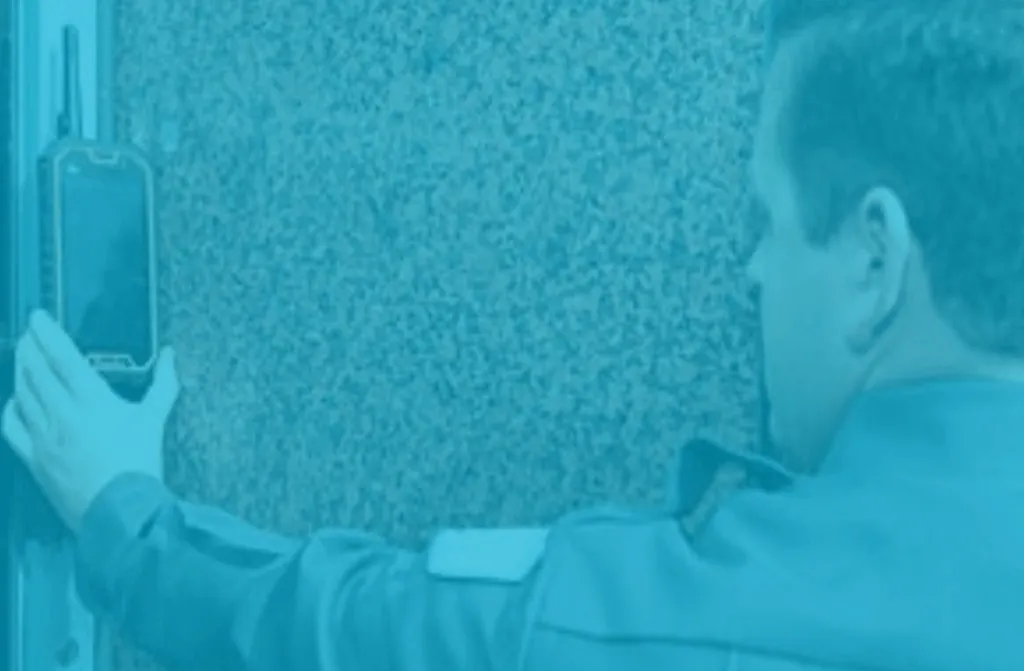
Las rondas de vigilancia, las patrullas verificadas por GPS y los controles en los puntos de control no solo sirven para documentar lo que ha ocurrido a posteriori. Crean un registro de que alguien está realizando comprobaciones, y ese registro cambia la forma en que se lleva a cabo el trabajo.
Andrew Smittie, director general de Lutheran Health Network, describió cómo se aplica esto en la práctica. Los datos de TrackTik se comparten mensualmente en las reuniones sobre el entorno asistencial, y se elabora un informe anual que analiza las tendencias de seguridad en toda la organización y sirve de base para las decisiones sobre la asignación de recursos. Se trata de un sistema sanitario que considera los datos de patrullas e incidentes como una aportación permanente a la gobernanza en materia de cumplimiento normativo y seguridad, y no como un registro a posteriori al que se recurre únicamente cuando algo sale mal.
Likith Kolla, operador de Lakeridge Health, destacó la versión en tiempo real de esta misma función. Poder ver la ubicación y la actividad del personal de seguridad es lo más importante durante una emergencia real, cuando los responsables necesitan saber dónde hay personal de guardia sin tener que esperar a recibir una llamada por radio.
Un responsable de operaciones de instalaciones de una gran empresa del sector sanitario describió con claridad el mecanismo subyacente. El hecho de registrar los problemas de forma inmediata, y que los directivos revisen esa información, ha hecho que los operadores de las instalaciones sean notablemente más diligentes a la hora de desempeñar sus funciones correctamente y a tiempo. La visibilidad influye en el comportamiento. Esa es una afirmación más defendible que decir que una plataforma previene la violencia directamente, y se sostiene ante un análisis riguroso.
What Proof Looks Like to a Board or a Surveyor
“We have a program” is a policy statement. “Here is what the program did this quarter” is evidence. The difference is a set of records that are captured as the work happens, kept consistently over time, and reported without anyone rebuilding them by hand the week before a review.
| Pruebas | What it demonstrates | De dónde proviene en TrackTik |
|---|---|---|
| Patrol completion in high-risk units | Prevention work is happening where the risk is, on schedule | Checkpoint scans and GPS-verified tours |
| Workplace violence incidents by unit, shift and type | The organization knows where violence occurs and whether it is trending down | A dedicated workplace violence incident category with required fields |
| Response time from request to officer on unit | Staff can count on security when they call | Dispatch and Command Center time stamps |
| Corrective actions opened and closed | Incidents lead to change, not just documentation | Follow-up actions assigned and tracked as site tasks |
| Officer training and credential currency | The people responding are prepared and authorized | Training and certification records in people management |
The common gap is not any one of these records; it is that they live in different places. Patrol data in one system, incident reports in another, training in HR, and corrective actions in someone’s inbox. When an incident crosses departments, the record has to cross with it, which is why how enterprise security teams report incidents to legal and compliance matters as much as how they report them to the board.
Six Metrics to Bring to the Environment of Care Meeting
A short, stable set of measures reported the same way every month builds more credibility than a long report that changes each time. These six cover prevention, response and follow-through:
- Workplace violence incidents per 1,000 patient days, by unit. Normalizes for volume so units of different sizes can be compared fairly.
- Patrol completion rate in designated high-risk areas. The emergency department, behavioral health and other units the risk assessment identifies, including overnight. See proving after-hours coverage in your highest-risk areas.
- Median response time to staff requests for security. The number clinical staff feel most directly.
- Share of incidents reported by staff versus discovered by security. A rising staff-reported share is a sign that reporting friction is coming down.
- Corrective actions closed within target. Proof that incidents change something.
- Officer training completion for de-escalation and the units they cover. Evidence the people on the floor are prepared.
Building a Defensible Record in 90 Days
Security leaders inheriting a paper-based or fragmented process often ask where to start. A practical sequence:
- Days 1 to 30: separate and standardize. Create a dedicated workplace violence incident category with required fields for unit, shift, behavior type and injury. Move all security reporting onto officers’ phones so incidents are logged at the scene, not reconstructed later.
- Days 31 to 60: verify coverage. Map checkpoints in the units your risk assessment flags, set tour frequencies by shift, and start measuring completion. Gaps will show up immediately; that is the point.
- Days 61 to 90: report and close the loop. Bring the six metrics above to your first Environment of Care meeting, agree targets, and assign corrective actions with owners and dates. Share a summary with nursing leadership so staff can see that reports lead somewhere.
By the end of the quarter you have three months of consistent data, which is enough to show a trend and far more defensible than a single snapshot assembled for a survey.
El papel de TrackTik en el programa de prevención
TrackTik supports the operational backbone underneath a violence prevention program. Verified patrols in the areas that carry the most risk, with officers reporting from the unit through the TrackTik security guard tour app. A workplace-violence-specific incident category instead of a general catch-all. Board-ready security reporting without anyone questioning whether the numbers can be trusted.
Para un responsable de seguridad que intenta determinar si un programa de prevención está funcionando realmente, esa es la pregunta más importante. No se trata de si sonó una alarma, sino de si hay datos que demuestren que se están llevando a cabo las medidas destinadas a prevenir el incidente desde el principio.
To test your own program, start with the 2026 Hospital Workplace Violence Prevention Evidence Brief. For who owns each step when an incident crosses departments, use the Cross-Functional Incident Workbook for Hospitals. To see how the record is built and reported for a hospital, book a TrackTik demo.
Preguntas frecuentes
Últimos artículos
Recursos destacados
Descubre Trackforce en acción
Reserva una visita guiada con nuestro equipo y descubre cómo se adapta a tu negocio.