Réussir en tant que petite entreprise de sécurité grâce à un système de rapports efficace

Trackforce
December 4, 2019 · 11 min read
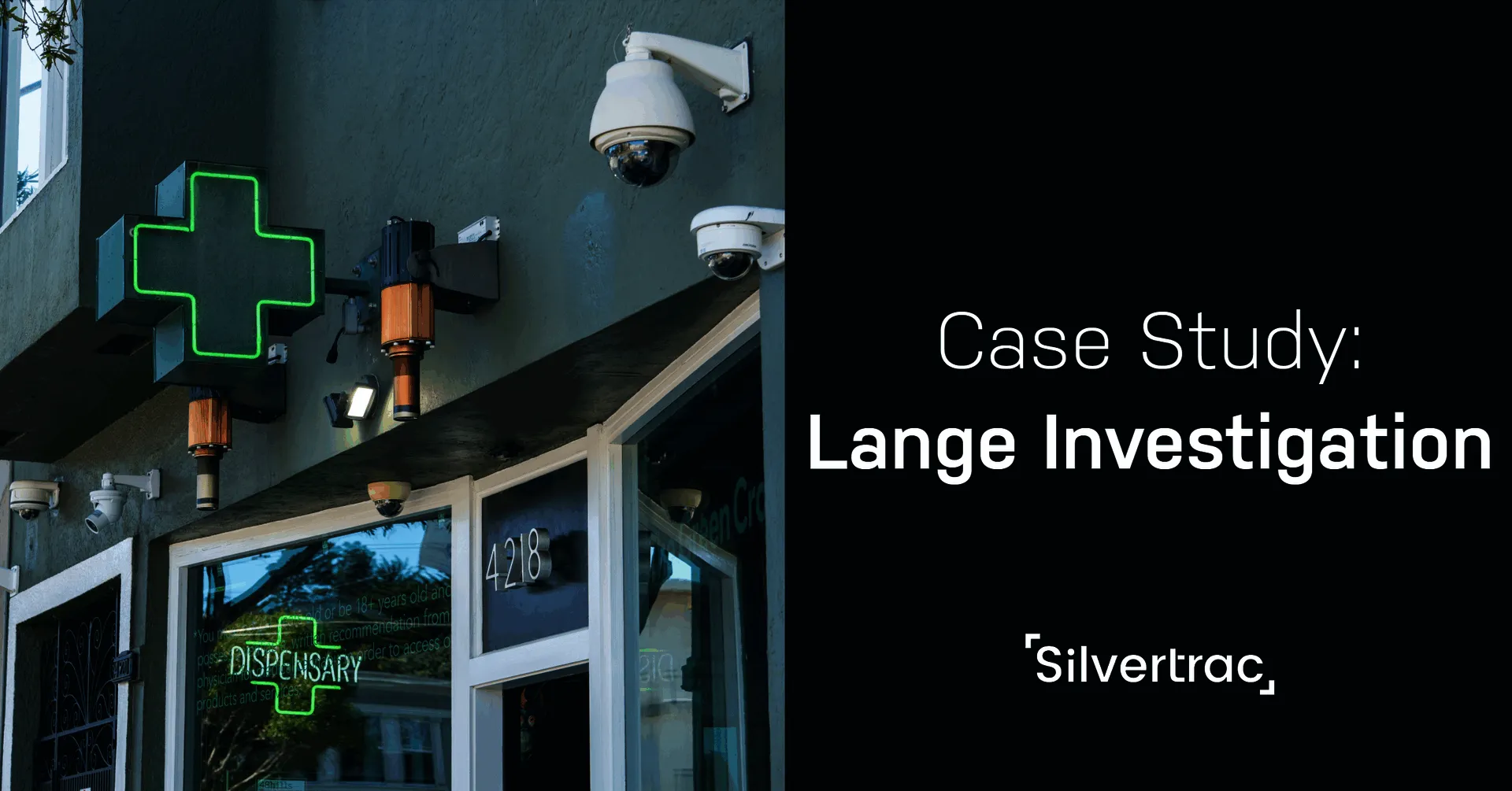
Lange Investigation and Consulting, LLC was started in 2014 by Roger Lange in Benton Harbor, Michigan. After a career in law enforcement, Roger stepped into private security with a mission to consistently deliver professional results and the highest level of customer service. What follows is the story of how a small security company used efficient reporting to win clients from bigger competitors, enter the cannabis security market and earn the trust of local law enforcement.
Roger originally ran his operation on Silvertrac, which is now part of Trackforce. The lessons in his story apply directly to firms running TrackTik security workforce software today, and the sections after the story show how each one works in TrackTik.
Points clés à retenir
- Paper and site computers both fail for the same reason.
The officer has to leave the round to write the report, so the record is late, thin and hard to verify. - Accountability is what clients buy.
Lange won clients away from larger competitors because he could show exactly what happened on every shift. - Reporting opened a regulated market.
A cannabis operator chose a small Michigan firm because it could prove after-hours coverage, which is what cannabis compliance demands. - A good daily activity report holds up in court.
Time-stamped, photo-backed reports turned officers into credible witnesses for a client’s legal case. - TrackTik does all of this from the officer’s phone.
Mobile incident and activity reporting, checkpoint tours, ReportPro AI and client-ready reports are built into one platform, so a small firm can offer the same proof as a national one.
The Problem With Paper Reports and Site Computers
When he started his security company, Roger first used paper reporting, a process he describes as “antique.” He knew early on that it would not work long term and bought computers for each site he serviced. That did not improve things enough.
« Le problème, tant avec les rapports papier qu’avec les ordinateurs sur site, c’est que mes agents de sécurité devaient d’abord effectuer leurs rondes, puis revenir au bureau pour rédiger un rapport. »
Roger needed a better solution. He was running a small operation in a competitive area, and without a way to set his company apart, his opportunity to grow was limited. His experience is common: going paperless with the daily activity report is usually the first change a small firm makes that clients actually notice.
| Reporting method | When the report is written | What the client can verify | Weakness |
|---|---|---|---|
| Paper logbook | End of round or end of shift | Handwriting and a signature | No time stamps, no photos, easy to lose or backfill |
| Site computer | After the officer returns to the office | A typed narrative | Officer leaves the post to write; detail fades; no location proof |
| Mobile reporting in TrackTik | At the scene, during the round | Time, GPS location, photos, checkpoint scans, officer identity | Requires a phone and a short onboarding |
La bonne solution peut tout changer
Roger found Silvertrac by chance after seeing an officer using it at a mall in Chicago. He knew immediately what kind of impact it could have, and as soon as he got back to Michigan he made the switch. Asked how his business developed afterwards, he gave the most credit to the accountability he now had over his entire operation.
« Silvertrac garantit la transparence, et c’est précisément ce qui attire tant de clients. Certains clients m’ont choisi après avoir quitté d’autres entreprises car, à ma connaissance, je suis le seul à utiliser Silvertrac dans toute la région du sud-ouest du Michigan. »
Two brand-new opportunities followed the move from paper to guard management software, and each gave his company growth he had not thought possible. Both are worth looking at closely, because they show what motivates a client to change security providers: not price, but proof.
National expansion through cannabis security
A cannabis company based in Colorado flew Roger out to its facilities to talk about security. The company was planning an expansion into at least five areas in Michigan and needed airtight after-hours security for the whole operation. Lange Investigation won the contract to run security for all of its Michigan locations.
“The thing that sells and was very useful in the cannabis industry is accountability, reporting, and the ways that we’re able to monitor. The cannabis group loved to hear that they can know what’s going on after the shift is over.“
Doing business with a national cannabis operator was a huge step for a small security company trying to grow, and as more states legalize, more small and midsize firms will see the same opportunity. Cannabis security does come with its own requirements, including state-specific standards and the option of armed officers at dispensaries and grow facilities. Before streamlining his operation, Roger would not have had the capacity to work through those rules; with reporting handled, he had the time and energy to make sure the company met every requirement of a new industry. If you are considering the market, start with our quick start guide to security in the cannabis industry.
What cannabis clients ask a security company to prove
- After-hours presence. Time-stamped checkpoint scans from guard tours or patrol visits that show the facility was actually checked, not just scheduled.
- Access and alarm events. Every door opening, alarm and visitor logged with who responded and what they found.
- Incident documentation. Photo-backed reports that can be handed to a state regulator or an insurer without editing.
- Officer credentials. Current licenses and, where armed coverage is required, the training records to match.
A trusted partner for local law enforcement
As a career law enforcement officer, Roger knows how important evidence is to upholding the law. When a tenant at a client’s apartment complex was reported for disorderly behavior and a fight broke out, he was able to use the daily activity report (DAR) for the complex as evidence in court to back up the client’s account.
“Not only do we have the security officer giving their account, but they have proof because it’s documented in the DAR, and they’ve got body cam footage to confirm all of it. When our security officers went to court they sounded like they were a 20 year veteran in law enforcement getting on the stand to testify.”
That is what a reporting system is really for. A report written at the scene, with a time stamp, a location and a photo, is the evidence layer that ends accountability disputes, whether the dispute is with a tenant, a client or a court.
What a Daily Activity Report Needs to Hold Up
Roger’s officers sounded like veterans on the stand because the report did the work for them. A DAR that can be used as evidence, or simply trusted by a client, contains the following. For a fuller breakdown see seven things every daily activity report should include.
- Who, where and when, captured automatically. Officer identity, site, GPS location and time stamps that the officer cannot alter after the fact.
- Checkpoint proof. Scans of NFC or QR checkpoints that show each area was physically visited, with the time between checkpoints.
- Observations in plain, factual language. What was seen, not what was assumed. Structured templates help officers stay objective.
- Photos and attachments. A picture of the damage, the open gate or the unauthorized vehicle, attached to the entry it belongs to.
- Actions taken and escalations. Who was notified, when, and what the outcome was.
- A clean, consistent format. The same layout every shift, so a property manager, a regulator or a judge can read it without a translator.
How a Small Security Company Does This in TrackTik Today
Everything that set Lange Investigation apart is now standard in TrackTik, and it is designed to work for a firm with a handful of officers as well as one with a thousand. If you have ever wondered whether a small security company needs software, this is the case for it.
- Report from the round, not after it. Officers file daily activity and incident reports from the TrackTik security guard tour app at the scene, with time, location and photos attached automatically. TrackTik security incident reporting structures the entry so nothing is missed.
- Write like a veteran, every time. ReportPro AI turns a quick field note into a clear, professional report in the officer’s own facts, which is exactly the credibility Roger’s officers showed in court.
- Prove after-hours coverage. Checkpoint tours and mobile patrol visits are logged with GPS and time stamps, so a cannabis operator or property manager can see the facility was checked after the shift ended.
- Give the client the report, not a phone call. Reports and business intelligence dashboards are shared with the client automatically, which is the accountability that pulled clients away from Roger’s larger competitors.
- Keep the compliance side in one place. Officer licenses, armed certifications and training records live in people management, so entering a regulated market like cannabis does not create a second administrative job.
Et maintenant ?
Without modernizing his reporting, none of this growth or credibility would have been possible for Roger and his company. With automatic accountability in place, he could put his energy into the long-term goals of the business instead of chasing paperwork.
If you are a small security company competing against larger firms, reporting is the fastest way to prove you are the better choice. Book a TrackTik demo and we will show you what a client sees from their first shift with you.
Questions fréquemment posées
Derniers articles





Ressources à la une





Découvrez Trackforce en action
Prenez rendez-vous avec notre équipe pour une démonstration et découvrez comment cette solution s'adapte à votre activité.