Planification de la sécurité des événements : 5 étapes pour renforcer la sécurité des événements

Trackforce
May 26, 2022 · 13 min read
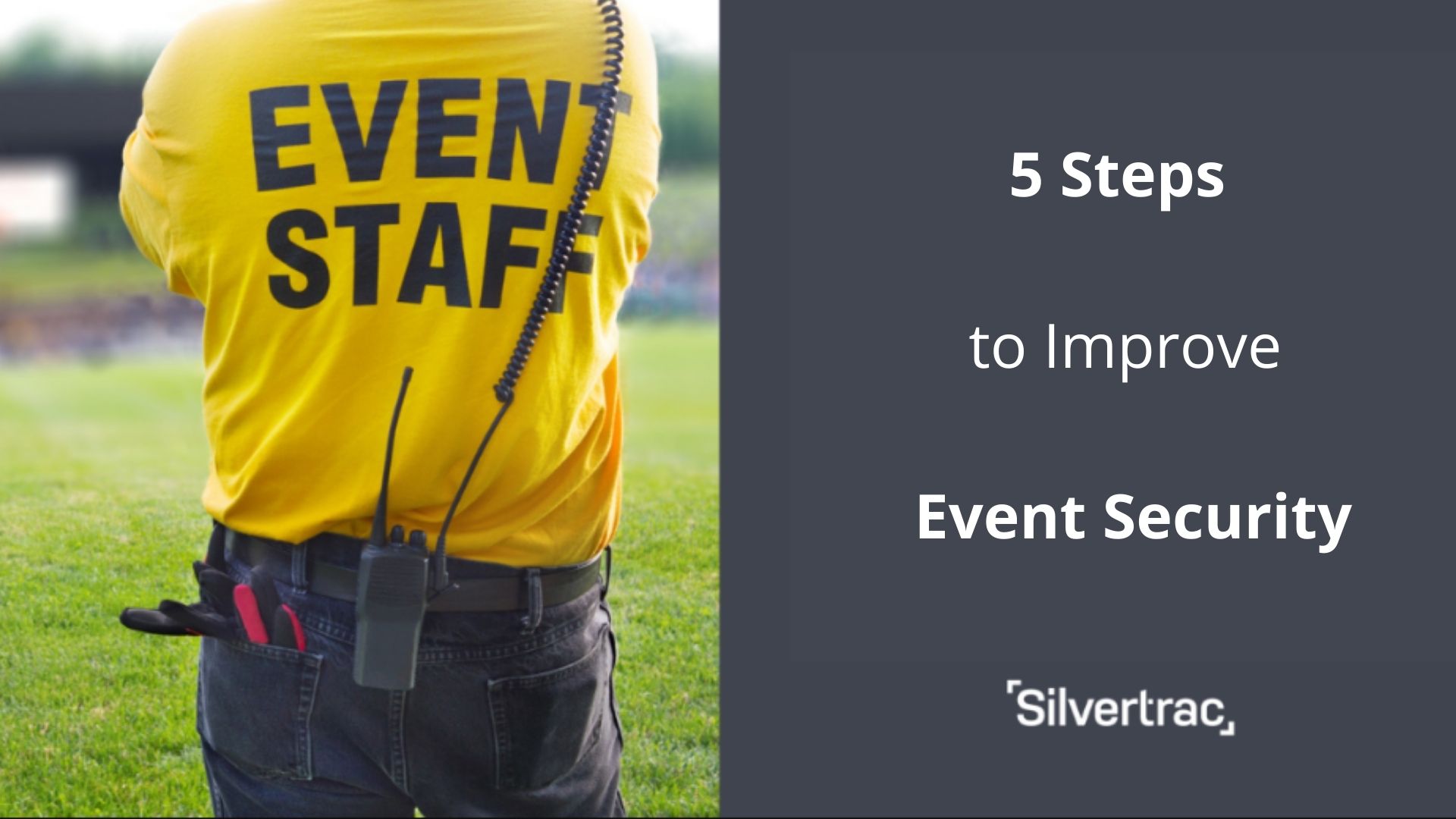
Special event security planning is a massive undertaking. A long list of requirements has to come together for a concert, festival, conference or game day to be judged a success, and one of the most important is contracting a security company that understands the nuances of event work.
Event security officers have to manage large crowds, a task that gets harder when alcohol is served. They have to handle situations quickly and discreetly so attendees keep enjoying the event, and because the risk profile of a crowded venue is different from a fixed post, the team needs training in risk management, first aid and crowd control.
This article walks through five essential steps for a successful event security plan, adds a planning timeline and an event-day command structure, and shows how TrackTik security workforce software from Trackforce lets a security firm staff, run and document an event from the same platform it uses every day.
Points clés à retenir
- Event security has five phases, and most failures happen before the doors open.
Qualification, venue inspection, coordination with officials, live management and the post-event review each need their own plan. - Licensing and insurance come first.
A PPO license, liability coverage and licensed, background-checked officers are the entry ticket to event contracts. - Walk the venue and write the plan down.
Checkpoints, posts, exits, points of concern and escalation paths should exist as post orders every officer can read on their phone. - On event day, communication is the control.
Officers, supervisors, event staff and local officials need one shared picture of what is happening and who is responding. - TrackTik turns the plan into the record.
Post orders, checkpoint tours, dispatch, incident reports and the post-event review all live in one place, so the client gets proof and the next event starts from data.
5 Essential Factors in a Successful Event Security Plan
- Qualifying your company to offer event security services
- Pre-event venue inspection
- Working with local officials
- Event security management during the special event
- Post-event review
Event Security Planning Timeline
Timing varies with the size of the event, but the sequence rarely changes. Use this as a working backbone and adjust the lead times to the venue.
| Quand | What gets done | Où il se trouve sur TrackTik |
|---|---|---|
| 6 to 8 weeks out | Confirm licensing and insurance, scope the contract, estimate headcount and roles | People management, contracts and invoicing |
| 3 to 4 weeks out | Walk the venue, run the risk assessment, map posts, checkpoints and exits | Site setup, checkpoints, post orders |
| 2 weeks out | Meet local officials, agree escalation paths, finalise the staffing roster | Scheduling, post orders |
| 1 week out | Brief officers, assign posts, test radios and the officer app, confirm credentials | Officer app, training records |
| Event day | Check in, run tours, manage crowds, dispatch incidents, log everything | Guard tour app, dispatch, incident reporting, Command Center |
| Within 72 hours after | Debrief officers and the client, review every incident, bill verified hours | Business intelligence, reports, invoicing |
1. Qualifying Your Company to Offer Event Security Services
The first step to better event security is making sure your security company is operating in compliance with every regulation in the state where the event is held. Rules differ by state, so check the security guard license guide before you bid on an event outside your usual territory.
Pour pouvoir proposer des services de sécurité, vous devez :
- Hold a Private Patrol Operator (PPO) license
- Carry liability insurance
- Employ officers who hold a valid security officer license and have passed a thorough background check
Keeping those credentials current across a large event roster is where firms slip. Tracking every license, certification and expiry date in TrackTik people management means the scheduler cannot assign an unlicensed officer to the event, and you can hand the promoter or venue a compliance list on request.
The next step is convincing clients that your company can handle event security contracts. Many event planners look at the events a company has worked before, including event type and size, to find a firm with the right experience. That makes breaking into event work difficult, but there are a few ways to open the door:
- Hire for event experience. Whether permanently or for specific contracts, recruit officers who have worked events before. If you can show that the team on the ground is capable, you are more likely to win the contract.
- Add armed, first aid and CPR certified officers to your roster. Dehydration, heatstroke and fainting are routine at large events such as music festivals. An officer who can handle basic medical needs gets attendees help immediately.
- Start small. If you have not provided event security before, build a portfolio with small opportunities: subcontract with a larger firm on a big event, or ask current clients for referrals to run security at smaller functions.
2. Pre-Event Venue Inspection
Most event venues are large spaces full of entrances, exits, hallways and hiding places, which means dozens to hundreds of potential security concerns. A pre-event venue inspection lets your officers learn the space before they have to work it. Walking the property with the event planner also sets expectations early and often decides who wins the contract.
During the inspection, event planners and the security team should determine every checkpoint, officer post, point of concern and any special requirement for that venue and that event. Free intelligence gathering tools such as satellite imagery and local crime mapping sharpen the assessment before you ever set foot on site.
A step-by-step event security checklist should include:
- Inspecting and learning the venue inside and out, including loading docks, back-of-house and roof access
- Conducting a full risk assessment audit for the venue and the specific event
- Assessing the potential for large-scale attacks and vehicle threats at entrances and queues
- Planning crowd control measures, barriers, lanes and capacity counting
- Keeping communication and information flow regular and online, with a named channel for every post
Capture the output of the walk as post orders and checkpoints rather than a memo. When the venue map, posts and tour routes are configured in TrackTik guard management, every officer sees the same plan on their phone and supervisors can confirm each checkpoint was actually covered.
3. Working with Local Officials
Most events will have local law enforcement and first responders such as EMTs or fire personnel on site for the day. In those cases, your security team should work with local law enforcement in advance so each agency knows the security operation, the command structure and who to contact. The partnership between private security and public safety is what keeps large public events safe.
For events without officials on site, there is still a chance they will need to be called in. The contracted security team should have a plan of action that clearly defines how and when an officer escalates to those agencies. Event management and all staff, security and non-security, should review the plan before doors open so everyone knows the safety protocols if an incident occurs.
4. Event Security Management During the Special Event
Security management during the event itself is where all the pre-work pays off. This is where your team has to handle crowd management and monitor for potential threats and suspicious activity at the same time, often for many hours and across a large footprint.
Crowd control tips
- Keep exits clear and ask attendees to move if they are blocking them.
- Monitor ticket and registration lines closely and prevent cutting, which is where most early-day friction starts.
- Watch VIP and staff-only areas, and make sure credentials are checked every time, not just at first entry.
- Track capacity by counting staff and security personnel as well as admitted guests.
Threat monitoring tips
- Check bags at entry and search for weapons. Tell guests about bag checks in advance and frame them as a guest safety measure.
- Watch for unusual behavior such as guests who keep staring at staff or officers, or who seem disengaged from the event itself. Situational awareness is a trainable skill, not an instinct.
The event-day command structure
Keeping the lines of communication open is the single most important thing you can do on event day. Your venue security team should be in constant contact about suspicious activity, and every report should reach one place. A simple structure works for most events:
- Officers at posts check in, scan checkpoints and report from the TrackTik security guard tour app, so every observation has a time and a location.
- Roving supervisors receive assignments through security guard dispatch, which turns a radio call into an assigned, time-stamped response.
- An event command post watches the whole venue in the TrackTik Command Center, sees open incidents and officer locations, and escalates to law enforcement or medical when the plan says to.
Working this way keeps guests safe and keeps your officers safe too. It also means the client can see the response as it happens instead of hearing about it the next morning.
5. Post-Event Review
After the event, debrief internally with your officers and externally with the client to review how the security operation went. This lets everyone see where they succeeded and where they can improve. If an incident was not handled properly, this is the moment to work out what went wrong so it does not happen again. The review also gives supervisors a chance to recognise officers who went above and beyond and to identify officers who need additional training.
A good review runs on records, not recollection. Every incident report written in TrackTik security incident reporting during the event, with photos, time stamps and location, becomes the agenda for the debrief, and TrackTik business intelligence shows checkpoint coverage, response times and incident counts by zone. Hand the client that summary and you have both proof of the work and a head start on the next proposal.
What a post-event report should contain
- Headcount, posts covered and checkpoint completion rate
- Every incident with time, location, officer, action taken and outcome
- Average response time from report to supervisor on scene
- Escalations to law enforcement or medical, and how they were handled
- Recommendations for the next event: staffing, post placement, barriers, timing
Common Event Security Mistakes to Avoid
- Staffing by headcount instead of by post. Twenty officers with no assigned posts is a crowd of your own. Map the posts first, then staff them.
- Briefing from memory. A verbal briefing in the parking lot does not survive a shift change. Written post orders on every officer’s phone do.
- Running radios with no log. Push-to-talk is fast, but if nothing is recorded, you cannot prove what was reported, when, or who responded.
- Ignoring the ingress and egress peaks. Most incidents cluster in the first and last hour. Staff those windows heavier than the middle of the event.
- Skipping the client debrief. The post-event review is where the next contract is won. Bring data, not anecdotes.
Planification de la sécurité des événements : prochaines étapes
It may feel like a large undertaking, but a well-thought-out security plan executed at a high level means everyone has their bases covered. Get qualifications in order, run the pre-event tactics, work with local authorities, manage the day with one shared picture and close with a data-backed review, and attendees and hosts will leave happy and safe. Security firms that serve hospitality and venue clients use TrackTik to run exactly this cycle, event after event.
Want to see how post orders, checkpoint tours, dispatch and incident reporting come together on event day? Book a TrackTik demo and we will walk through it against one of your upcoming events.
Questions fréquemment posées
Derniers articles





Ressources à la une





Découvrez Trackforce en action
Prenez rendez-vous avec notre équipe pour une démonstration et découvrez comment cette solution s'adapte à votre activité.