Renforcer les capacités des civils en matière de formation à la sécurité et à la sûreté

Trackforce
July 9, 2019 · 16 min read
In one of our earlier Silvertrac Extra blogs, we chatted with Private Force International (PFI) co-founder Jonathan Alvarez about increasing crime rates and how the security industry can help combat them. Just to recap, the data supports the notion that reported crime has been decreasing over the long term. However, the data also tells us that a large share of crime is never reported at all, which is far more concerning.
The Bureau of Justice Statistics report Criminal Victimization, 2023, based on the National Crime Victimization Survey, found that only 30% of property victimizations were reported to police in 2023. The rate of violent victimizations reported to police (10.1 per 1,000 people age 12 or older) was less than half of the overall violent victimization rate (22.5 per 1,000).
Alvarez attributes the increase in crime to an overall lack of values that stems from an individual’s upbringing and a lack of morality, a root cause that can only be fixed from within the home.
So if we can’t fix the root cause, what can those of us in the security industry do to help?
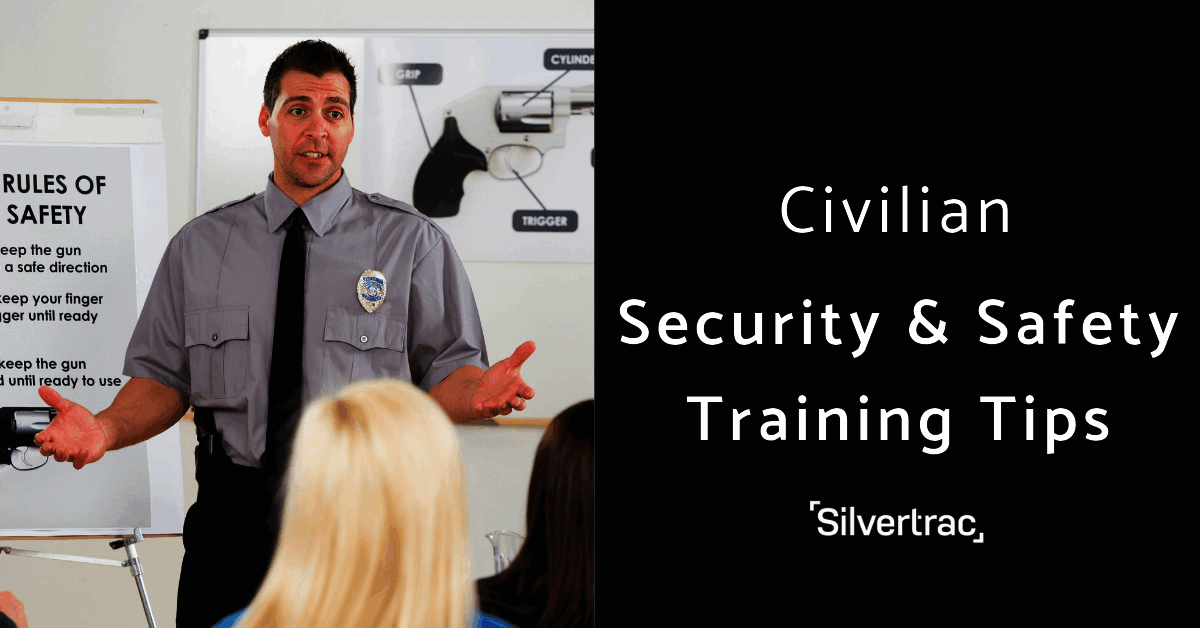
We can start by bringing security and personal safety training directly to the people. Security guard companies can foster civilian empowerment by increasing the overall safety knowledge of residents in the areas they serve. Sadly, security personnel won’t always be there at the time tragedy strikes, but the security industry can give civilians the tools and training to know what to do when that time comes.
In this article, we cover the workplace and personal safety courses Alvarez recommends, how to build trust with the community, and how security firms can package civilian safety training as a value-added service, with practical steps for pricing, delivery and proving results.
Points clés à retenir
- Unreported crime is a gap civilians can help close.
Trained employees, tenants and residents notice more, report sooner and give officers better information when they arrive. - Safety training is a natural extension of a security contract.
Situational awareness, de-escalation basics, emergency action planning and reporting suspicious activity build on what your officers already do every shift. - Keep civilian courses at the awareness level.
Focus on noticing, reporting, evacuating and staying calm, and bring in certified instructors for CPR, first aid and bleeding control. - Package and price training like any other service.
Include sessions in the contract, sell them as add-on workshops or run an annual program, and price for instructor time, preparation and materials. - TrackTik keeps the program accountable.
Site tasks, incident reporting, business intelligence and contracts and invoicing let you schedule sessions, capture what civilians report, prove the impact and bill for the work.
Why Civilian Safety Training Matters for Security Companies
Officers can only be in one place at a time. The employees, tenants, students and visitors who use a property every day see far more than any patrol route covers. When those people know what to look for and who to tell, your officers get earlier warnings and better information, and your client gets a safer site.
Training also changes your relationship with the client. It moves you from a vendor that supplies officers to a partner that makes the whole organization better prepared. That is a strong part of any security value proposition, and it gives you a reason to be on site, in front of decision makers, well before the next renewal conversation.
- More eyes and ears. Trained civilians report suspicious activity sooner and more accurately.
- Calmer emergencies. People who have practiced an evacuation or lockdown drill are less likely to panic.
- Stronger relationships. Regular sessions build trust between officers and the community they protect.
- Stickier contracts. A client whose staff has been trained by your team has one more reason to renew.
- A new service line. Training can be billed as an add-on, which adds revenue without adding posts.
Cours de sécurité au travail
Personal safety is every individual’s own responsibility. Law enforcement and public safety personnel are often just a dial away. But between long dispatch times and overworked departments, it has become more important than ever to have the skills that could protect you and your family.
Security companies can work with local organizations and the businesses they serve to train employees and their family members on basic safety skills. Corporate security teams can do the same internally, and many enterprise security departments already run awareness sessions as part of their workplace violence prevention programs.
Basic safety training empowers non-security personnel to act appropriately and efficiently when an incident occurs. Oftentimes, civilians with little to no knowledge of safety procedures panic when they experience a scary situation. Knowing how to keep calm and identify the next best steps can help keep the individual and those around them safe.
All workplace safety training programs should cover, at a minimum:
- Observational and situational awareness
- Violence prevention
- De-escalation training
- CPR and first aid training
- Emergency action planning
More specialized office security training such as Stop the Bleed can also be covered by a qualified safety specialist, depending on the type of organization being trained. CPR and first aid courses should likewise be taught by certified instructors, either on your own team or through a training partner.
What Alvarez has seen work
Alvarez has seen these organization-wide safety classes be successful a number of times. During his time in hospitality security, he implemented a training program that taught basic safety skills to each department, including how and when to use an active shooter bag.
Not only did this make each department feel safer and more equipped to deal with a security incident, it also helped the security team identify critical information about the people and property they were employed to protect. By training the departments on observational awareness, non-security employees could update security personnel with the necessary information as soon as they arrived on-site.
Core training modules at a glance
The table below shows one way a security company might structure a workplace program. Keep each module practical and awareness-level, and tailor the examples to the client’s site.
| Module | Who it is for | What participants learn |
|---|---|---|
| Situational awareness | All employees, tenants and residents | How to notice what is out of place, trust their instincts and stay aware of exits and surroundings |
| Reporting suspicious activity | All employees, front desk and facilities staff | What to report, how to describe people and vehicles, and who to contact on site and in an emergency |
| De-escalation basics | Customer-facing staff, reception and managers | How to stay calm, use a respectful tone, give people space, and step away and call for help when a conversation turns hostile |
| Emergency action planning and drills | All staff, floor wardens and managers | Evacuation routes, assembly points, shelter-in-place and lockdown procedures, and how to account for everyone afterward |
| Active-threat preparedness awareness | All staff | Recognizing warning signs, knowing the site’s alert and communication plan, and the general options to get out, hide or call for help |
| CPR, first aid and bleeding control | Volunteers and designated responders | Lifesaving basics taught by certified instructors, plus where first aid kits and AEDs are located |
For active-threat topics, stay at the awareness level and align with the client’s emergency plan and local law enforcement. The CISA Active Shooter Preparedness program offers free, non-tactical materials you can use alongside your own site-specific content. If a client’s workplace is covered by the OSHA emergency action plan standard, your drills can also reinforce the elements it requires, such as procedures for reporting an emergency, evacuation routes and accounting for employees after an evacuation.
Cours de sécurité personnelle
Dans ses cours de sécurité personnelle pour les civils, Alvarez aborde le concept du crime comme un triangle. On ne peut pas changer le désir de nuire à autrui. Cependant, on peut réduire les risques d'être victime .
Personal safety courses cover similar topics as organizational safety courses, but are more tailored to day-to-day civilian life. Organizations should offer different types of personal safety courses, depending on what participants are looking to learn and what they are comfortable with.
Women’s self-defense training courses have gained popularity over the years, as they offer a safe environment for women to discuss their own encounters, learn from one another, and develop the physical skills necessary to fight off potential assailants.
If you offer hands-on courses like these, use qualified instructors, confirm that your insurance covers the activity and have participants sign the appropriate waivers. Many security companies focus their own sessions on awareness and prevention and partner with a specialist for physical training.
Popular personal safety topics
- Staying aware in parking lots, garages and transit stops
- Walking to your car or home after dark, and using escort services where they are available
- Protecting personal information and spotting common scams
- Home and apartment security basics, from lighting to locks
- Travel safety for employees who work late or travel for business
Intégration communautaire
Community involvement is essential to building strong, trusting relationships between security officers and the community they are protecting. During a security company’s first shift at a new location, it is important that the guards on shift are friendly and inviting: introducing themselves, asking if the community has any questions, and letting the community know how the officers can assist them.
“Meet and Greets” can be a great way to continue enhancing these relationships. As the community becomes more comfortable with the security officers, they will be much more likely to alert them when something goes wrong, be less defensive when an officer approaches them, and feel more secure in their environment.
It is very important that security personnel build an open line of communication and trust with the people they are protecting on a regular basis. For residential and commercial communities, short tenant safety briefings run together with the property management team are an easy place to start.
Ces relations positives permettront de mieux comprendre ce que l'entreprise a à offrir à la communauté et d'apaiser les craintes que les civils ressentent souvent lorsqu'ils entrent en contact avec un agent de sécurité armé ou non armé.
How to Package and Price Safety Training as a Value-Added Service
Once you have the content, decide how clients will buy it. Most security companies use one or more of the following models.
Packaging options
- Included in the contract. A set number of sessions per year is built into the service agreement as a differentiator. This works well for competitive bids and large multi-site clients.
- Add-on workshops. Clients book individual sessions, such as a tenant safety night or a new-hire orientation module, at a set price per session.
- Annual safety program. A recurring package that combines regular workshops, an annual drill and a summary report for the client’s leadership.
- Event or seasonal briefings. Short sessions ahead of the holiday season, a large event or a move-in period, when risks and foot traffic change.
Whether to absorb the cost or charge for it is the same decision many firms face with technology. Our article on treating security software as an upsell or a value add walks through the trade-offs, and the same logic applies to training.
Pricing considerations
Price training the way you price any other service: start from the true cost of delivery and add your margin. Account for:
- Instructor time for delivery, preparation and travel
- Officer coverage if an on-duty officer is pulled from post to teach
- Materials, handouts, certification fees and training equipment
- Session length, group size and whether you charge per session or per participant
- Customization for the client’s site, emergency plan and industry
Tools like TrackTik Margin Insight help you see what each site and service actually costs, so a training add-on improves profitability instead of quietly eroding it.
The best security programs do not stop at the post. When the people on a property know what to notice, who to tell and what to do, every officer on site becomes more effective.
How to Launch a Civilian Safety Training Program
- Start with your existing clients. Ask which sites have recurring incidents, heavy foot traffic or new staff who would benefit most.
- Review incident history. Use the incidents and observations already in your reports to choose the topics that matter most for each site.
- Pick a small core curriculum. Begin with situational awareness, reporting suspicious activity and emergency procedures, then add modules as demand grows.
- Choose and prepare instructors. Select supervisors and officers who enjoy working with people, and partner with certified providers for CPR, first aid and bleeding control.
- Align with the client’s plans. Match every session to the site’s emergency action plan, post orders and local law enforcement guidance.
- Define the offer. Decide whether training is included, sold as an add-on or packaged as an annual program, and write it into the contract.
- Run a pilot. Deliver one or two sessions, collect participant feedback and refine the content.
- Report the results. Share attendance, feedback and changes in reporting activity with the client, then plan the next round.
The Security Company How-To: Preparing Officers to Work with Civilians
All of these tactics are great in theory, but how are security companies supposed to implement them, especially when one of the biggest issues security companies encounter is officers who are reluctant to work with civilians?
- It starts with hiring! Don’t hire officers who immediately say they don’t want to work with people. You can’t teach someone how to want to talk to people. You can only help them expand their communication skills if they are open to learning.
- Supervisor on-the-job training. Supervisors should be outgoing, friendly, and ready to talk to community members at all times. Officers should shadow this behavior in the field, learning from their superiors.
- Interpersonal training. Interpersonal communication is the communication between individuals. It is how we learn about others’ feelings, opinions and more. This can be the most challenging to implement, as a security company may not have the budget or bandwidth to run training like this. However, if a company does have the ability to run this type of training, it is an invaluable asset to their team.
Those communication skills carry straight over into civilian training sessions. Our roundup of the best de-escalation tips for private security is a good starting point for officers who will teach or model those skills.
How TrackTik Helps You Deliver Safety Training Services
Running a training program across many sites takes the same discipline as running the security program itself. TrackTik gives you one place to plan sessions, capture what civilians report and show clients the results.
- Site tasks and post orders. Schedule training sessions, drills and follow-ups as site tasks, and keep emergency procedures current in digital post orders with TrackTik security operations, so officers on every shift know the plan civilians were trained on.
- Incident reporting. When trained employees or tenants report suspicious activity, officers log it with TrackTik security incident reporting, including photos, times and locations, which creates a clear record of how civilian reporting contributes to site safety.
- Client reporting and business intelligence. TrackTik Business Intelligence turns session activity, incident trends and drill results into client-ready reports, so you can show what changed after training.
- Contracts and invoicing. Add training workshops and annual programs as billable services with TrackTik Contracts and Invoicing, so add-on work flows through to accurate invoices.
- Margin visibility. Compare the cost of delivering training with what you bill, site by site, to keep the service profitable as it grows.
Réflexions finales
Security officers will not always be there when something goes wrong, but the people they protect can be ready. Workplace safety courses, personal safety classes and genuine community involvement give civilians the confidence to stay calm, notice more and report sooner, and they give security companies a meaningful way to stand out.
Ready to turn safety training into an accountable, billable part of your service? Book a TrackTik demo to see how site tasks, incident reporting, business intelligence and invoicing work together.
Foire aux questions
Derniers articles


Ressources en vedette
Découvrez Trackforce en action
Réservez une visite avec notre équipe et voyez comment ça s'intègre à votre activité.