4 wesentliche Eigenschaften, die einen erfolgreichen Sicherheitsmitarbeiter auszeichnen

Trackforce
July 9, 2019 · 14 min read
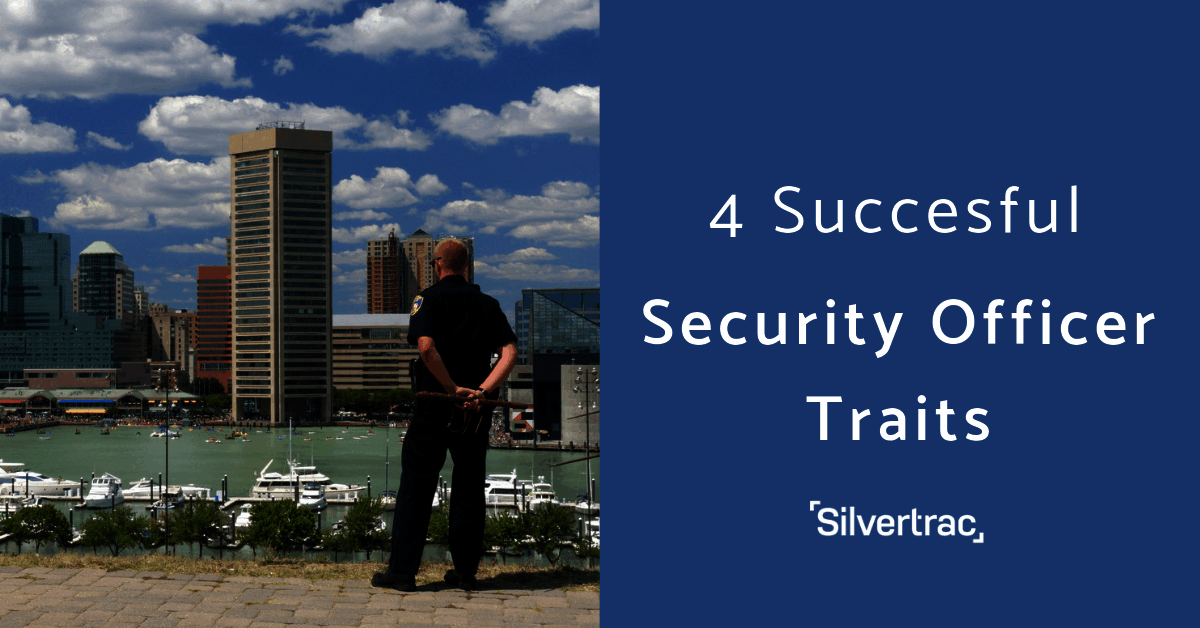
A big part of security guard recruiting is identifying whether an applicant has the right personality for the security industry. Spotting consistent behavioral patterns in an interview can be challenging, but there are reliable ways to do it.
We have identified 4 key traits that are essential for any security guard or officer:
Hiring a security employee who has all 4 of these traits can be difficult. This guide covers the characteristics and behaviors that are integral to a security officer’s success, the interview questions that reveal them, and a simple scorecard to keep hiring decisions consistent. Identifying these signs during the hiring process helps you weed out under-performing guards before they cost you a contract. Once an officer is on the schedule, the TrackTik security workforce management platform shows you whether those traits hold up on every shift.
Die wichtigsten Erkenntnisse
- Hire for four traits, not just a license.
Dependability, responsibility, communicability and adaptability predict on-shift performance better than a resume alone. - No-shows are the most expensive trait failure.
A single missed shift can put a contract at risk, so test reliability early with scenario questions and an honest shift-preference conversation. - Structured questions beat gut feel.
Asking every candidate the same behavioral questions and scoring each trait from 1 to 5 makes hiring decisions consistent and defensible. - Communication is a client retention skill.
Officers who report clearly and treat clients and civilians well are the ones who keep contracts renewing. - Verify the traits after day one with TrackTik.
Shift attendance, tour completion, incident report quality and client feedback show which officers live these traits on every shift, and where coaching is needed.
The 4 Traits at a Glance
Use this table as a quick reference during interviews and performance reviews. Each trait shows up differently on shift, leaves a different warning sign in an interview, and leaves a different trail in your operational data.
| Trait | What it looks like on shift | Interview red flag | What TrackTik shows you |
|---|---|---|---|
| Zuverlässigkeit | Arrives on time, completes every checkpoint and stays on post until relieved | Vague answers about past attendance or unexplained employment gaps | Clock-in history, late or missed shifts and guard tour completion |
| Verantwortung | Follows post orders without supervision and fixes small problems before they grow | Blames past employers or teammates for every problem | Completed site tasks and checklists, with time and location stamps |
| Kommunizierbarkeit | Writes clear reports, escalates quickly and stays calm and courteous with clients and civilians | Cannot describe a past incident in a clear, factual sequence | Incident report quality, escalation speed and client feedback |
| Anpassungsfähigkeit | Adjusts to a no-show, a new site or a new procedure without dropping standards | Discomfort with technology or any change to routine | How quickly officers pick up new sites, post orders and mobile workflows |
1. Dependability: The Officer Who Always Shows Up
One of the biggest challenges the security industry faces is employee ghosting and no-call, no-show shifts. As a security company goes through the hiring process, it is important to identify whether a candidate is dependable. If a guard fails to show up for just one shift, that could result in a contract loss.
A security team also needs to be able to depend on its members. Say an incident occurs while on patrol, and post orders dictate that for this type of incident, a guard needs to be at Checkpoints A, B and C.
If officers only show up to Checkpoints A and B, leaving Checkpoint C on the guard tour abandoned, the security team risks additional damage to the property and potential harm to the team or civilians. If the team cannot depend on fellow officers, it cannot effectively patrol and protect the space. A TrackTik guard tour system with live GPS tracking makes many of these situations preventable, even for entry-level guards, because missed checkpoints are visible to supervisors as they happen.
Another way to gauge dependability is to ask about shift preferences. A candidate who wants only part-time security work will usually be balancing other jobs and responsibilities, which can make them harder to schedule reliably. Part-time guards are still valuable, but if you are hiring for a long-term, full-time role, make that expectation very clear.
Interview questions that reveal dependability
These questions show how a candidate reacts in real workplace scenarios, rather than how they describe themselves.
- Tell me about a time a personal commitment conflicted with a scheduled shift. What did you do?
- In your last role, how often were you late or absent, and what caused it?
- Describe a time a teammate did not show up. How did you handle the extra coverage?
- What schedule are you looking for, and what other jobs or commitments will you balance with it?
2. Responsibility: The Officer Who Owns the Post
Responsibility in the workplace comes in many forms. An employee must be responsible for their specific job duties, their overall performance, and their actions and behavior at work. Managers are responsible not only for themselves, but also for the people they manage.
These internal responsibilities maintain the standards and productivity that keep a company running smoothly. When people do not accept responsibility for their own duties and behavior, it is like herding cats. Managers get stuck correcting inefficient employees, using up the time needed to run and grow the company.
Security guards also carry the responsibility of building and maintaining relationships with clients and civilians during many of their shifts. A supervisor cannot be on site to hand-hold, so it falls to the guard to keep a positive relationship with the people who ultimately hold the key to renewing the security contract. TrackTik guard management software closes the feedback loop between guards, shift supervisors and clients, so the relationship stays healthy.
When team members own their responsibilities, it frees up time spent managing, builds longer-lasting client relationships, and promotes a self-motivating company culture. All of these strengthen a business’s potential for growth.
Interview questions that reveal responsibility
- Tell me about a mistake you made on the job. How did you report it, and what did you change afterward?
- If your post orders did not cover a situation you were facing, what would you do?
- Describe a time you noticed a safety hazard that was not technically your job to fix.
3. Communicability: The Officer Clients Trust
Client communication is often a hard sell for security officers, since many would rather not interact with clients or civilians. However, security personnel must maintain appropriate internal communication with colleagues and supervisors, as well as client communication and customer service, to do their job properly.
Effective internal communication helps employees feel empowered, well informed and trusted. It gives individuals the most up-to-date information to do their roles well. Without it, companies are more likely to run into poor time management, duplicated effort and frustrated employees.
The customer service side of an officer’s job matters because clients who contract with security companies want real insight into what is happening on their properties. They need to know their properties are safe and their security budget is not being wasted. Timely, well-written information from the guard company proves the value of the service and increases the likelihood of a great referral.
Clear, respectful communication with civilians also helps dispel the fear or contempt some people feel when they come in contact with an armed officer. Positive interactions help people feel protected and give them a comfortable channel to report concerns if and when an incident occurs.
Interview questions that reveal communicability
- Walk me through the last incident you responded to, from start to finish. Listen for a clear sequence and a separation of facts from opinions.
- How would you explain a site policy to a frustrated visitor who insists on being let in?
- Give the candidate a short written scenario and ask for a brief incident summary. A writing sample is the most reliable preview of future report quality.
4. Adaptability: The Officer Who Handles the Unexpected
Adaptability is important in any business, but within the security industry it is two-fold. An officer must be ready to adapt in real time during a shift, and also ready to adapt to a changing work environment as the organization evolves.
On-site adaptability comes into play when another officer no-shows or an incident requires additional backup. A talented guard can think on their feet and use whatever strategy is necessary to keep the post safe and the client happy.
Company adaptability is often a longer process to learn. Changes in organizational direction, job roles or even ownership can require the best officers to be retrained to a new standard. That may include process updates, personnel changes, acquisitions or mergers.
Change can be challenging. Hiring staff who know how to roll with the punches lets the company streamline its growth and direction so that change is a positive experience. Employees who fight inevitable change slow down the goals a company is working toward, so bring people onto the team who are excited and willing to grow with the company. They will be its most valuable assets.
Interview questions that reveal adaptability
- Tell me about a time a procedure changed at work. How did you learn the new way of doing things?
- Your relief officer calls out and your supervisor asks you to cover a different post. What do you do?
- Which mobile apps or reporting tools have you used on the job, and how quickly did you get comfortable with them?
Build a Simple Hiring Scorecard for the 4 Traits
Unstructured interviews tend to reward whoever is most likable in the room. A scorecard keeps every hiring manager focused on the same four traits, so you can compare candidates fairly and explain your decisions later. Score each trait from 1 to 5 using the questions above.
| Trait | 1: Concern | 3: Acceptable | 5: Strong |
|---|---|---|---|
| Zuverlässigkeit | Gaps or excuses about attendance | Solid record, few specific examples | Specific examples of covering shifts and showing up under pressure |
| Verantwortung | Deflects blame onto others | Follows the rules when supervised | Owns mistakes and fixes problems without being asked |
| Kommunizierbarkeit | Disorganized or unclear answers | Clear when speaking, weaker in writing | Clear, factual and calm, both verbally and in writing |
| Anpassungsfähigkeit | Resists change or new technology | Adjusts with support | Learns new sites, procedures and tools quickly |
How to put the scorecard to work
- Ask every candidate the same questions in the same order. Consistency is what makes the scores comparable.
- Score each trait right after the interview. Record scores before discussing the candidate with anyone else, so first impressions do not get rewritten.
- Set a minimum score for dependability. It carries the most contract risk, so a strong score in another trait should not make up for a weak one here.
- Keep the record with the officer. With TrackTik people management, licenses, skills and certifications live in one place and can be matched to the assignments that require them.
- Revisit the scores at 90 days. Compare interview scores with real performance data to learn which questions actually predict success for your sites.
How TrackTik Measures the 4 Traits After Day One
An interview predicts performance. The shift proves it. TrackTik turns every shift into a record you can coach from, so you know which officers are living the four traits and which ones need support, long before a client notices.
- Dependability: Clock-ins, scheduled shifts and guard tour completion show who shows up and finishes the route. Supervisors are alerted to incomplete tours instead of discovering them days later.
- Responsibility: Site tasks and checklists record what was done, when and where, so ownership of the post is visible rather than assumed.
- Communicability: TrackTik security incident reporting gives officers structured templates, and ReportPro AI helps them turn field notes into clear, professional reports that clients can act on.
- Adaptability: Post orders and procedures live in the TrackTik mobile app, so when something changes, officers work from the current version rather than an old binder.
TrackTik business intelligence rolls this activity up by officer, site and client, which makes it easier to recognize your best people, target coaching where it is needed, and show clients the work behind every invoice.
For enterprise security teams
The same four traits apply to in-house security programs. Enterprise security leaders can use the scorecard to hold proprietary hires and contract security partners to one standard, with TrackTik providing a consistent record of performance across every site.
Hire for the Traits, Then Keep the People Who Have Them
Finding the right officer is only half the job. Keeping them matters just as much: in an industry survey we covered recently, 42% of security leaders named high turnover as their top challenge.
As a security company owner, if you find a candidate who embodies these 4 key qualities, hire them. Then keep rewarding them as they succeed and advance in their career. If you do not, they will find a security company that will honor and respect what they bring to the table.
Häufig gestellte Fragen
Neueste Artikel





Empfohlene Ressourcen





Sehen Sie Trackforce in Aktion
Vereinbaren Sie einen Termin für eine Vorführung mit unserem Team und finden Sie heraus, wie sich das Produkt in Ihren Betriebsablauf einfügt.