Développer et améliorer la conscience situationnelle de vos agents de sécurité

Trackforce
September 25, 2015 · 12 min read
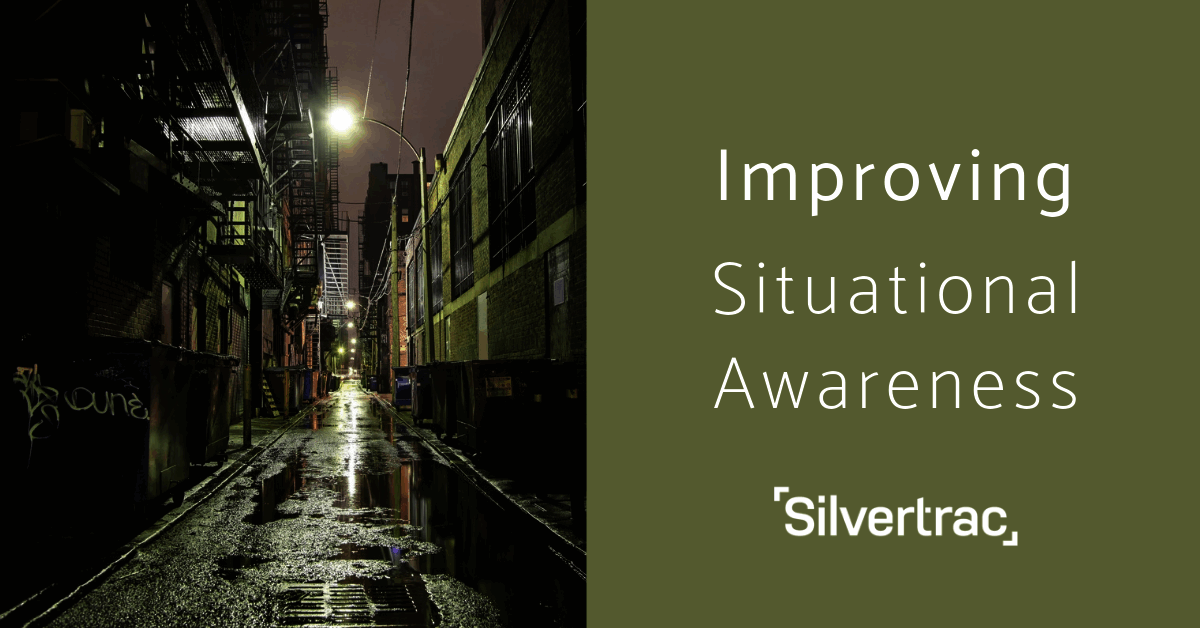
Tout agent de sécurité devrait se soucier de savoir si ses agents ont une conscience situationnelle. La plupart des gens en ont une vague idée, mais ils sont incapables de la définir précisément, et encore moins de déterminer si un agent la possède.
As defined by the United States Coast Guard, Situational Awareness is: “the ability to identify, process, and comprehend the critical elements of information about what is happening to the team with regards to the mission”. More simply, it’s knowing what is going on around you.
Être conscient de la situation et s'entraîner à la conscience situationnelle sont deux choses différentes, mais toutes deux sont essentielles. Examinons quelques stratégies pour développer et améliorer la conscience situationnelle de vos agents de sécurité.
Points clés à retenir
- Situational awareness means knowing what is happening and what it means.
Officers who notice, understand and anticipate react faster when every second counts. - It can be taught.
Instinct helps, but observation drills, scenario practice and regular coaching build awareness in any officer. - Healthy vigilance beats complacency.
Officers should investigate what is out of place, with enough judgment to escalate the right things. - Preparation decides performance under pressure.
Running scenarios in advance and knowing who leads in a crisis shortens reaction time. - Technology keeps awareness consistent on every shift.
With TrackTik, guard tours, site tasks, digital post orders and incident reports keep officers engaged with their surroundings and show supervisors where attention is slipping.
Qu'est-ce que la conscience situationnelle ?
Après des années d'expérience dans le secteur de la sécurité, je définis la gestion des risques comme la compréhension de l'impact de votre environnement, des besoins de vos clients et des procédures internes à votre entreprise sur vos actions dans des situations de forte pression. Ces situations peuvent aller des menaces internes ou externes aux problèmes environnementaux au sein de l'entreprise.
Par exemple, si votre agent travaille dans une usine de fabrication, il doit tenir compte des chariots élévateurs, des presses de plusieurs tonnes, des liquides chauds, des produits chimiques dangereux et des matières dangereuses. Les agents de sécurité doivent être prudents et attentifs à proximité de ces équipements, sous peine de se mettre en danger ou de mettre autrui en danger.
En situation d'urgence, les gardes doivent pouvoir évaluer rapidement la situation et prendre des décisions en une fraction de seconde. Lorsque l'urgence survient à leur poste, que l'instinct de survie est à son paroxysme et que l'adrénaline monte, cette seconde d'inattention peut s'avérer fatale.
Nombre de gestionnaires et de dirigeants, pourtant excellents, sont incapables de réfléchir calmement en situation de crise ou d'urgence. Certaines personnes, en revanche, sont naturellement capables de réagir instantanément et d'agir au mieux. Elles savent évaluer la situation et prendre la bonne décision, la plupart du temps, en une fraction de seconde.
Related post: The Good, Bad and Ugly of Incident Reports
The Three Levels of Situational Awareness
A widely used model from human factors research, developed by Dr. Mica Endsley, breaks situational awareness into three levels. Each level builds on the one before it, and each one maps to something an officer does on every shift.
| Level | What the officer does on post | How TrackTik supports it |
|---|---|---|
| 1. Perception | Notices what is happening, such as a propped fire door, an unfamiliar vehicle or a smell that should not be there. | Guard tour checkpoints and site tasks prompt officers to stop and look closely at the areas that matter most. |
| 2. Comprehension | Understands what it means, such as recognizing that the propped door leads to a restricted area during a shift change. | Digital post orders put site-specific risks, contacts and instructions on the officer’s device. |
| 3. Projection | Anticipates what happens next and acts first, such as securing the door before anyone uses it to slip inside. | Incident reporting with photos and real-time alerts gives supervisors the context to act before a small issue becomes a serious one. |
Most training focuses on the first level. The biggest gains often come from the second and third, which depend on officers knowing the site, the client and the escalation path. That is why digital post orders matter so much: an officer cannot interpret what they see without the right context.
Enseignement de la conscience situationnelle
Mais la conscience situationnelle est autant une compétence acquise qu'innée. Si certaines personnes ont cet instinct et cette conscience, ça peut aussi s'apprendre. Il est essentiel de former vos agents, et vous-même, à développer cette conscience. Ce n'est pas une mince affaire, mais ça pourrait leur sauver la vie.
Ce que j'enseigne toujours à mes agents, c'est à être un peu paranoïaques. Oui, paranoïaques. Je préférerais qu'ils le soient légèrement plutôt que de négliger les bruits suspects, les fuites ou les objets déplacés. Les personnes qui réagissent le mieux en cas d'urgence sont celles qui s'attendent déjà au pire et qui sont très attentives à leur environnement.
Alors, comment former des policiers à la méfiance ? Commencez par leur apprendre à tout examiner, même le moindre bruit. L'objectif est qu'ils développent une vigilance de base et qu'ils s'interrogent sur tout ce qui leur paraît anormal.
Même en dehors de toute urgence, cette vigilance est importante. Il y a 30 ans, alors que j'étais agent de sécurité, j'ai entendu un sifflement provenant d'un coin de l'usine que j'avais pourtant bien fermé à clé. J'ai mené l'enquête et j'ai fini par le signaler. Il s'est avéré que c'était le vent qui s'engouffrait sous la membrane en polyuréthane du toit, qui avait besoin d'être remplacée. J'ai reçu des remerciements chaleureux de la part du service d'entretien et de la direction de l'usine .
Maintenir l'équilibre
Bien sûr, vous ne voulez pas d'agents de sécurité tellement paranoïaques et craintifs qu'ils paniquent et appellent la police ou leur supérieur au moindre bruit. Cependant, si vous intégrez des activités de cohésion d'équipe et des exercices d'observation à vos réunions mensuelles ou trimestrielles, ils deviendront de meilleurs observateurs et développeront cette vigilance.
Encouragez les agents à enquêter sur ce qu'ils aperçoivent du coin de l'œil. Essayez de les placer dans une position où ils ne sont pas confinés à un poste fixe et peuvent aller vérifier ce qu'ils voient. Au pire, ils passeront quelques minutes à examiner un raton laveur. Par contre, ils pourraient arrêter un intrus ou un cambriolage.
Ça va même jusqu'à l'odorat. Si vous ou vos agents ressentez une odeur inhabituelle, humez-la comme si vous humiez du bacon et du café au réveil. Cela peut paraître étrange, voire ridicule, mais il est de votre devoir de créer un environnement où cette vigilance est valorisée plutôt que moquée.
Soyez préparé mentalement
En plus de rester vigilant, il faut envisager différents scénarios afin d'être prêt à toute éventualité. J'ai toujours demandé à mes agents de se mettre dans la peau d'un criminel pour se préparer à une situation et ensuite savoir comment la gérer discrètement, efficacement et avec professionnalisme.
Un des principes d'une bonne équipe de direction est de reconnaître les limites de ses membres, qu'il s'agisse de gestionnaires ou d'employés. Il arrive parfois que des superviseurs, pourtant compétents dans la gestion de leurs équipes, perdent leurs ressources en situation d'urgence. Dans ce cas, l'entreprise doit désigner une autre personne pour assurer la sécurité de l'équipe. Il peut même s'agir d'un agent de sécurité.
Êtes-vous la personne chargée de mettre tous les employés en sécurité ? Si la réponse est non, il serait judicieux de vous former, ainsi que vos collègues, à la gestion des situations de crise afin de pouvoir intervenir efficacement en cas de problème. Pas besoin d'être un héros, mais chaque membre de votre organisation doit être prêt à faire face à une crise.
Situational Awareness Drills to Run With Your Team
Awareness fades without practice. These short drills fit into a shift briefing, a monthly meeting or a field training session.
- What changed? Walk an area with an officer, change three small things, then send them back. Talk through what they spotted and what they missed.
- Observation recall. Show a photo of a busy scene for 30 seconds, then ask officers to list everything they remember: people, vehicles, exits and hazards.
- Baseline walk. Ask new officers to describe what normal looks, sounds and smells like at their post. Anything outside that baseline deserves a closer look.
- Tabletop scenarios. Talk through a medical emergency, a fire alarm or an aggressive visitor. Who leads, who calls for help and where does everyone go?
- Incident replay. Review a real report from one of your sites and ask which early signs could have been noticed sooner.
- Communication check. Practice clear, concise radio and phone updates so what an officer sees reaches the right person quickly.
Pair the drills with de-escalation practice, because spotting a problem early only helps if officers can handle it calmly. These de-escalation skills for security professionals are a natural next step, and integrated officer management tools help close the training gaps that drills reveal.
How TrackTik Helps Officers Stay Aware on Every Shift
Training builds the habit. The right tools keep it going when officers are tired, working alone or covering a quiet overnight shift. TrackTik supports situational awareness at every step:
- Guided patrols. The TrackTik guard tour system sends officers to checkpoints on schedule, so high-risk areas get regular attention instead of a quick walk-by.
- Site tasks between tours. Specific checks, such as confirming a door is locked or photographing a fire exit, keep officers looking closely. See how TrackTik site tasks turn the work between tours into proof.
- Clear, complete reports. ReportPro AI helps officers turn what they observed into accurate, professional incident reports in less time.
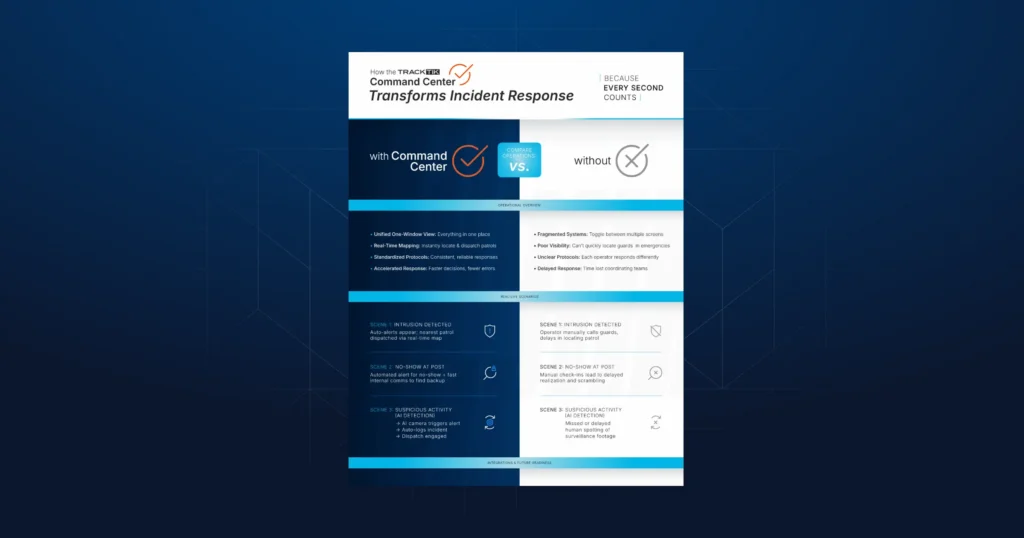
- Real-time coordination. The TrackTik command center brings alerts, incidents and officer activity into one view, so supervisors can respond while a situation is still developing.
- Officer safety. Mobile check-ins and alerts help protect officers working alone or at remote posts. Learn more about how to keep security guards safe.
Warning Signs That Awareness Is Slipping
Complacency rarely announces itself. Watch for these signs in your team and in your data:
- Patrols completed much faster than the route allows
- Checkpoints missed at the same time on several shifts
- Incident reports that are vague, copied from earlier shifts or missing photos
- Few or no observations logged at a busy site
- Officers who cannot describe recent changes at their post
TrackTik business intelligence surfaces these patterns across sites and shifts, so supervisors can coach early, before a missed detail turns into a missed incident.
Summary: Situational Awareness Essentials
- La conscience situationnelle est difficile à acquérir, mais facile à perdre. Elle exige de la pratique et un effort conscient.
- Faites attention aux événements inhabituels.
- Soyez attentif aux comportements inhabituels des civils, des employés et des membres de l'équipe qui vous entourent.
- Adoptez une approche proactive en matière de collecte d'informations.
- Agissez rapidement dans une situation compromettante et communiquez efficacement.
- Comprenez le site sur lequel vous travaillez et les risques courants qui y sont associés.
- Évaluez constamment la situation.
Sources : Guide de formation à la coordination d'équipe de la Garde côtière des États-Unis pour les étudiants
Foire aux questions
Derniers articles

Ressources en vedette
Découvrez Trackforce en action
Réservez une visite avec notre équipe et voyez comment ça s'intègre à votre activité.