Security Enforcement Officer or Security Guard?

Trackforce
March 15, 2019 · 8 min read
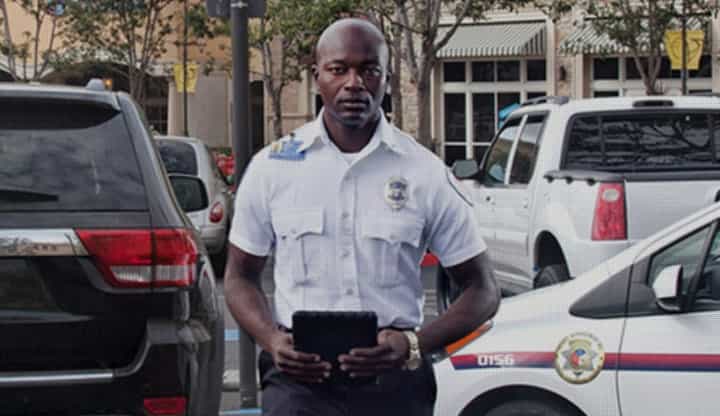
So, what’s the real difference between a security officer and a security guard? Most people in the security industry don’t realize there actually is one. And some will say that if security companies or clients don’t care, why should they? In my opinion, it matters a great deal, and it’s up to us as security professionals to change the language and change the standards of each security guard management system.
There is a big difference in the use of those terms to describe the backbone of the security industry. Most licensing authorities will say that if you’re armed, you’re an officer, and if not then you’re a guard. That’s ridiculous. Does someone really deserve more professional recognition and credit just because they have a gun?
I’ve seen armed guards that didn’t even deserve the title of watchman. Guys with no holsters and .38’s in their pants pockets (during the S&L crisis in the 80’s). I’ve also seen unarmed officers that deserve to be recognized for their excellence.
Key takeaways
- The words we use shape the standards we set.
Calling frontline staff “officers” recognizes a role that has grown far beyond watching a gate. - Licensing language is inconsistent.
Many licensing bodies tie the title to whether someone is armed, and the names for each license vary from state to state. - The modern officer’s job is broad.
Alarm and CCTV monitoring, patrols, access control, customer service and reporting are all part of a typical shift. - Professionalism is earned on every shift.
Alertness, appearance, judgment and well-written reports are what separate an officer from a “guard.” - The right tools raise the standard.
TrackTik gives officers digital post orders, verified tours and AI-assisted reporting, so professional work is visible to managers and clients.
What’s Wrong With Guard?
Suffice it to say I dislike the term ‘guard’, primarily because it’s taken on a negative connotation that demeans the person doing the work. Also, from a purely grammatical standpoint, guard is a verb. Calling them officers recognizes the variety of responsibilities they have rather than defining them by one simple function.
For much of the past couple centuries, the people entrusted to secure facilities didn’t do a whole lot. They sat in their ‘shack’, another term I dislike. They were either the stereotypical fat or stupid ‘watchmen’ of the Andy Griffith Show or worse, thugs in uniforms with pistols. They smoked, drank coffee or booze, and ignored their duties. Their function was to be visible more than anything else. Today’s modern world calls for security officers who do so much more than just sit.
The modern security officer, in most cases, is charged with so much more than just the front gate and fire watch. Officers have to monitor fire, burglar, hazardous chemical, heating/cooling, alarms, and CCTVs. They make extensive patrols through hazardous areas, maintain access control, provide customer service, and remain constantly observant.
Depending on where an officer is working, they may be entrusted to hundreds of millions of dollars worth of assets for the company. That calls for a professional officer who can think and act like a professional.
Why Officers Deserve Respect
So what makes a security officer different than a security guard? How many people will walk through a dark warehouse filled with chemicals that could literally kill them if they spilled or were inhaled? Officers do it as part of their duties and don’t think twice about it. Why? Because it’s their job, and it has to be done.
Modern security officers are, at the very least, high school graduates. In a few cases, they have college degrees or additional studies behind them. They are intelligent, street smart, capable of thinking proactively, and they handle crisis situations regularly. They are taught to use their heads to defuse a situation instead of a .38. The days of warm body posts, when anyone who could fill a uniform was put at a post, are long gone. To be successful as an officer nowadays, you must possess key characteristics to set yourself apart from the rest.
They want to improve themselves, even if most managers don’t want to believe it. They will read security magazines, if offered, and they want additional training, whether the company offers it or not. They keep their pants around their waist, not their butts. Their shoes are shined, uniforms complete, and you can’t tell what they had for lunch by looking at their shirt. And because much more is expected of them, they are more alert and observant.
At this point it is up to us in the security field to begin to acknowledge that these men and women are officers and not guards, no matter what the licensing requirements may say. We should treat them with the respect befitting an officer, a topic for another post. And of course, this means the officers themselves need to improve their deportment and job performance as well.
Security guard vs security officer at a glance
The title matters less than the standard behind it. Here is how the traditional idea of a “guard” compares with what clients expect from a modern security officer.
| Aspect | The traditional “guard” | The modern security officer |
|---|---|---|
| Primary role | Be visible at a fixed post | Prevent, detect, respond to and report on activity across a site |
| Typical duties | Watch a gate or door | Patrols, access control, alarm and CCTV monitoring, customer service and incident response |
| Decision-making | Follow a narrow set of instructions | Use judgment to de-escalate and adapt to changing situations |
| Training | Minimal and one-time | Site-specific and ongoing, with certifications tracked |
| Tools | Logbook, flashlight and radio | Mobile app with post orders, checkpoint tours and incident reporting |
| Reporting | Handwritten notes, if any | Clear, timestamped digital reports that clients can trust |
| How performance is measured | Was someone there? | Verified tours, response times and report quality |
What the licensing terms actually mean
Part of the confusion comes from licensing itself. Every state sets its own rules, and the names vary. Some call the base credential a “guard card,” others a “security officer” license, and some reserve special titles for armed roles. In most states the structure looks similar: a base license for unarmed work, with additional permits for firearms and specialty assignments. Our security guard license guide breaks down the common license types and what each one requires.
Be An Officer, Not A Guard
The respect you want can be yours as security enforcement officers and not guards, but you have to work for it. Respect will never be handed to anyone simply for wearing a uniform or carrying a firearm. You have to prove that you are worthy of being called an officer. How, you ask, do I do that? It’s simple.
Do your job. Don’t give special favors, follow the orders of management or the client, and be alert and observant. Make recommendations for change if you see something not working. Let them know, by showing it, you’re not an automaton and can think and react to changing situations. Study, as often as you can, the field and the client’s business as well.
There are multiple aspects to focus on when aiming to develop a great security patrol system. Pay attention to the subtle changes on your assignment. Keep the uniform in serviceable condition. Write your reports in a professional manner. Be friendly but firm when telling someone they can’t enter. It’s all these little things, along with a healthy dose of common sense, that distinguishes the professionalism of a security enforcement officer from the ordinariness of a guard.
How to build a team of professional security officers
Officers earn respect on the job, but companies set them up to succeed. These steps help every officer on your roster work like a professional.
- Hire for the post. Match candidates to the site, since a lobby, a warehouse and a remote substation call for different strengths.
- Train for the site, then keep training. Combine site-specific onboarding with regular refreshers, and track certifications in TrackTik People Management.
- Put clear post orders in every officer’s pocket. With TrackTik Guard Management, officers can read site instructions on their phone before and during every shift.
- Verify the work. Checkpoint tours prove patrols happened and give good officers credit for the work they do.
- Make professional reports the default. ReportPro AI helps officers turn quick field notes into clear, complete reports.
- Recognize performance with data. Use Business Intelligence dashboards to spot your best officers, not just your problems.
- Invest in keeping them. Officers who feel respected and see a path forward stay longer. See why security guards quit, and what makes them stay.
Frequently Asked Questions
Latest Articles





Featured Resources





See Trackforce in action
Book a walkthrough with our team and see how it fits your operation.