NewTrackforce is now home to TrackTik, GuardTek and Silvertrac.See what's changed →
Why Security Guards Are Still Walking Out the Door in 2026
(And What Actually Gets Them to Stay)
Trackforce
September 22, 2026 · 8 min read
If you’re running a security operation, you already know the guard you hired six months ago probably isn’t the guard covering that shift today. The industry’s turnover problem hasn’t leveled off. It’s gotten worse.
A UC Berkeley Labor Center report found annual turnover in the U.S. security services industry hit 88.6% in 2024, compared with 66% across the private sector overall. ASIS International puts industry-wide turnover at 77% for the same year, and some contract security firms report rates as high as 300%, meaning they’re replacing their entire guard force three times over in a single year. The Bureau of Labor Statistics projects essentially flat employment growth for security guards through 2034, yet the industry still generates roughly 162,300 job openings a year. That gap tells you everything: this isn’t a hiring problem. It’s a retention problem, and it’s expensive.
The cost adds up fast
Every guard who walks takes recruiting spend, background checks, drug testing, uniforms, and training hours with them. Add in the overtime you’re paying current guards to cover the gap, the SLA penalties when coverage slips, and the client relationships strained by a rotating cast of unfamiliar faces, and the true cost of turnover runs well past the recruiting line item on a budget.
The guards themselves aren’t leaving for one reason. Pay tops the list, especially in high-cost markets where entry-level security wages haven’t kept pace with hospitality, retail, or gig work. But engagement matters too. Guards in low-stimulation posts disengage. Guards who face hostile public interactions without support burn out. Guards who get minimal training feel unprepared and look for employers who invest in them. While none of this is new, what’s changed is how much leverage guards now have to act on it.
Proof that intervention works: the SFO example
Skeptical that wage increases actually move the needle? San Francisco International Airport raised security guard wages from $6.45 to $10 an hour and watched turnover drop from 94.7% to 18.7%. This documented before-and-after at a single site is one of the clearest data points available showing that retention responds directly to compensation decisions.
Raising wages across the board isn’t realistic for every firm’s margins, though. That’s where secondary levers come in: signing bonuses, tenure-based raises, better benefits, commuter passes, and flexible scheduling all show up in retention data as meaningful, even when a full wage overhaul isn’t on the table.
What’s changed since the old playbook
A handful of newer strategies are gaining real traction in 2026, beyond the standard compensation and culture advice.
Predictive retention over exit interviews. By the time a guard sits down for an exit interview, the opportunity to keep them is already gone. Firms are starting to use scheduling data, attendance patterns, and overtime load to flag guards who show early signs of disengagement, so managers can step in before a resignation letter shows up.
Wage transparency as a retention tool, not just a recruiting one. Guards can check ZipRecruiter and BLS wage data as easily as employers can. Firms that post honest, competitive pay ranges upfront are seeing less early-tenure attrition, because guards aren’t discovering three months in that they’re underpaid relative to the market.
Scheduling control that mirrors gig work. When guards compare security jobs to rideshare or delivery work, they’re not only comparing pay. They’re comparing how much say they have over their own hours. Self-service shift swaps and choice-based post assignments are proving to be a retention lever in their own right, separate from what’s on the paycheck.
Mental health support without stigma attached. Security guards regularly deal with hostile or upsetting interactions as part of the job. Firms that offer counseling and stress management, and actively work to remove the stigma around using them, are seeing guards stay longer and burn out less.
Where technology fits into the picture
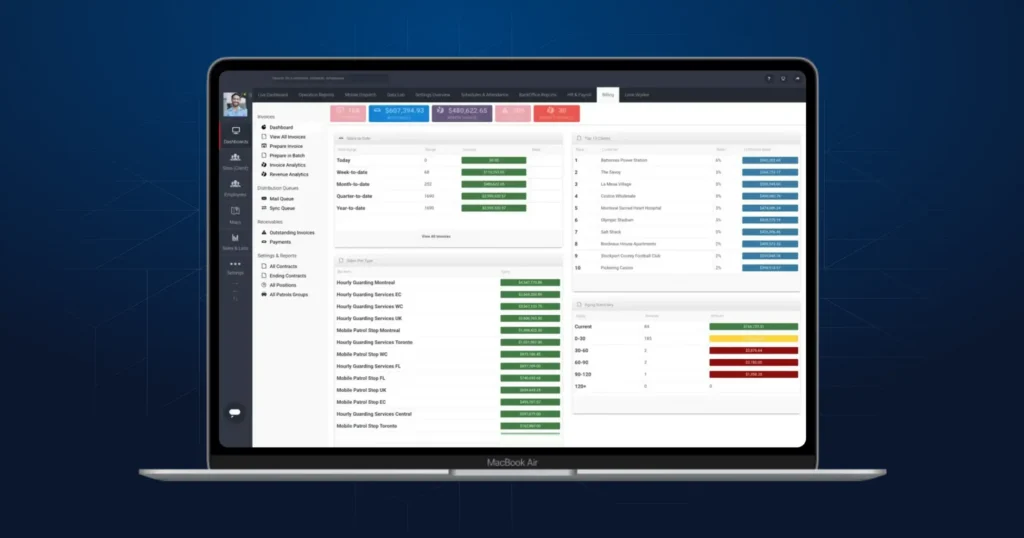
None of these strategies require guesswork if you have the right visibility into your workforce. Security workforce management platforms like TrackTikautomate scheduling, payroll, and billing so managers spend less time on manual follow-ups and more time on the things that actually affect retention: training, recognition, and one-on-one conversations with guards about where they want their career to go.
“We’re maintaining an impressive 80% employee retention rate, thanks in part to enhanced insights into workforce trends that TrackTik offers.”
Ashlee Cervantes, CEO Guardian Protection Force Inc.
Where to go from here
Turnover in this industry isn’t going to fix itself, and the data suggests it’s trending in the wrong direction, not the right one. The firms pulling ahead are combining the fundamentals (competitive pay, real training, a workplace where guards feel heard) with better visibility into their own workforce data, so they can act before a good guard is already gone.
For a full breakdown of the root causes behind guard turnover and a step-by-step approach to building a retention strategy that works, download The Ultimate Guide to Retaining Your Security Guards.
Security guard retention lags behind most industries because the job combines low starting wages with high-stress demands: hostile public interactions, night and weekend shifts, and long stretches of low-stimulation work. Guards who can find comparable or better pay in hospitality, retail, or gig work often do, which keeps turnover well above the cross-industry average.
Given that industry-wide turnover regularly runs between 50% and 90% annually, and some contract firms see rates as high as 300%, a retention rate in the 75-85% range is strong. Firms using workforce data to catch disengagement early, rather than relying on exit interviews, tend to land in that range.
Yes, and the effect can be dramatic. When San Francisco International Airport raised security guard wages from $6.45 to $10 an hour, turnover dropped from 94.7% to 18.7%. Pay isn’t the only lever, but it’s consistently the one with the clearest, most measurable impact.
Every guard who leaves adds to the hiring workload: sourcing, background checks, drug testing, and onboarding all have to happen again, often for the same open post. Firms stuck in high-turnover cycles end up spending most of their hiring capacity on replacement rather than growth, which makes it harder to staff new contracts or scale up.
Signing bonuses, tenure-based raises, flexible scheduling, and choice-based post assignments all show measurable retention gains even when a full wage increase isn’t feasible. Investing in training and clear paths to promotion also matters. Guards who see a future with a firm are less likely to leave for a marginally higher hourly rate elsewhere.
Workforce management platforms like TrackTik give managers visibility into scheduling, overtime, and attendance patterns that often signal disengagement before a guard resigns. That data lets firms intervene earlier, and features like self-service scheduling and easy access to pay and timesheets remove the everyday friction that quietly drives guards to look elsewhere.
Beyond experience and certifications, hiring managers get better retention outcomes when they screen for fit with specific post types (foot patrol versus guard booth, solo work versus team-based roles) and are upfront about pay, schedule, and growth opportunities during the interview. Mismatched expectations at hiring are one of the most common, and most avoidable, drivers of early turnover.