Keys to a Successful & Engaging Security Officer Training Program

Trackforce
September 14, 2015 · 9 min read
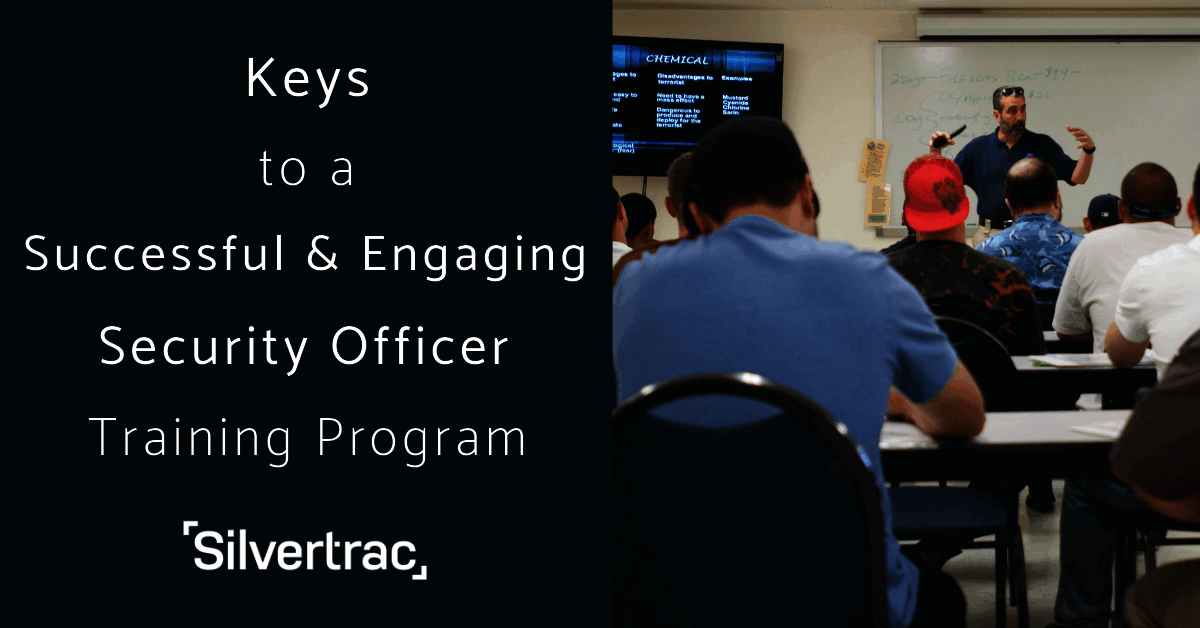
How do you know if your employees are going to learn and, more importantly, retain what you teach them? It’s never an easy question to answer. I’ve done it for 32 years so I know first hand that it’s not easy. However, over the years I have learned a few things that help me keep security officers engaged during a live training session. Here are some tips that you can apply to your program that will help you achieve the same results.
Key takeaways
- The instructor matters most.
An engaging instructor can make any material work, and a dull one can sink great content. - Materials should support, not replace, teaching.
Hours of videos and handbooks lose officers’ attention fast. - Blend proven methods.
Keep it simple, use questions to make officers think, and open with a story they can’t ignore. - Learning has to continue on the job.
Post orders on the officer’s phone, real-incident scenarios and short refreshers make training stick. - Track it so nothing lapses.
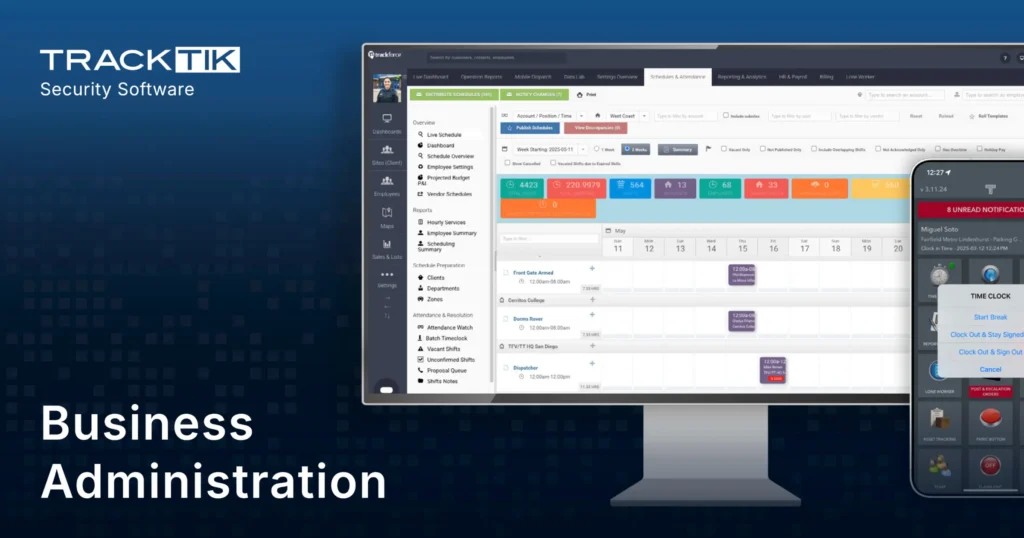
TrackTik tracks training, licenses and certifications, alerts you before they expire and checks credentials at scheduling.
Quality Instructors
Anyone can teach a security officer training class. I would say even a chimp can teach a class of employees something and possibly be more effective than some of the consultants/trainers I’ve listened to.
The first step to creating the best security guard training program possible is finding a great instructor and materials list. Without those tools, you can’t successfully train anyone on anything.
It doesn’t matter if you utilize videos, books, manuals, handbooks, PowerPoint presentations, or cartoon characters. If your instructor is as interesting as a cow patty it simply won’t work. But I have also seen people who could read the phone book and keep you interested like a Stephen King novel.
It’s about the instructor not necessarily the material. The best instructors will find ways to keep their audience involved in what is being taught.
Taking Action: Do your best to find a security training instructor that is personable, engaging, and excited about the class they’re teaching.
Effective Materials
Having your officers simply watch videos for 8 hours straight is boring and won’t end up producing the desired results. If the goal is to improve the level of service an officer can offer to your client in the field, sitting them in a room with a video and a handbook isn’t the most effective solution.
Now I’m not saying you have to exclude videos all together. But they should be used as a supplement to the instructor, not a replacement.
Videos, handbooks, posters, and the like can be very effective in training. The unfortunate part is that they are overused to such a degree that most officers don’t pay attention to them after the first few hours, whether they know the material or not. This can often lead to poorly trained officers, and poor retention of your contracts.
Taking Action: Use training materials like videos, handbooks, and PowerPoints as a tool to complement the instructor’s efforts. Make sure that the tools you decide to use help you achieve the desired outcome. Don’t simply use video because everyone else is.
Security Officer Training Methods
The training method you utilize also has a great deal to do with how well it is received and retained by your officers. I use 3 different methods all melded together in my classes.
1. Keep It Simple (KISS)
The first method I use is an oldie but a goodie: KISS, or Keep It Simple, Stupid. This should be a commandment for everyone who trains people. Keep your training simple! It doesn’t matter if you’re training security officers, supervisors or C-suite executives. Keep it simple.
The reasoning for this is just as simple. You are training your participants on something they may not know much about, so you need to keep it at a basic level and build on it as you go along. Even C-suite MBAs need you to build on your subject slowly and let them absorb what you’re teaching.
2. The Socratic Method
The second method I use is called the Socratic Method. It is a simple yet very effective way of teaching people. In essence, they train themselves. Instead of giving them the answers, I ask open-ended questions and have them tell me the answers.
If they don’t know the answers, they sit and stew for a few seconds. But in the process, they throw out answers that are both right and wrong, and I tell them whether they are on the right track. This lets students engage in the learning process and take part in discovering new material.
Again, it’s a matter of drawing the correct answer out of them and making them think it through. Depending on who you’re training, they may overthink the answer and never get on the right track, or keep it basic and get it on the first try. It also encourages them to build on each other’s answers to find the right one.
3. Start With a Hook
Lastly, I use a shock method of training. I usually start my classes with a hook that can’t be ignored. Officers need to understand why they are in the course and what’s in it for them.
Start with a story or example that gets everyone’s attention. It makes them sit up, take notice and wonder what’s going to happen next. While it may be a bit theatrical and dramatic, it is effective.
Training Methods Compared
The best programs mix methods based on what officers need to learn. Here is how common approaches compare.
| Method | Best for | Watch out for | Make it stick |
|---|---|---|---|
| Instructor-led classroom | Fundamentals, policies and discussion | Long lectures and passive videos | Use questions and real stories throughout |
| Socratic questioning | Judgment and decision making | Quieter officers getting left out | Call on everyone and build on answers |
| Scenario drills and role play | De-escalation and emergency response | Scenarios that feel unrealistic | Base drills on real incidents from your sites |
| Site-specific, on-the-job training | Post orders and site layout | Inconsistent trainers | Pair new officers with experienced ones and use a checklist |
| Short refresher sessions | Keeping skills current | Being skipped when schedules get busy | Schedule them and track completion |
| Simulation and VR | Practicing high-risk situations safely | Cost and setup time | Use for scenarios you can’t stage live |
Make Training Stick on the Job
Classroom training is only the start. Officers remember what they use, so reinforce it in the field.
- Put post orders in officers’ hands. Digital post orders on the TrackTik guard mobile app let officers check site instructions anytime.
- Train on real incidents. Use your own incident reports to build scenarios officers will actually face, including de-escalation and critical event response.
- Pair new officers with experienced ones. Shadow shifts turn classroom rules into site habits.
- Schedule short refreshers. Brief, regular sessions keep skills sharp better than one long annual class.
- Rehearse high-risk situations safely. Simulation and VR are among the physical security technologies transforming private security.
Track Training So Nothing Lapses
Even the best training program fails if certifications expire unnoticed. TrackTik helps you stay compliant by tracking guard licenses, certifications and training, alerting you before they expire and checking credentials when scheduling. TrackTik people management then matches skills and certifications to every assignment. For more, see how to eliminate training gaps with integrated officer management tools.
How to Measure Whether Training Worked
- Report quality: Are reports complete and consistent? TrackTik ReportPro AI helps officers write clear, compliance-ready reports.
- Tour completion: Are officers completing rounds and checkpoints as trained?
- Incident handling: Are incidents resolved correctly and on time?
- Client feedback: Are clients noticing better service?
- Retention: Well-trained officers stay longer, as these security guard retention strategies show.
Track these over time with TrackTik business intelligence dashboards, so you can see which training changes make a real difference.
Summarizing the Main Points
- The instructor is a critical part of the process. Without a good instructor you’re fighting an uphill battle.
- Choose your training material carefully. Get rid of the extra and focus on what’s necessary to deliver the desired result.
- Keep it simple.
- Engage your students in an interactive learning environment.
- Reinforce training on the job and track it so nothing lapses.
Ready to keep every officer trained, certified and ready? Book a TrackTik demo to see it in action.
Frequently Asked Questions
Latest Articles


Featured Resources

See Trackforce in action
Book a walkthrough with our team and see how it fits your operation.