4 Ways Security can Reduce Workplace Violence in Healthcare

Trackforce
September 10, 2026 · 7 min read
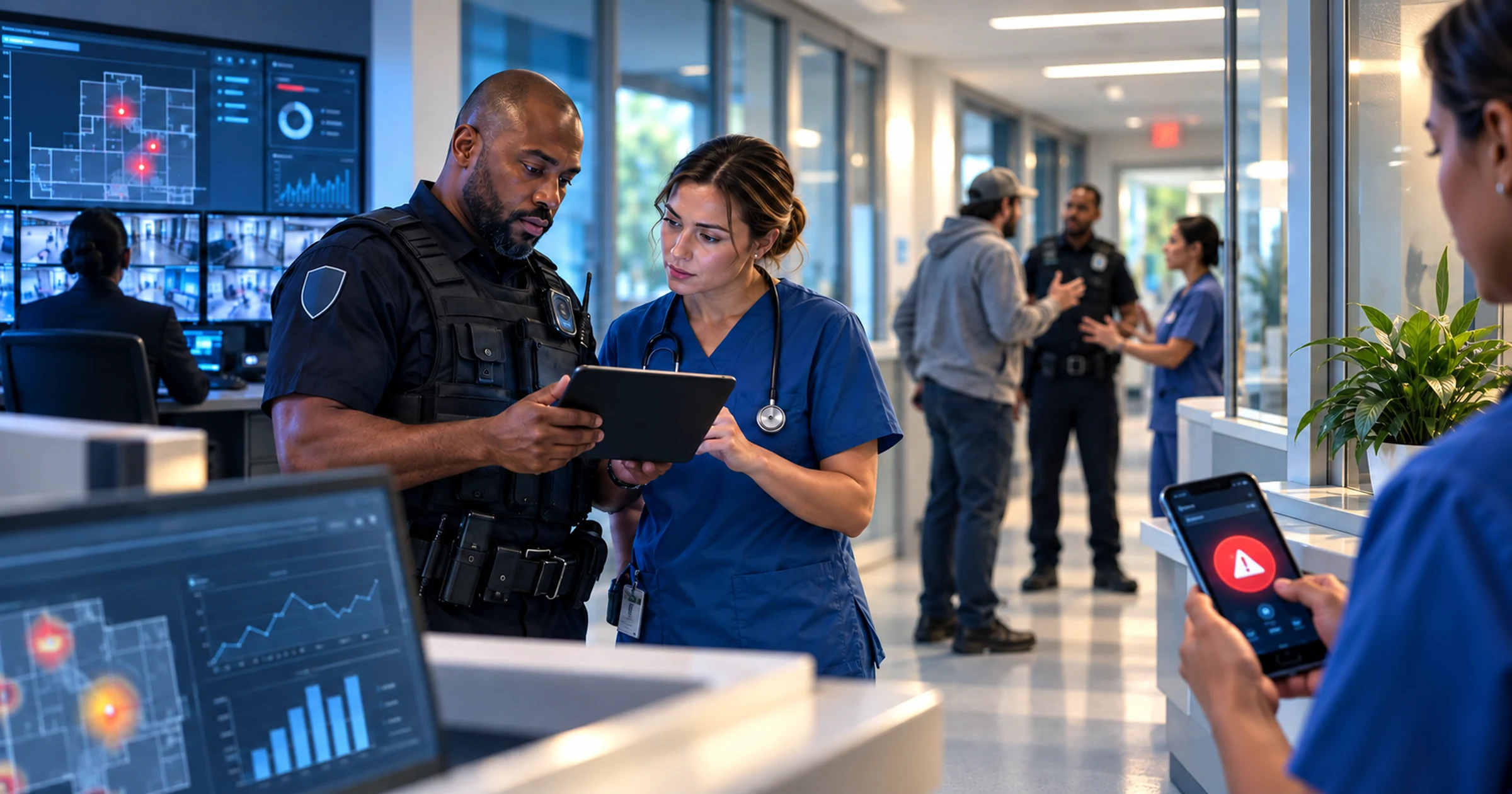
Healthcare workers face a disproportionate share of workplace violence, and the risk isn’t easing. Nurses, techs, and frontline staff continue to absorb verbal abuse, threats, and physical assault as part of daily patient care, often without a clear path to report it or a system that captures what happened.
For corporate security professionals, that gap is the opportunity. New processes and tools can help teams combat and mitigate workplace violence in healthcare settings, protecting the people delivering care while giving leadership a documented, defensible record of the program at work.
Key takeaways
- Underreporting is the root problem, not a side effect.
Only about 4 in 10 nurses say their employer gives them a clear way to report an incident, so security teams are planning against an incomplete picture of their own units. - Where the report starts decides how fast the response moves.
An officer filing from the scene reaches the command center in seconds. A handwritten note filed at the end of a shift arrives long after the response window has closed. - Scattered records cannot be analyzed.
Officer reports, dispatch actions, and staff alerts only become risk intelligence when Trackforce holds them in one connected operational record. - Clinical staff are the widest sensor network you have.
Panic buttons and discreet mobile reporting let a nurse or technician reach security without escalating the moment in front of a patient. - Trend data is what proves the program.
Consistent incident capture turns a vague sense that something changed on a unit into a question a CSO can answer for a governing board or an accreditation surveyor.
The Scale of the Problem
More than 1 in 4 nurses report being physically assaulted at work in the past year, and most of those incidents go unreported. That underreporting isn’t a minor gap: over a third of RNs say workplace violence on their unit has increased in the past year, while fewer than 7 percent report it decreasing.
Part of the problem is structural. Fewer than 1 in 5 nurses say their employer includes staff in violence risk assessments, and only about 4 in 10 say their employer provides a clear way to report incidents. Without a consistent reporting process, security and safety teams are working from an incomplete picture of what’s actually happening on their units.
The financial exposure is significant too. The American Hospital Association‘s most recent analysis put the total financial cost of violence to U.S. hospitals at roughly $18.27 billion a year, covering health care treatment for victims, security staffing, and violence prevention programs and training.
Securing Healthcare Facilities Is a Standing Priority
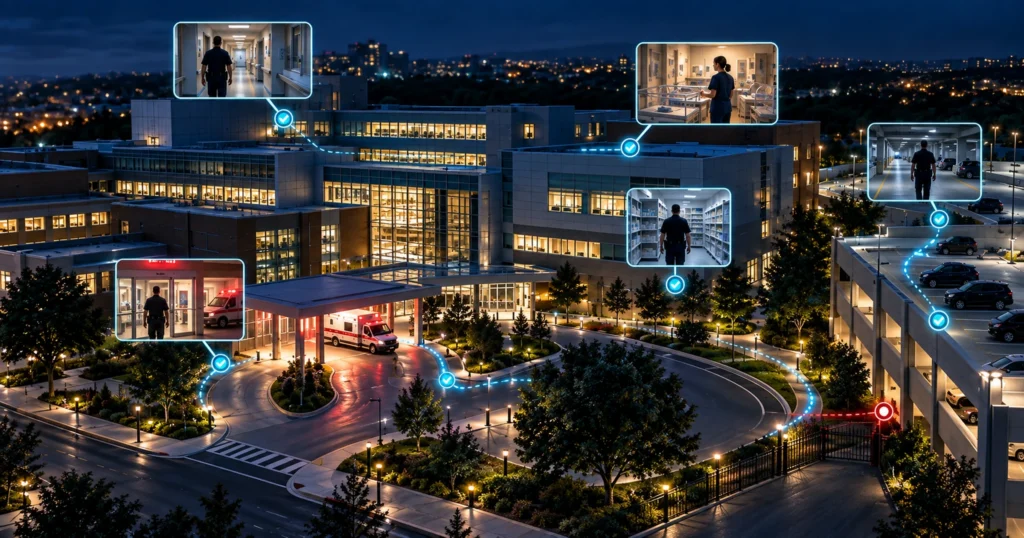
Controlling who enters and exits a healthcare facility remains critical for security. Unauthorized visitors threaten both patient and employee safety, and a real-time, accurate visitor list, showing who’s authorized versus who isn’t, is essential in buildings that never close.
Emergency preparedness matters just as much. Security teams need a plan that works in real time, so they can establish situational awareness and respond to patient and employee threats as they unfold rather than after the fact.
4 Ways Security Can Mitigate Risk in Healthcare
When security professionals put the right people, processes, and technologies in place, they build a more responsive environment where officers can address threats effectively. Four tools make the biggest difference:
- Real-Time Officer Reporting Officers on patrol or responding to an incident need a way to record and report information accurately and fast. Reporting directly from the scene gets information to the command center sooner, so response decisions aren’t delayed by a handwritten note filed hours later.
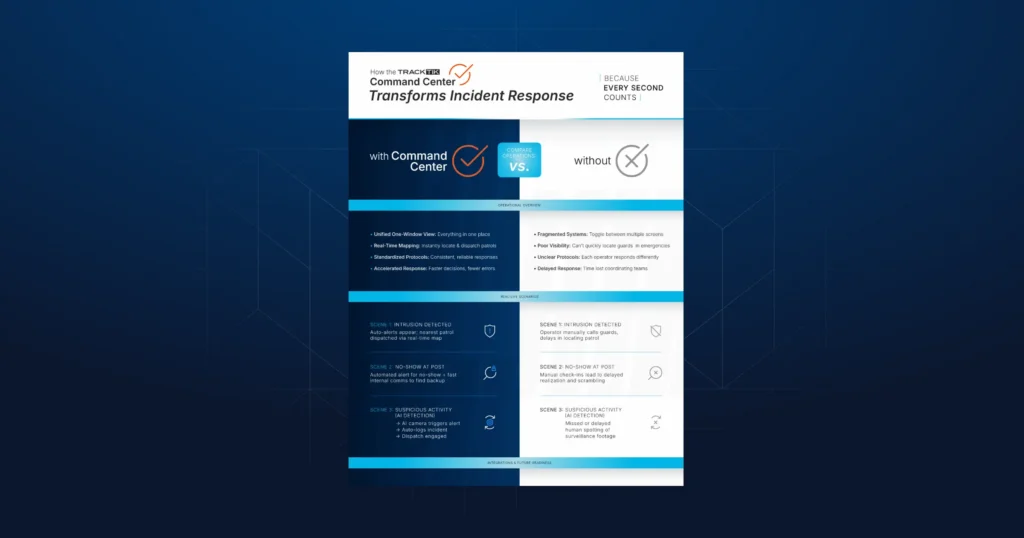
- Centralized Command Center for Immediate Response Just as officers transmit information in real time, the command center needs that same information immediately to respond appropriately, whether that’s sending reinforcements or alerting local authorities. An active, centralized response is critical to de-escalating a situation before it grows.
- Incident Data for Risk-Based Analysis Incidents and response actions are only useful if they’re centralized and reviewed over time. A consistent record of incident types and responses gives security teams the trend visibility they need to reduce future risk through more proactive processes and tools, turning “what changed on our unit” from a research project into a query.
- Employee Reporting Tools Giving employees a direct way to flag suspicious behavior or a potential security risk turns every staff member into a source of intelligence. Panic buttons and discreet mobile reporting functions give employees a fast, low-friction way to alert security before a situation escalates.
Building a Program You Can Prove
Healthcare workers carry an enormous responsibility, and the threat of workplace violence adds real strain on top of it. Security teams that build in the right processes and tools take that risk off the table by giving clinical training and staffing decisions the operational record underneath them: consistent incident capture, real-time response, and trend data that shows the program is working.
With the right healthcare security software, security professionals can turn scattered incident reports into one connected record, the kind a CSO uses to run the program day to day and the kind a governing board or accreditation surveyor asks for when it’s time to prove the work is happening.
Frequently Asked Questions
Latest Articles



Featured Resources
See Trackforce in action
Book a walkthrough with our team and see how it fits your operation.