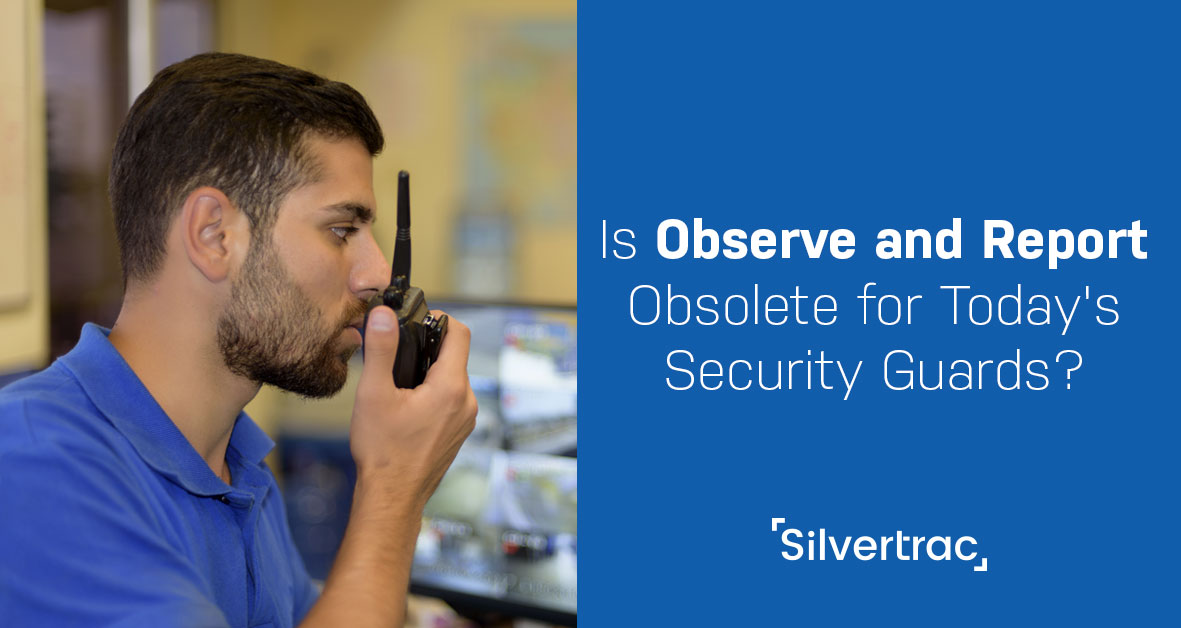
Is Observe & Report Obsolete for Today’s Security Officers?

Trackforce
November 1, 2018 · 8 min read
On August 26th, 2018, a gunman opened fire at a Madden NFL gaming tournament in Jacksonville, FL, killing two people and injuring ten others. Following the incident, a survivor decided to sue the venue and the game publisher, claiming that they failed to provide enough security.
But even if there had been more security officers on duty that day, would they have been able to do anything about the incident?
Key takeaways
- Observe and report has limits.
Officers who only watch and call for help can be blamed when an incident escalates. - Intervention carries risk too.
Officers who step in can face use-of-force claims and negligence lawsuits. - There is a middle path.
Many firms define specific responses, like de-escalating or evacuating, for specific situations. - Post orders and training must match.
Never ask officers to do more than they are trained, licensed and authorized to do. - Documentation protects everyone.
TrackTik records what officers saw and did with time-stamped photo, video and GPS evidence.
What Does Observe and Report Mean?
Observe and report is a post order policy that limits an officer’s role to watching for problems and reporting them, usually to a supervisor, the client or law enforcement, without physically intervening. It has long been the default for security firms providing unarmed contract security, because it keeps officers out of situations they are not trained, equipped or authorized to handle.
The policy protects officers and limits liability, but it can leave a gap when an incident escalates faster than help can arrive. The cases below show both sides of that tension.
Damned If You Do, Damned If You Don’t
In 2010, a Kraft Foods employee opened fire on her coworkers at a plant in Philadelphia, killing two people. During the incident, the security officers and supervisor on duty called 911, but did not intervene. The families of the deceased sued the security company, winning $46.5 million in damages (most of which was tossed out on appeal seven years after the incident).
The security officers were following the old contract security policy of “observe and report.” By that policy, you could argue the officers did their jobs by reporting the incident to the police and then hiding to protect themselves.
Security officers are in a tricky position, because their ability to injure or restrain dangerous individuals is usually limited.
“Private security officers, as a result, end up being put in a no-win situation,” writes Laura Spadanuta in Security Management Magazine. “If guards do intervene, they may be criminally charged for excessive use of force or once again, sued for negligence.”
So, if there were more security officers present in Jacksonville on the day of that shooting, how should they have handled the situation?
Above & Beyond
Back in 2015, we interviewed Robert Sollars, an author, security consultant, and expert on workplace violence. We talked to him about the Kraft Foods lawsuit.
“Sometimes you need to go above and beyond what your post orders say in order to protect the lives and assets of the client that you’re protecting,” said Sollars. He added “There’s always an opportunity to either de-escalate or talk them down from doing what they’re doing.”
In an ideal world, security officers would be trained to safely intervene and de-escalate dangerous situations. However, when many officers are being paid minimum wage, and turnover rates are estimated to be between 100% and 400% annually, this kind of training just isn’t feasible for many security companies.
Three Post Order Models Compared
Most firms do not have to choose between all or nothing. Many now use a middle path, with clearly defined responses for specific situations.
| Model | What officers do | Typical fit | Main risk |
|---|---|---|---|
| Observe and report | Watch, document and call for help without intervening | Unarmed posts, lower-risk sites and officers with limited training | Seen as inaction when an incident escalates |
| Observe, report and respond | Follow defined actions for specific situations, such as de-escalating, evacuating or securing an area, while help is on the way | Most commercial, residential and public-facing sites | Requires clear post orders and regular training |
| Active intervention | Physically intervene to stop a threat within their legal authority | Armed or specially trained officers with explicit client authorization | Higher use-of-force and liability exposure |
How to Write Post Orders That Protect Officers and Clients
- Define authority by situation. Replace a blanket “observe and report” with plain-language guidance for each type of incident.
- Spell out the likely incidents. Cover the situations most likely at that site, such as trespassing, a medical emergency, a fight or an active threat.
- Name the escalation path. List who to call, in what order and how quickly.
- Match the order to the officer. Never ask officers to do more than they are trained and licensed for, and review these practices for keeping security guards safe.
- Train and refresh. Build de-escalation, communication and situational awareness skills, then refresh them regularly.
- Agree with the client in writing. Make sure the client’s expectations match what officers are actually authorized to do.
- Deliver post orders digitally. Digital post orders help officers understand their tasks and let you confirm they have read them.
Documentation Is the Officer’s Best Protection
Whatever model you choose, the record of what officers saw and did is what protects them, the company and the client when an incident is questioned later. Trackforce built TrackTik to make that record complete.
- Post orders on every phone. TrackTik guard management sends post orders straight to officers’ mobile devices, so nobody works from an outdated binder.
- Evidence that holds up. Security incident reporting guides officers through each report and attaches time-stamped video, photo, audio and GPS evidence that holds up, even in litigation.
- Clear, consistent write-ups. ReportPro AI helps officers turn rough field notes into clear, accurate reports.
- Help on the way, fast. A panic button alerts the command center, and security guard dispatch sends the closest available officer.
- Immediate escalation. Automatic email or text notifications reach supervisors, clients and third parties the moment an incident is reported.
This article is general information, not legal advice. Officer authority and use-of-force rules vary by state and country, so review your policies with legal counsel and your licensing requirements.
Want to see how TrackTik documents every incident from first observation to final report? Book a TrackTik demo.
Frequently Asked Questions
Latest Articles

Featured Resources
See Trackforce in action
Book a walkthrough with our team and see how it fits your operation.