The Best De-escalation Tips for Private Security Companies

Trackforce
June 30, 2020 · 12 min read
Keeping people and property protected is the most important service that private security provides.
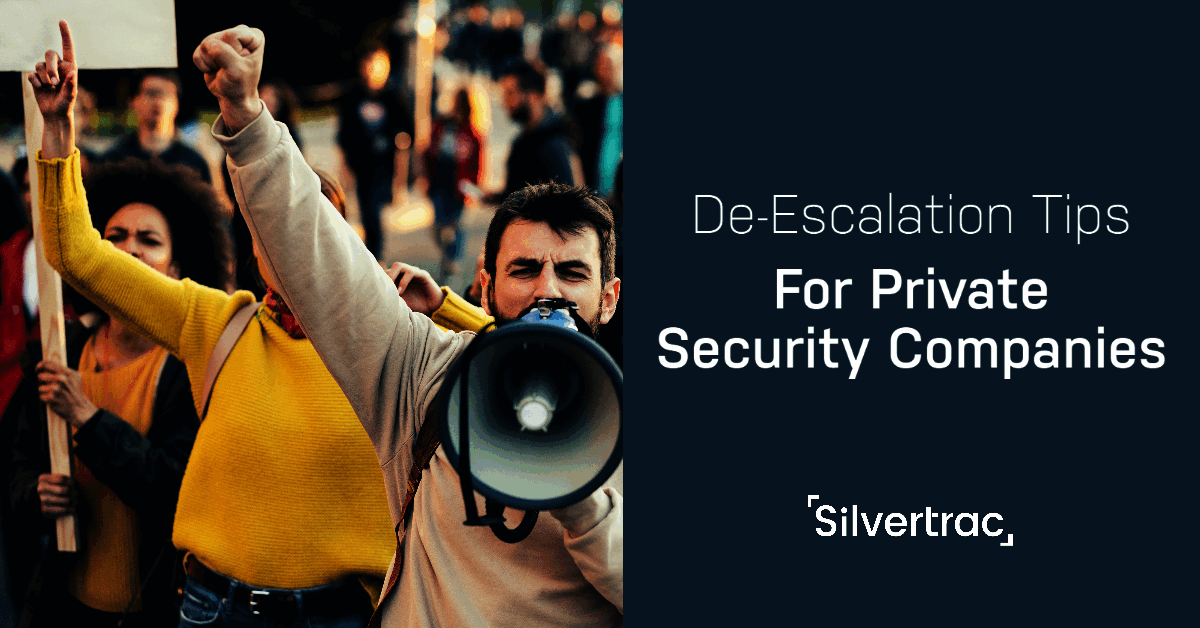
In any tense situation where there’s potential for violence, de-escalation needs to be the priority, not just one of many options. To make sure this happens, your entire security operation needs to be on the same page about how to respond to and de-escalate tense situations.
This article will cover some basic strategies your security guards can use to keep tense situations calm and prevent violence or injury.
Once you start implementing these strategies in your operation, training your officers on them should be the highest priority. Well-trained guards, supervisors, and managers will be able to better execute de-escalation strategies.
Key takeaways
- Spot the signs early.
Yelling, clenched fists and invaded personal space are obvious. A rising tone of voice and laughter at odd times are easier to miss. - Follow a plan, not instinct.
A rehearsed sequence of prepare, understand, listen, communicate, collaborate, document and debrief keeps officers calm and consistent. - How you say it matters as much as what you say.
Tone of voice, distance and body language do most of the work in a tense moment. - Avoid the phrases that backfire.
“Calm down,” threats and false promises almost always make a situation worse. - Document everything, then learn from it.
TrackTik incident reports capture time-stamped photo, video, audio and GPS evidence, and every debrief makes the next response better.
Escalation Warning Signs
In the private security industry, there’s a good chance your security guards will be in potentially dangerous situations. That’s why having strong situational awareness is incredibly important.
Here are some of the most common warning signs that a person might escalate a situation in the field:
- Direct threats
- Bragging about previous violent encounters
- Yelling
- Extensive profanity
- Violating security guard’s personal space
- Finger pointing
- Heavy breathing/flaring nostrils
- Making fists
These are the most obvious signs that a situation could escalate. But there are less obvious signs that are just as common:
- Higher tone of voice
- Laughter at odd/inappropriate times
- Refusing to make eye contact
- Tensing body
Make sure your security guards who work in the field are aware of these warning signs. It will make dealing with dangerous situations that much easier.
Warning Signs and How to Respond
Recognizing a warning sign is only useful if officers know what to do next. Use this as a quick reference in training:
| Warning sign | What it may signal | How the officer can respond |
|---|---|---|
| Yelling or a rising tone of voice | Frustration is building | Lower your own voice and slow your speech |
| Invading personal space or finger pointing | An attempt to intimidate | Step back to keep a safe distance and keep your hands visible |
| Clenched fists or a tensing body | Possible preparation for physical action | Create distance, stay near an exit and call for backup |
| Direct threats or bragging about violence | Intent to escalate | Treat it as a safety issue, follow post orders and request backup or police |
| Refusing eye contact or laughing at odd times | Anxiety, distress or possible impairment | Stay calm, keep observing and avoid sudden movements |
7 Steps to De-Escalate Situations
Staying calm in a potentially threatening or dangerous situation is a lot easier said than done. It’s completely normal for security guards to want to fight fire with fire and stand their ground.
But this is only going to make the situation worse. If a guard responds aggressively, the person they’re dealing with will want to respond even more aggressively back.
These 7 steps will help any security operation be better equipped to handle sticky situations and keep everyone safe.
1. Prepare
Having a plan for your security teams to follow in threatening situations has a lot of benefits. Following a plan can minimize mistakes, give officers confidence, and keep them calm. Using past situations to help develop your plans will make them even better.
Things to consider in these plans include knowing when to call for backup, when using physical force should be considered, and how to communicate. Once you have a solid plan in place, make sure all security officers are trained well to implement that plan. With TrackTik, escalation procedures can be sent to every officer’s device as post orders they acknowledge, so every guard on every site follows the same plan.
2. Understand
Whether a security officer is trying to remove someone loitering, a violent criminal, or an aggressive soccer mom, it’s important to look past the person’s actions. Looking at everyone as people first, even in tense situations, will make them feel like someone actually wants to help them.
If anything an officer says or does comes off as judgmental, the person they are trying to calm down will see the situation as a struggle instead of an attempt to find a solution. If the officer’s goal is to keep everyone calm, escalation is a lot less likely.
3. Listen
The #1 rule for listening is to not interrupt. But it’s more than just letting an angry person rant and yell. People need to feel like they’re actually being heard. Security guards dealing with an angry person should practice active listening.
Maintaining eye contact will keep guards focused and show the person that someone is paying attention to them.
Repeating what they say back to them makes sure the security guard knows what the person is trying to say, not just guessing.
4. Communicate
Communication is not just about the words you say. Research on how people read feelings and attitudes suggests words carry only a small share of the message, as little as 7% in one well-known study. The rest comes down to how things are said and body language.
Your security guards need to pay attention to every aspect of how they communicate. Doing things like keeping a calm tone of voice or standing further back will communicate that the security guard is not a threat and wants to help.
When asking questions, giving people plenty of time to respond can make a huge difference. Not only will the security guard be practicing patience and keeping calm, the problem person won’t feel rushed.
5. Collaborate
Even the most aggressive or threatening person is more likely to respond better when they feel like someone is genuinely trying to help them. Again, an officer’s main priority should be peacefully resolving the situation, not using force.
Using phrases like “let’s figure out how we can fix this problem together” shows that the officer is willing to work with the person. Asking questions to better understand why the person is mad in the first place can help the officer come up with the best solution.
Offering solutions to the problem based on what the person has said shows the security officer is actually trying to help or mitigate the situation.
6. Document
Documenting a problem interaction can make all the difference. If the situation turns violent, having documentation can help later on in potential lawsuits or interactions with law enforcement.
Using guard management software like TrackTik will allow security guards to record audio, take notes, and take pictures to make sure the entire story gets told. TrackTik incident reports add time-stamped video, photo, audio and GPS evidence, and ReportPro AI helps officers turn rough notes into a clear, professional account after a stressful encounter.
To keep the situation calm, it’s always best to ask or inform the problem person that they will be recorded. If they start to escalate in response, taking notes and/or making sure backup is nearby are good alternatives. Recording consent laws vary by state, so make sure your recording policy reflects the rules where you operate.
7. Debrief
Talking about tense situations as a team is super important. Getting feedback from guards in the field can help update and improve de-escalation preparedness in the future.
This is a great time to get more buy-in from your security guards since they will get to play a part in developing strategy. Incident data in TrackTik business intelligence also shows where and when tense situations happen most, so you can adjust staffing, training and post orders.
What Not to Do
Knowing what not to do in potentially threatening situations is also important. Here are a few tips of things to avoid when dealing with an escalating situation.
- Don’t make false promises. Promises in general are probably better to avoid.
- Don’t interrupt. This is so important it’s in here twice. Interruption is one of the quickest ways to start escalating an already tense situation.
- Don’t make any type of threat. Again, the goal is to resolve the situation without violence. Threats make that less likely.
- Don’t show visible frustration. The problem person will respond better to an already calm security officer.
- Don’t say stereotypical lines like “calm down” or “just breathe.” These phrases can actually cause a negative response and make the situation worse.
Phrases That Help vs. Phrases That Hurt
Small changes in wording can lower the temperature of a conversation. Here are some swaps to practice in training:
| Instead of saying | Try saying |
|---|---|
| “Calm down.” | “I can see you’re upset. Let’s sort this out.” |
| “That’s the policy.” | “Here’s what I can do for you.” |
| “You need to leave now.” | “Can we step outside so we can talk this through?” |
| “I’m not going to tell you again.” | “Help me understand what happened.” |
| “Why would you do that?” | “Walk me through what happened.” |
When De-Escalation Isn’t Enough: Keeping Officers Safe
Even the best-trained officer cannot calm every situation. When things turn dangerous, officers need a fast way to get help, especially when they work alone. The TrackTik security guard tour app includes lone worker protection built for exactly that:
- Panic button. Sends an immediate alert to the command center and shares the officer’s location, so nearby officers can be sent through TrackTik security guard dispatch.
- Fall and impact detection. Raises an alert if an officer goes down or a device is dropped.
- Danger-zone timer. Triggers assistance automatically if an officer does not check in within a set window.
- Push-to-talk. Turns any device into a two-way radio for instant communication.
If an officer is hurt, follow these steps for what to do if a guard is assaulted on site.
One Last Word
These are great tips for trying to keep situations calm and people safe. But we know this won’t prevent every bad situation from getting out of hand.
Violent and tense situations are inevitable in the private security industry. Having a good grasp on every strategy and option will help security teams have the best response in any situation. Knowing how to respond appropriately will keep your security guards safe and your clients happy.
Working in a hospital or clinic? See our guidance on de-escalating healthcare security situations. To see how TrackTik supports officer safety and incident documentation, book a TrackTik demo.
Frequently Asked Questions
Latest Articles

Featured Resources

See Trackforce in action
Book a walkthrough with our team and see how it fits your operation.