How AGS Protect Built AI Agents That Act on TrackTik
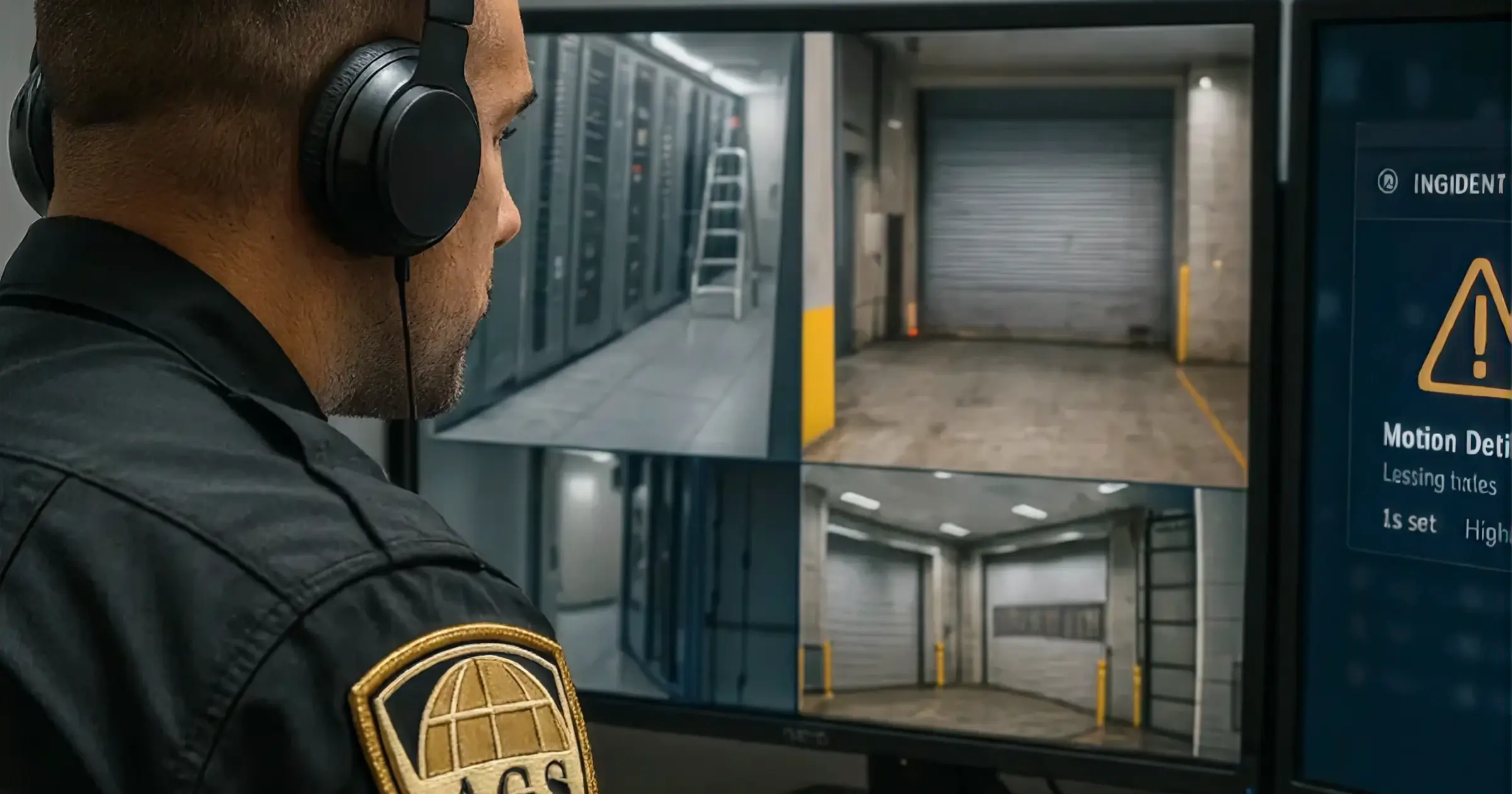
A pioneering security firm layered reasoning AI on top of its system of record. The payoff: recovered revenue, sharper client conversations and an operating model most competitors have not thought of yet.
Most manned guarding companies are still circling AI from a safe distance. AGS Protect is not. The firm has built a working layer of AI agents on top of TrackTik, agents that do not just flag problems but carry a decision through to a finished outcome, always with a person in the loop.
Key takeaways
- Shadow mode first, live schedules second.
The first agent ran for two weeks against real decisions before it could touch a live schedule. - A 90% match became the bar.
Early runs matched schedulers only 30 to 50% of the time. After the reasoning was rewritten, the agent cleared 90%. - TrackTik owns the rules; agents add judgment.
Deterministic workflows stay in TrackTik. Agents sit on top only where judgment adds something a fixed rule cannot. - Revenue that would have been written off.
An audit agent found unbilled contracted overtime and an estimate about to go out roughly $3,000 short. - Client insight that cuts cost.
A security council agent found 36% of overnight dispatches at one property went to a single stairwell. The fix was one camera.
From marketing experiment to operational tool
For Lee Andrews, Founder and CEO of AGS Protect, AI began by supporting marketing in 2023 and grew into something far more operational. The goal was never to replace the team. It was to take pressure off schedulers and dispatchers who were already stretched thin.
“The point was never to take anyone’s job. It was to give our people back the hours they were spending chasing the same problems over and over.”
Lee Andrews, Founder and CEO, AGS Protect
Earning trust before it touched a schedule
The first agent was built to recover coverage when an officer calls out or does not show up. It ran in shadow mode for two weeks before it was allowed near a live schedule. The test was simple: would the agent make the same call a seasoned scheduler would? At first, it did not.
“The early runs only matched our team 30 to 50 percent of the time. I remember thinking, ‘Am I wasting my time here?’”
Lee Andrews, Founder and CEO, AGS Protect
Rather than abandon it, the team rewrote the reasoning behind the agent: the logic it used to weigh skills, proximity, cost and overtime risk. The next week, it cleared 90 percent. That 90 percent match against a real human decision became the bar every agent had to clear before going live.
How the coverage agent works today
- An officer misses a shift, and the agent waits for a set window.
- The agent reaches out to the officer by text.
- If the officer cannot make it, the agent surfaces qualified, available replacements.
- The operations team approves and dispatches, without a scheduler having to spot the gap first.
Agents, not features
The discipline that makes this work is knowing when not to build an agent.
“TrackTik already handles the deterministic work, the rules, the alerts, the open-shift posts. There was no sense rebuilding that. At our scale it would have been far too expensive anyway.”
Lee Andrews, Founder and CEO, AGS Protect
So the team drew a line. TrackTik owns the deterministic workflows in scheduling and dispatch. Agents sit on top only where judgment adds something a fixed rule cannot, and only after the team has tested which ones actually earn their place.
“We’re not asking the AI to reason for itself. We’re feeding it the reasoning our people already use, the human in the loop. Then it operates with approvals from the ops team.”
Lee Andrews, Founder and CEO, AGS Protect
That principle stretches beyond scheduling. AGS is now building agents that generate client-specific training workflows in its learning management system, draft post orders from HubSpot, and send the right training materials to the officers assigned to each account.
Why it all rests on TrackTik
None of this works without a single, trustworthy source of truth, and that is the role TrackTik plays. Certifications, leave time, site requirements, billable hours and incidents already live in TrackTik. The fields exist, the workflows exist, and the agents read from and act on them through the TrackTik API.
“The quality of the data in TrackTik is the whole reason this is possible. It’s our data warehouse. Every agent reads from it. The data was a big part of why we chose TrackTik in the first place.”
Lee Andrews, Founder and CEO, AGS Protect
The contrast shows up across the rest of the stack. When the agents reach into QuickBooks, they work against a system that does not yet have the same depth of structured operational data to draw on.
What the agents caught
Billing leaks found before they cost money
The clearest proof came when AGS pointed an audit agent at a new contract. The agent compared how the account was built in TrackTik, its positions and post orders, against the signed contract.
It found a position where contracted billable overtime was not being billed, across several weeks. In a separate check, the same agent caught an estimate that was about to go out underbilled by roughly $3,000, because an entire day of shifts had been missed.
“That’s money we would have just written off. The agent caught it before it ever left the building.”
Lee Andrews, Founder and CEO, AGS Protect
Cold posts, non-billable overtime and contractual compliance have become the pillars of that work, making sure AGS bills accurately and on time for what it actually delivers. Learn more about TrackTik Contracts & Invoicing.
Client insight that lowers the bill
AGS then pushed the same idea toward the client relationship. A security council agent collects, reviews and analyzes activity at each property, including local crime data, and turns it into something clients can act on in quarterly business reviews.
One example landed hard. Pulling three months of dispatch data for a single property, the agent found that 36 percent of overnight dispatches went to one stairwell where people were smoking. The fix was a single camera.
“The client could see exactly where their money was going, and exactly how to spend less of it. Every client we show this to wants it. It speaks to their budget, their liability, their efficiency.”
Lee Andrews, Founder and CEO, AGS Protect
| Agent | What it does |
|---|---|
| Coverage agent | Recovers call-outs and no-shows with qualified cover |
| Audit agent | Checks account setup against each signed deal |
| Security council agent | Turns dispatch and crime data into client insight |
| Training and post orders | Builds client-specific training and post orders |
Where it goes next
Lee sees the next phase as customization: agents shaped tightly around each company’s own workflows. He is clear about which vendors will keep up.
“The companies that win here will be the ones with well documented APIs who are willing to partner and actually build alongside their providers.”
Lee Andrews, Founder and CEO, AGS Protect
For AGS Protect, that partnership with TrackTik is already underway. The agents are live, and the savings are real. For other security firms, the lessons are practical: start with clean operational data, test agents against real human decisions, keep a person in the loop, and point AI at the problems where judgment, not rules, makes the difference.
Hear Lee tell the story in the on-demand webinar AI Agents for Security Operations.
Free download
Get the AGS Protect case study
Save the in-depth story as a PDF to share with your operations and leadership teams.
Frequently Asked Questions
Latest Articles





Featured Resources





See Trackforce in action
Book a walkthrough with our team and see how it fits your operation.