How to Best Deescalate Healthcare Security Situations

Trackforce
February 20, 2025 · 9 min read

According to the Bureau of Labor Statistics, healthcare workers are five times more likely to experience workplace violence injury compared to employees in other industries. In fact, recent studies show 62% of healthcare workers say they’ve experienced some violence in the workplace, with aggravated assaults accounting for 78% of violent crime incidents in hospitals.
The IAHSS Foundation’s 2024 Healthcare Crime Survey found that share rose to 92% of violent crime incidents in 2023.
The true number of cases is likely higher because healthcare workers often don’t report incidents like verbal abuse and harassment.
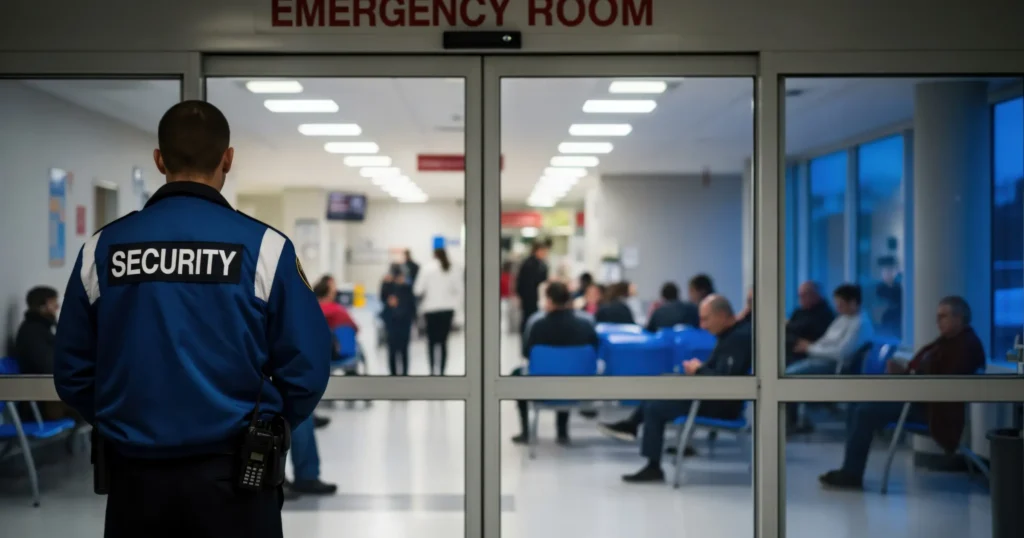
With the goal of prevention, it’s important to consider workplace violence de-escalation strategies. In turn, training physical security guards in healthcare settings can also help prevent and de-escalate. Policy, procedures, reporting, software solutions, and management all have a role in prevention.
Key takeaways
- Healthcare workers face a much higher risk.
Violence in hospitals is common and widely underreported, especially verbal abuse. - Prevention starts at the top.
Leadership commitment, risk assessments, staffing and clear reporting procedures set the foundation. - Security officers need specialized training.
Advanced de-escalation, rules on force and teamwork with clinical staff are essential. - Seven steps calm most situations.
Spot warning signs, keep a soft approach, respect space, use calm words, show empathy, stay composed and consider mental status. - Document everything.
TrackTik incident reporting and analytics capture what happened and reveal patterns so prevention gets better over time.
Common Risk Factors
Lack of policy and training is common in healthcare facilities, which makes the situations more difficult to manage. Violence also occurs more often when there is higher turnover, fewer staff members, and inadequate security measures. Skilled security teams are valuable for the protection of staff, patients, family, and friends.
Proactive Strategies for Preventing Violence in Healthcare Settings
Healthcare facilities can also take preemptive measures against violence, including:
- Acknowledging the problem: Recognize workplace violence as a serious issue that requires resources and procedures. It is helpful to conduct risk assessments, dedicate resources for prevention programming, and openly discuss the issue to encourage reporting.
- Committing from the top: Make sure management is committed to helping prevent workplace violence. This is more than giving lip service. Management should provide resources for training and actively participate in prevention programs to set a supportive example.
- Investing in security personnel: Hire professional security officers to improve safety and deter threats. Maintain adequate staffing levels, plus equip security teams with the right tools and technology.
- Providing training: Offer de-escalation and self-defense training to healthcare staff. Training should cover recognizing warning signs of escalating behavior, de-escalation techniques and communication strategies, basic self-defense tactics, and strategies for safely responding to active threats.
- Giving specialized training for security: Offer training for security officers, focusing on how to manage aggressive behavior and defuse situations. As experts, security teams should learn advanced de-escalation techniques, know the legal and ethical rules on force, and learn how to collaborate with healthcare staff to create a safe workplace. See how guard training can reduce workplace violence in healthcare.
- Developing reporting procedures: Provide a way to report, monitor, and investigate violent situations. People need confidentiality, follow-through on incidents, and support after an incident.
How Security Officers Can Help De-escalate
During a crisis, security officers can follow these seven guidelines.
1. Note Warning Signs
Security officers should be able to identify signs of agitation and react accordingly. Examples include volume and tone, mumbling, pacing, and aggression.
2. Take a Soft Approach
Security officers should not touch people until a healthcare worker or other individual asks for physical assistance. Physical use should always be a last resort, and the least amount of force as possible should be used.
3. Show Respect for Space
Security officers need to stand three or more feet away unless the person demonstrating aggression initiates physical contact.
4. Use Gentle Words
Speak calmly and respectfully, and remain non-confrontational.
5. Show Empathy
Focus on how the agitated person is feeling to gain trust and hopefully defuse the situation.
6. Don’t Overreact
Remain calm, and rational. Allow for times of silence for self-reflection.
7. Take Note of Mental Status
Try to see the difference between aggression and confusion. Be understanding of those with dementia which may present as anger.
For more techniques, see your de-escalation toolbox and the best de-escalation tips for private security companies.
How Trackforce Solutions Can Help
Trackforce offers tools to help healthcare workers, patients, and visitors remain safe. Here’s how our security workforce management software contributes to de-escalation and violence prevention:
- Real-time action: Trackforce helps staff quickly report incidents through mobile devices, which triggers immediate notifications to security personnel. This helps speed up intervention and minimizes the escalation of potentially violent situations.
- Situational awareness: Through GPS tracking and real-time location monitoring, Trackforce provides security officers with a clear picture of ongoing events and potential threats. This allows for proactive deployment of resources and quicker response times.
- Improved communication: Trackforce lets security officers use communication tools to collaborate during incidents.
- Information gathering: Trackforce captures detailed information on incidents, including location and time. This data can be analyzed to identify patterns and high-risk areas.
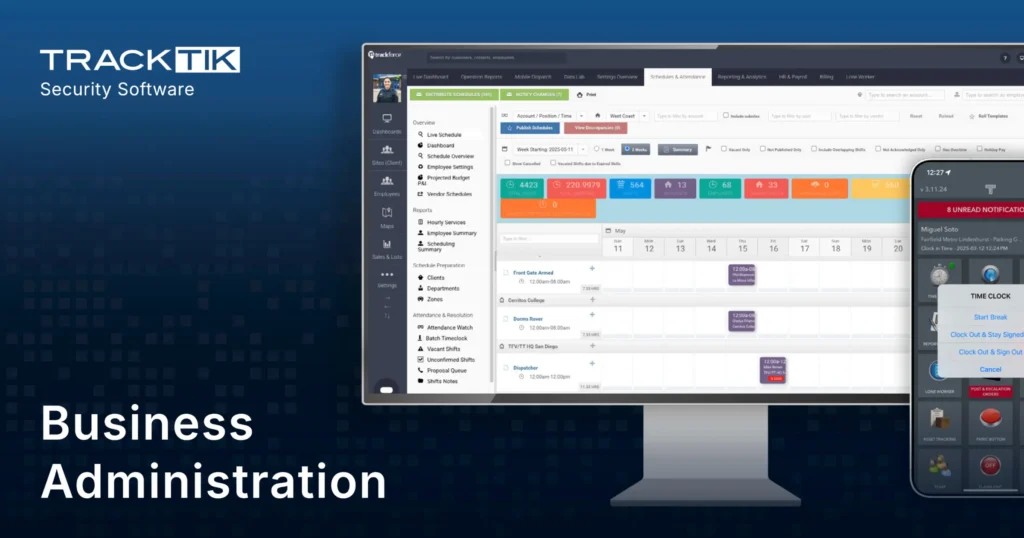
- Reporting: Trackforce provides a platform for documenting incidents, generating reports, and tracking investigations. This helps with follow-up actions and prevention in the future.
By integrating Trackforce solutions into prevention strategies, healthcare facilities can reduce the risk of workplace violence.
Warning Signs and How to Respond
| What you see | What it may mean | How to respond |
|---|---|---|
| Raised voice or sharp tone | Rising frustration | Lower your own voice, acknowledge the frustration and listen |
| Pacing or restlessness | Anxiety or agitation | Give space, offer a quieter place to talk and avoid crowding |
| Mumbling or confusion | Pain, medication effects or cognitive impairment | Slow down, use simple words and involve clinical staff |
| Clenched fists or rigid posture | Escalating anger | Keep a safe distance, keep hands visible and call for backup |
| Threats or attempts to block exits | Imminent risk | Prioritize safety, follow your emergency procedure and alert clinical leads |
De-escalation Do’s and Don’ts
Do
- Introduce yourself and use the person’s name
- Keep your tone calm and your body language open
- Acknowledge feelings, even if you cannot meet every demand
- Offer simple choices when you can
- Work with clinical staff, who may know the patient’s condition
Don’t
- Argue, threaten or make promises you cannot keep
- Crowd the person or stand between them and an exit
- Raise your voice to match theirs
- Touch the person unless physical assistance is requested and necessary
- Assume aggression when confusion or pain may be the cause
After the Incident: Document, Debrief and Learn
- Make sure everyone is safe. Get medical care for anyone hurt, including staff and officers.
- Document right away. Record who was involved, what happened, the words used, actions taken and any force used. TrackTik incident reporting adds photos, audio and GPS location.
- Write a clear report. ReportPro AI helps officers turn rough notes into complete, consistent reports.
- Notify the right people. Follow your escalation path to clinical leads, security leadership and, when needed, police.
- Debrief with clinical staff. Review what worked and what to change.
- Support affected staff. Offer follow-up resources to anyone involved.
- Look for patterns. TrackTik business intelligence shows incidents by unit, time and type so you can adjust staffing and training.
Strong documentation also shows surveyors your program works. See our hospital workplace violence prevention evidence brief.
More Ways TrackTik Supports Hospital Security
- Coordinated response. The TrackTik Command Center gives operators one view of every site and a standardized response.
- Officer safety. The TrackTik security guard tour app includes a panic alarm, fall detection and a danger-zone timer.
- Training on record. Certification tracking helps you stay compliant and keep every officer qualified.
A Safer Environment
With preventive strategies and the right tools, we can reduce risk for healthcare workers. Investing in training and advanced security solutions will help address potential threats before they happen. A safe healthcare workplace is the priority for patients, family members, staff, and security officers, so people can concentrate on the main goal of getting well.
Book a TrackTik demo to see how it supports hospital security teams.
Frequently Asked Questions
Latest Articles



Featured Resources


See Trackforce in action
Book a walkthrough with our team and see how it fits your operation.