Hotel Incident Reporting and the Hidden Risks Hospitality Teams Face

Trackforce
November 6, 2026 · 11 min read
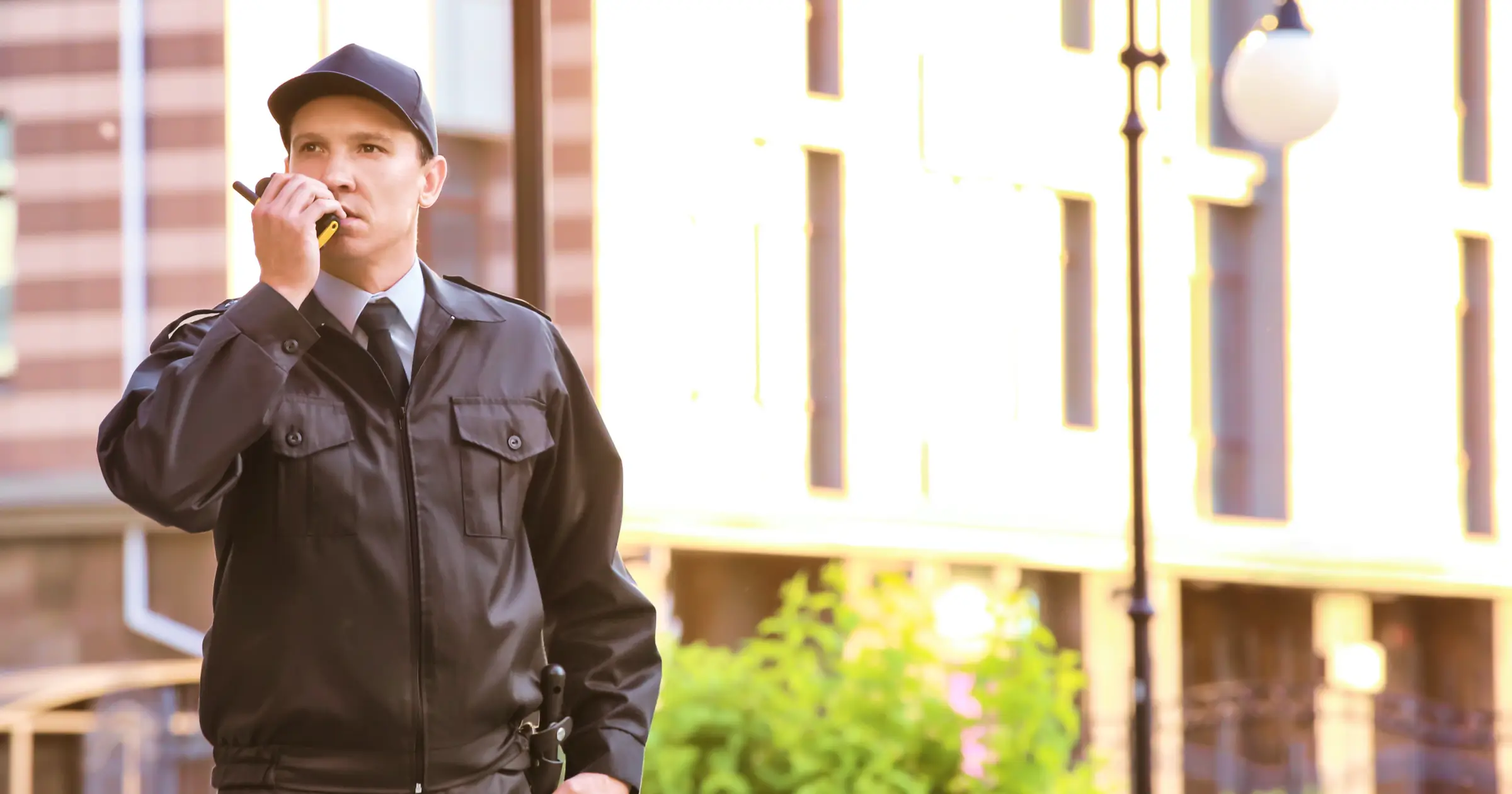
Good hotel incident reporting protects guests, staff, and the brand at the same time. It gives security and operations leaders a defensible record when a claim arrives, a clearer picture of where risk is building, and faster help for the employees who need it most.
Hotels and resorts also face a set of challenges few other industries share. Properties stay open to the public around the clock, guests expect privacy and a seamless experience, and many of the people most exposed to risk are housekeepers, room service attendants, and engineers working alone behind closed doors. Security has to stay discreet right up until the moment it can’t be.
Die wichtigsten Erkenntnisse
- Hotel incident reporting has to balance guest privacy and discretion with a complete, defensible record for liability claims.
- Housekeepers, room service staff, and overnight workers often work alone behind closed doors, which makes fast alerts and clear documentation essential.
- Hotel panic button laws in states such as New Jersey, Illinois, and Washington often carry response and recordkeeping obligations along with the device itself.
- TrackTik gives hospitality security teams mobile incident reporting, panic button and lone worker alerts, and portfolio-wide visibility in one platform.
- The free Cross-Functional Incident Workbook helps hotels map which department owns each step after an incident.
What makes hospitality incident reporting different
Guests are the priority, and they are also the risk. Hotels owe guests a duty of care, so slips and falls, medical emergencies, thefts from rooms, and disputes between guests can all lead to premises liability claims. The same guests can also be the source of harassment or aggression toward staff. A useful report has to capture both sides of that relationship clearly. Resorts and casinos raise the stakes further, with pools, gaming floors, nightlife, and large event spaces that each bring their own liability exposure.
Discretion shapes how incidents get handled. Guests expect privacy and an uninterrupted experience. Officers and managers often resolve a disturbance quietly at the door, in a hallway, or at the front desk, and those moments are easy to leave undocumented. Months later, when a guest files a complaint or a lawsuit, an undocumented interaction offers no protection.
The population changes every day. On any given night a property may host leisure travelers, conference attendees, wedding parties, day visitors, vendors, and contractors. Events and VIP stays can spike activity overnight. Incident reporting has to work for a front desk agent, a night auditor, and a contracted officer alike.
Brand standards span many properties. Management companies and brands need consistent incident data across every hotel to spot trends, compare properties, and defend decisions to owners and insurers. When each property uses its own logbook or spreadsheet, that comparison becomes nearly impossible.
Some incidents carry extra legal weight. Human trafficking, guest deaths, and assaults on employees can trigger law enforcement involvement and, in some jurisdictions, specific training or reporting obligations. Accurate, time-stamped records help legal and risk teams respond with confidence.
Why hotel worker safety changes the reporting equation
Hospitality has a large share of employees who work alone for much of their shift. Housekeepers and room attendants enter guest rooms by themselves, often with the door closed. Room service staff, minibar attendants, and maintenance engineers do the same. Night auditors and overnight security officers may be the only staff awake on property. Each of these roles puts a worker in close contact with guests, out of sight of coworkers, with limited ways to call for help.
That risk has driven a wave of hotel panic button laws. There is no federal mandate, so requirements come from states and cities, and New Jersey, Illinois, and Washington all require panic buttons for hotel employees, alongside city ordinances in places like Seattle, Chicago, and several California cities. Many hotel brands also made a voluntary commitment through the American Hotel & Lodging Association’s 5-Star Promise, launched in 2018.
These laws reach well past the device itself, and many carry reporting and recordkeeping obligations. New Jersey’s law is a good example. Along with providing a panic device to employees assigned to work in a guest room alone, hotels must have staff respond promptly when a device is activated, record accusations that a guest acted violently or inappropriately toward an employee, and keep that guest on a list for five years. Hotels also need to report alleged crimes to law enforcement and notify housekeeping and room service staff where a listed guest is staying.
In other words, an alert is only the first step. Hotels need a reliable record of who raised it, when and where it happened, who responded and how quickly, and what followed. Without that record, it is hard to show compliance, protect the employee, or act on a repeat offender.
How TrackTik supports hotel and resort incident reporting
Trackforce’s TrackTik platform helps hospitality security teams protect guests discreetly, respond faster when staff need help, and keep consistent records across every property.
Faster help for staff working alone
TrackTik’s panic button lets an officer send an immediate distress alert to the team from the mobile app, and can also be set to sound an alarm and call emergency services. Officers can pair an external Bluetooth panic button, so they can raise an alert without reaching for a phone. TrackTik’s Lone Worker feature adds scheduled check-ins, so supervisors know an officer working alone overnight is safe and get alerted when a check-in is missed. In the TrackTik Security Command Center, panic alarms and lone worker alerts surface as priority events alongside active incidents and officer locations, which helps responders reach the right floor or wing quickly.
Complete records without disrupting guests
With TrackTik security incident reporting, officers log disturbances, thefts, medical events, and staff safety incidents from their mobile device as they happen. Guided forms keep reports consistent, and time-stamped photos, video, audio, and GPS location build a record that holds up if a claim or lawsuit follows. Hotels can configure fields for the details their local laws require, such as panic device activations, response times, and guest accusations. ReportPro AI helps officers turn quick notes into clear reports, with every AI-assisted change logged for the audit trail.
The right people informed, every time
Automatic email and text notifications and escalations help incident details reach the front desk, the general manager, HR, and risk teams quickly. That speed matters when a housekeeper has been threatened and room service staff need to know to avoid a specific floor.
Visibility across lobbies, floors, and grounds
TrackTik guard tours record patrols of lobbies, guest floors, parking areas, and back-of-house spaces with GPS- and time-stamped logs. Asset tracking helps teams manage key handoffs and restricted-area access, so investigators can see who had access to a room or space.
The right coverage at every property
TrackTik scheduling assigns officers based on qualifications, post orders, and licensing, and the TrackTik SHIFT app puts schedules, shift updates, and open shifts on each officer’s phone. For hospitality groups running security across multiple hotels and resorts, that means fewer coverage gaps during events, peak season, and last-minute call-offs. Learn more about TrackTik guard scheduling.
Consistent standards across the portfolio
TrackTik Business Intelligence brings incident data from every property into one view, so management companies and brands can compare locations, spot repeat issues, and show owners and insurers how safety programs are performing.
Plan your incident handoffs before the next call for help
A panic alert or guest incident rarely stays with security for long. Within hours it can involve HR, Legal, Risk, Facilities, and Health & Safety, and many hotels have never formally mapped who owns each step.
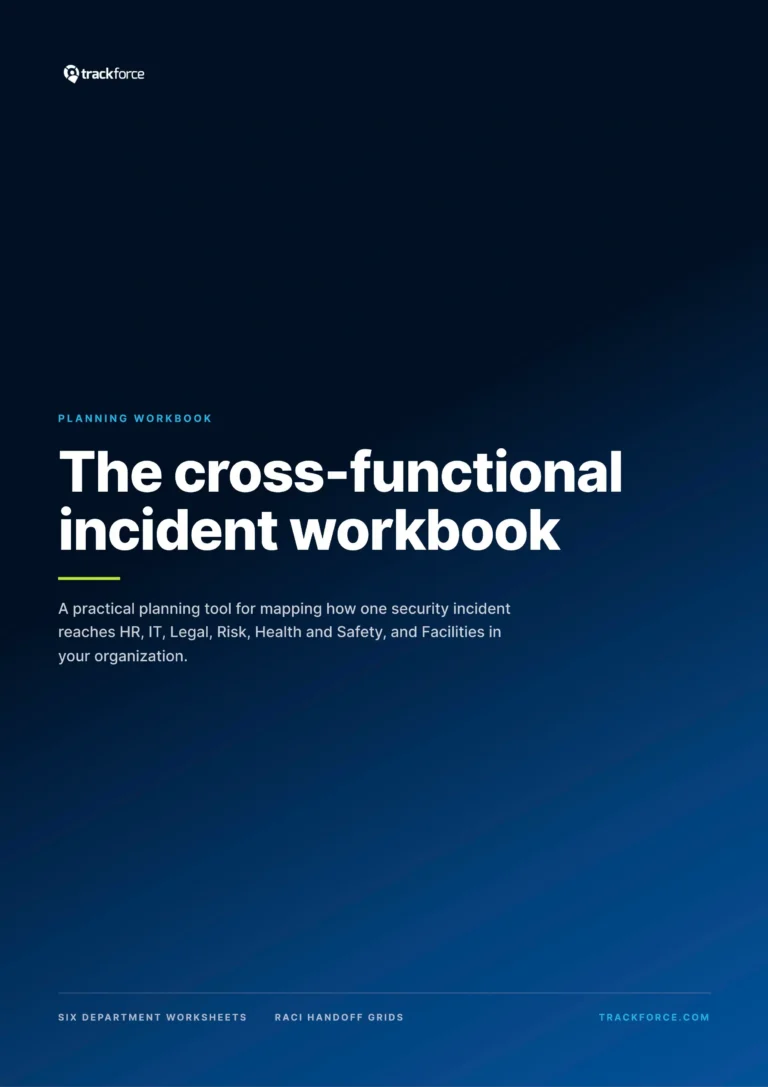
The free Cross-Functional Incident Workbook helps you sort that out before an incident forces the conversation. It includes six one-page worksheets, one per department, each covering what that team needs to know in the first hour and a RACI grid naming who is responsible, accountable, consulted, and informed. Work through it with your general managers and department heads, and you will leave with a first draft of your cross-functional incident communication plan.
Kostenloser Download
Das Arbeitsbuch für funktionsübergreifendes Vorfallmanagement
Download the Cross-Functional Incident Workbook to map who owns each handoff, then see how TrackTik can turn that plan into faster, better-documented incident response.
Hotel incident reporting FAQs
Neueste Artikel

Empfohlene Ressourcen

Sehen Sie Trackforce in Aktion
Vereinbaren Sie einen Termin für eine Vorführung mit unserem Team und finden Sie heraus, wie sich das Produkt in Ihren Betriebsablauf einfügt.