Why I Bought Guard Management Software 5 Years Ago

Trackforce
September 5, 2018 · 10 min read
Before starting at Silvertrac, now part of Trackforce, I spent years working for my family security company in Central California.

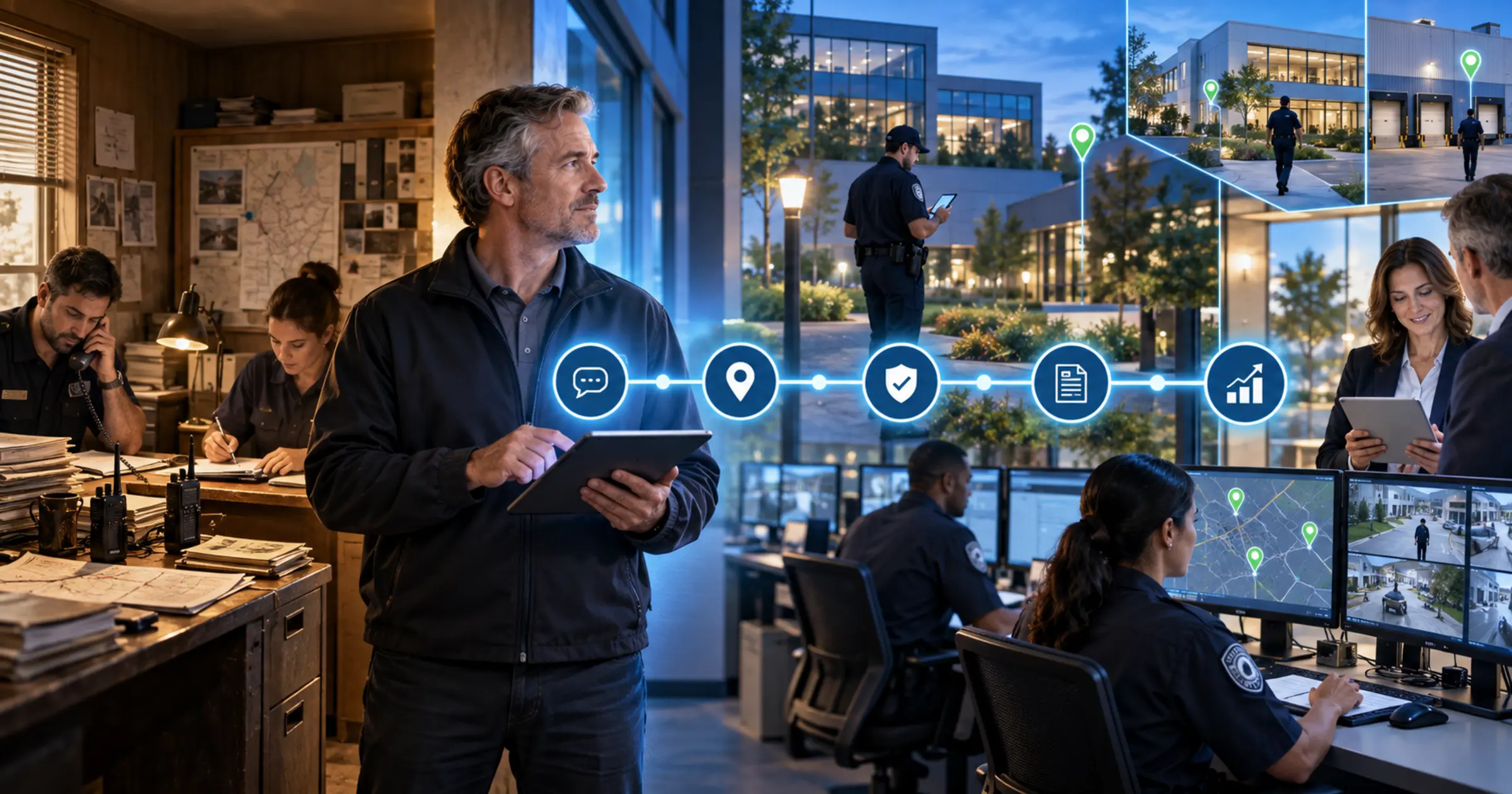
My grandfather founded the family business in the 80s. Our company grew pretty steadily through boom times and lean years. Around five years ago, we decided it was time to change the way things were done.
I wanted to get out of the race to the lowest price, and the best way seemed simple: offer a better service. Instead of trying to cut $4 from our hourly rate to stay competitive, we decided to offer our customers the kind of service that justified the extra spend. That’s where guard management software came into play. Here are five reasons why:
Key takeaways
- The alternative to cutting your rate is justifying it.
When competitors drive rates down, the only durable answer is offering a service the buyer can see is worth more. - Inconsistency is what actually costs accounts.
Management time spent rescuing accounts an officer damaged is time not spent growing, and it caps how large the business can get. - Referrals need to be earned repeatedly, not once.
Renewal only requires competence. A referral requires a client who has been impressed often enough to put their own name behind you. - Reactive management has no ceiling on cost.
Waiting for a mistake and then fixing it is more expensive every single time than the structure that would have prevented it. - Facts change the tone of a difficult conversation.
When something goes wrong, having timestamped checkpoint records to work from is often what saves the contract.
I couldn’t compete on price
In recent years, more and more competitors have saturated the market, many of them using unethical or illegal tactics, like paying guards under the table, to drive down rates. Margins are already razor thin in the security industry, and my family decided we couldn’t drop prices without offering subpar service. We decided it was better to charge more and offer more to our clients. That is a strategy in itself, and there is a whole discipline around what security buyers actually evaluate when rate is not the deciding factor.
Guard management software helped us compete against rock-bottom competitors in two key ways:
One, it introduced more efficient workflows to the company, both in the back office and out in the field. Because we were saving time managing accounts, not to mention tracking vehicle maintenance and filing reports, we had more time to find clients and service our existing clients better. Equipment and vehicles sit in asset tracking rather than a spreadsheet, and the admin side runs through the back office instead of across four of them.
Two, it improved the way we communicated with our clients. Our high touch, hands-on approach to client success gave them the feeling that they were getting a white-glove caliber security service.
I wanted more consistency
At the end of the day, client relations comes back to the officers. We kept finding that our security teams had poor follow-through on patrol. Our management team couldn’t keep cleaning up the mess when things went wrong. It’s hard to scale your business when you have to spend most of your time saving accounts that a guard screwed up.
When you’re not super steady year after year, referrals aren’t going to come in, and referrals were one of our best sources of new business, especially for lucrative commercial clients. They also require a degree of relationship-building and consistency that isn’t easy to muster. You have to exceed expectations to get referrals.
You can have great management, take care of the property, and get contract renewal without question, but your clients still won’t have the incentive to share your services with their network. They need to be wowed before they’ll start telling their friends.
Guard management software helped us structure patrols, track checkpoints, and prove the value of our services. It allowed us to present data to clients with updates on what we did, which is what business intelligence is for: turning a year of tours and incidents into something a client will actually read.
I had to shift from reactive to proactive management
We were stuck in the pattern of only responding to concerns when things went wrong. The company hadn’t put together a way to prevent disorganization and miscommunication before it led to angry clients. Instead, we waited until officers screwed up, then reacted.
One thing we did is standardize post visits. We used our guard management software to organize patrols for efficiency and set up checkpoints that were documented with timestamps. That introduced accountability and made clients understand that they’re getting their money’s worth.
With more structure in place, you can improve officer training. Training and standards are a recognised weak point across much of the security industry, so companies that come to the table with more professionalism stand out.
And when things go wrong, it also helps to have facts to back yourself up, which can shift the tone of a conversation and help save contracts. A structured incident report with a time, a location and a photo attached does more in a difficult client call than any amount of reassurance.
I needed to create urgency in the sales process
One of the more valuable aspects of guard management software actually affected our sales efforts.
When you’re pitching your services to a new client, you need to add value that their current provider isn’t bringing to the table to win their business. Property managers need to have a reason to go through the headache of changing vendors.
Sure, maybe their current security provider gives them plenty of incentive to terminate the service. But when that’s not the case, most managers have better things to be working on.
You need to introduce a sense of urgency to the conversation to encourage them to make a change. Advanced reporting that comes with guard management software can make that difference, because it is something the incumbent probably cannot show. The same logic governs the document that follows the meeting, which is why your proposals should be about the client rather than about you.
I was dealing with too much paper
A company can produce a whole lot of paper over the course of nearly 40 years. We found that our small family business was using up immense amounts of space storing paperwork for our clients. Our storage space was room that we couldn’t use to grow our company. Digitizing our reporting meant getting rid of reams upon reams of paper. We freed up a lot of space in the office for better use.
And, as a side effect, we started producing better reports, all typed out and designed for the client to use. No hand scribbled notes to translate, no sliding reports under client doors. It made our operation instantly look that much more professional. If that problem sounds familiar, the case for going paperless with your daily activity reports goes into the detail, and ReportPro AI now handles the part we used to do by hand, turning rough field notes into something a client can read.
What I would tell another owner now
Looking back, none of the five reasons were really about software. They were about being able to show a client what they were paying for, and about getting management time back from firefighting. The software was just the thing that made both possible at the same time.
If you are a security firm weighing the same decision, the question worth asking is not which features you get. It is whether, a year from now, you will be able to answer a client question from a record instead of from memory, and whether the hours you work will match the hours you bill through contracts and invoicing. If the answer to both is yes, the rate conversation gets much easier.
You can book a TrackTik demo and walk through it against your own sites and accounts.
Frequently Asked Questions
Latest Articles





Featured Resources





See Trackforce in action
Book a walkthrough with our team and see how it fits your operation.