From 3 Guards to 1,250:
How Armour Security Built an Accountable, Scalable Business on TrackTik
Armour Security Protection Services · Vancouver, British Columbia · TrackTik customer since 2015
Free Download
Download the full Armour Security case study
Get the complete story as a PDF you can save and share with your team. PDF, 9.4 MB, opens in a new tab.
About Armour Security Protection Services
Armour Security Protection Services is a security guarding company founded in Vancouver, British Columbia in 2014. It became a TrackTik customer in 2015 and today employs more than 1,250 guards across six provinces, from British Columbia to Nova Scotia, serving over 200 clients across more than 90 sites managed in TrackTik.
1,250+
Guards across 6 provinces
200+
Clients
90+
Sites managed on TrackTik
26
Patrols per 8-hour shift, up from 18
The Challenge
No way to prove a guard was ever there
When Rick Vj founded Armour Security in Vancouver in 2014, he had two clients and a problem he understood better than most. Before starting the company, he had worked his way up through the security industry himself: guard, supervisor, account manager. He knew exactly where the gaps were.
“There was no accountability. You ask a guard to patrol your shopping mall, but are they patrolling? There’s no checkpoint, no way to verify it. Everything looks fine on the paper reports, until something happens and you find out the guard was never actually there.”
Rick Vj, founder, Armour Security Protection Services
Armour’s clients were relying on manual, wand-based checkpoint scanning, a system that only proved a guard’s location after the fact, when someone plugged the device into a computer back at the office. There was no real-time visibility into whether rounds were happening at all.
The pricing model in the security software market didn’t help. Rick had looked at other platforms before finding TrackTik, but the software built for incident reporting alone was priced for enterprise budgets, not a two-client startup: $15,000 in setup costs, before even paying for the ability to track a checkpoint. For a company Armour’s size, that made real-time accountability unreachable.
The Solution
Real-time reporting, used as the sales pitch
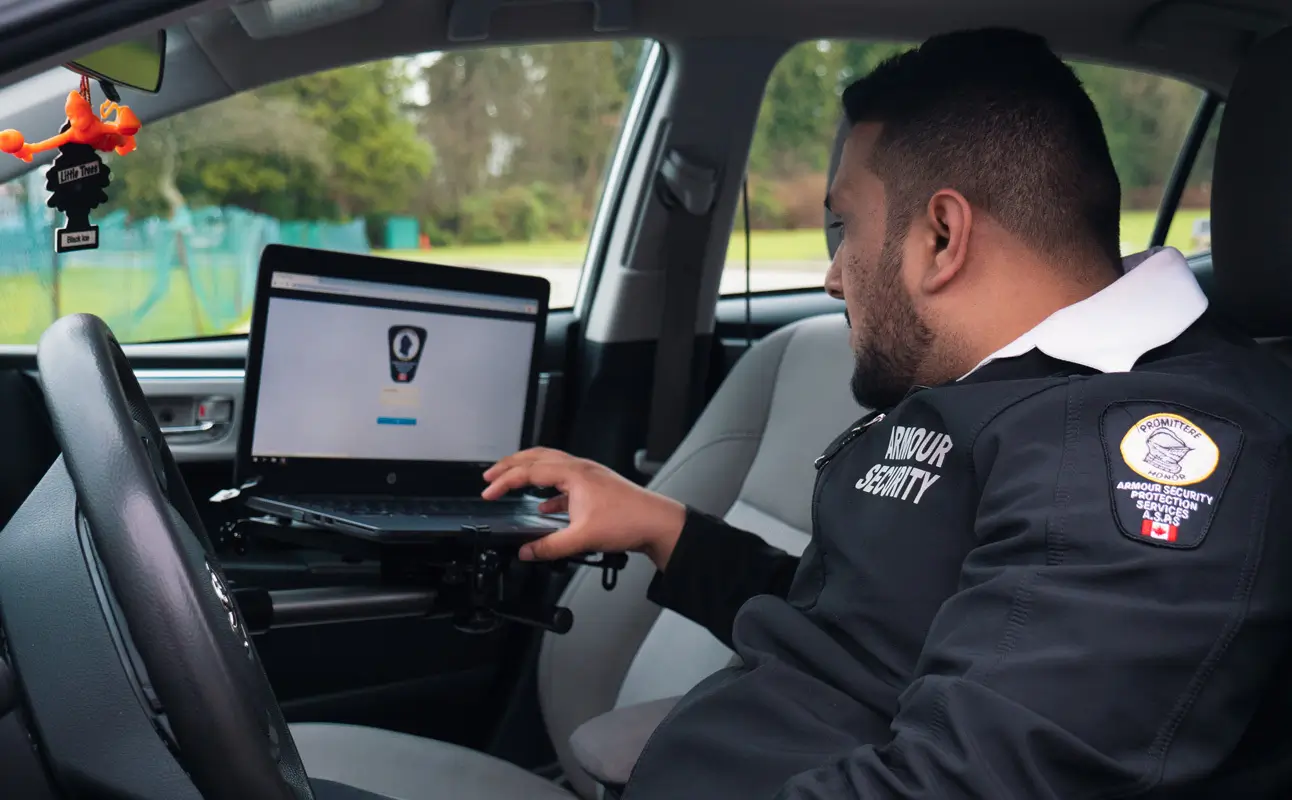
Armour signed with TrackTik in 2015, and has since turned it into a growth engine. Instead of leading with guard headcount, Rick and his team went client to client with a laptop and phone, demonstrating live, real-time reporting as proof that Armour could solve a problem competitors couldn’t. It worked well enough that prospects who didn’t sign with Armour still went back to their existing provider asking for “software like Armour has.”
As the business grew, so did its use of the platform. Armour started with TrackTik’s Guard Suite, then added Mobile Patrol as its patrol business expanded, followed by Dispatch to route vehicles more efficiently. Today Armour runs client-facing reporting portals, incident analytics, and real-time GPS-verified checkpoints as standard parts of every contract, not add-ons.
“TrackTik is part of our standardized product now. It doesn’t matter if we’re launching a site in Toronto or Vancouver. The setup for checkpoints, creating the client’s login, and reviewing the reports are all processes that run the same everywhere, and TrackTik is built into it.”
Rick Vj, founder, Armour Security Protection Services
The Results
What changed after Armour standardized on TrackTik
Guard accountability became the industry standard, not the exception
Before TrackTik, Rick says the prevailing norm in the industry was low: a guard in uniform was considered sufficient. TrackTik’s scheduled checkpoints and mandatory photo reporting changed what clients expected and what guards were held to. Armour felt the resistance directly during hiring in the platform’s early years, when some candidates turned down jobs specifically because Armour’s checkpoints required them to actually complete rounds. “It took five or six years to shift the industry standard,” Rick says. “Now everyone expects it.”
Mobile patrol productivity increased by more than a third
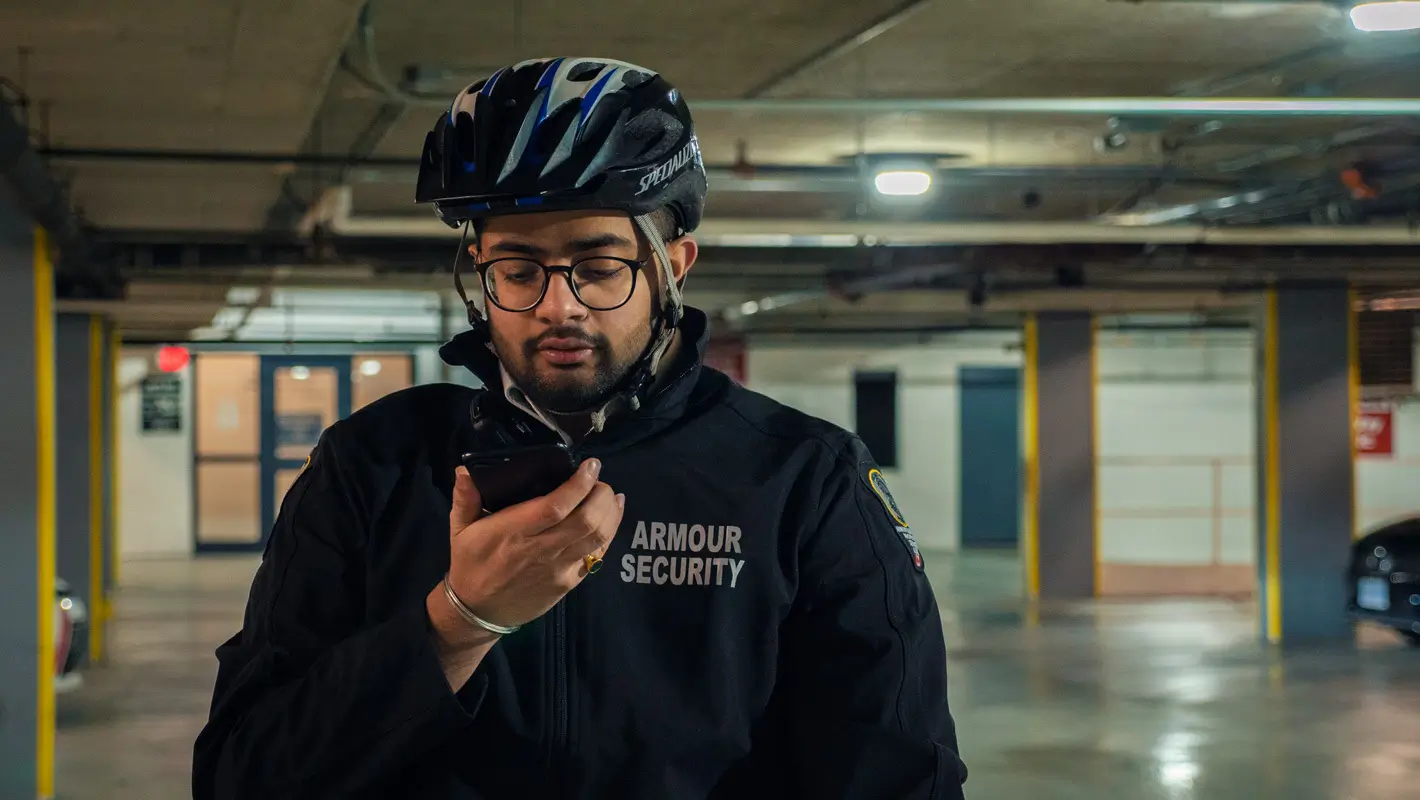
Route optimization through TrackTik’s dispatch and mapping tools let Armour’s mobile units cover more ground per shift without adding vehicles or headcount. “We used to do 18 to 19 patrols in an eight-hour shift,” Rick says. “Now we’re hitting 26, because the guards know exactly where to go instead of driving back and forth.”
Real-time reporting helped win government contracts
Armour’s transparent reporting model became a differentiator in competitive RFP processes, including a government housing contract. “They knew what they were paying for, down to the minute a guard signed in and out,” Rick says. Since 2022, Rick’s team has responded to three or four RFPs that explicitly required TrackTik or an equivalent platform as a condition of the bid.
Client trust improved because clients could see the unedited data
Armour gives select clients direct portal access to their own site reports. “It’s more transparent, and clients trust us more,” Rick says. “We’re not hiding anything. Guards still make mistakes sometimes, but clients know exactly what they’re paying for, and photos show them what actually happened whenever an incident occurs.”
On one of Armour’s most complex accounts, a large multi-building property portfolio, TrackTik verification confirmed that every building on the site was armed and unarmed on schedule each night, a critical control point given the site’s history of break-in attempts.
Incident analytics changed how Armour staffs and patrols
Armour’s operations leadership, which includes a director with over three decades of policing experience, reviews monthly incident analytics with clients to adjust checkpoint frequency and post orders in high-incident areas, the same “hot spot” approach used in policing.
Supervision costs went down
Before TrackTik, Armour needed to send field supervisors to each site up to twice a day to verify uniform and license compliance. Guards now submit photo-based compliance reports directly through the platform, cutting the need for in-person spot checks. “The cost we pay for TrackTik is a lot cheaper than the cost of the supervision we used to need,” Rick says.
The relationship scaled with the business
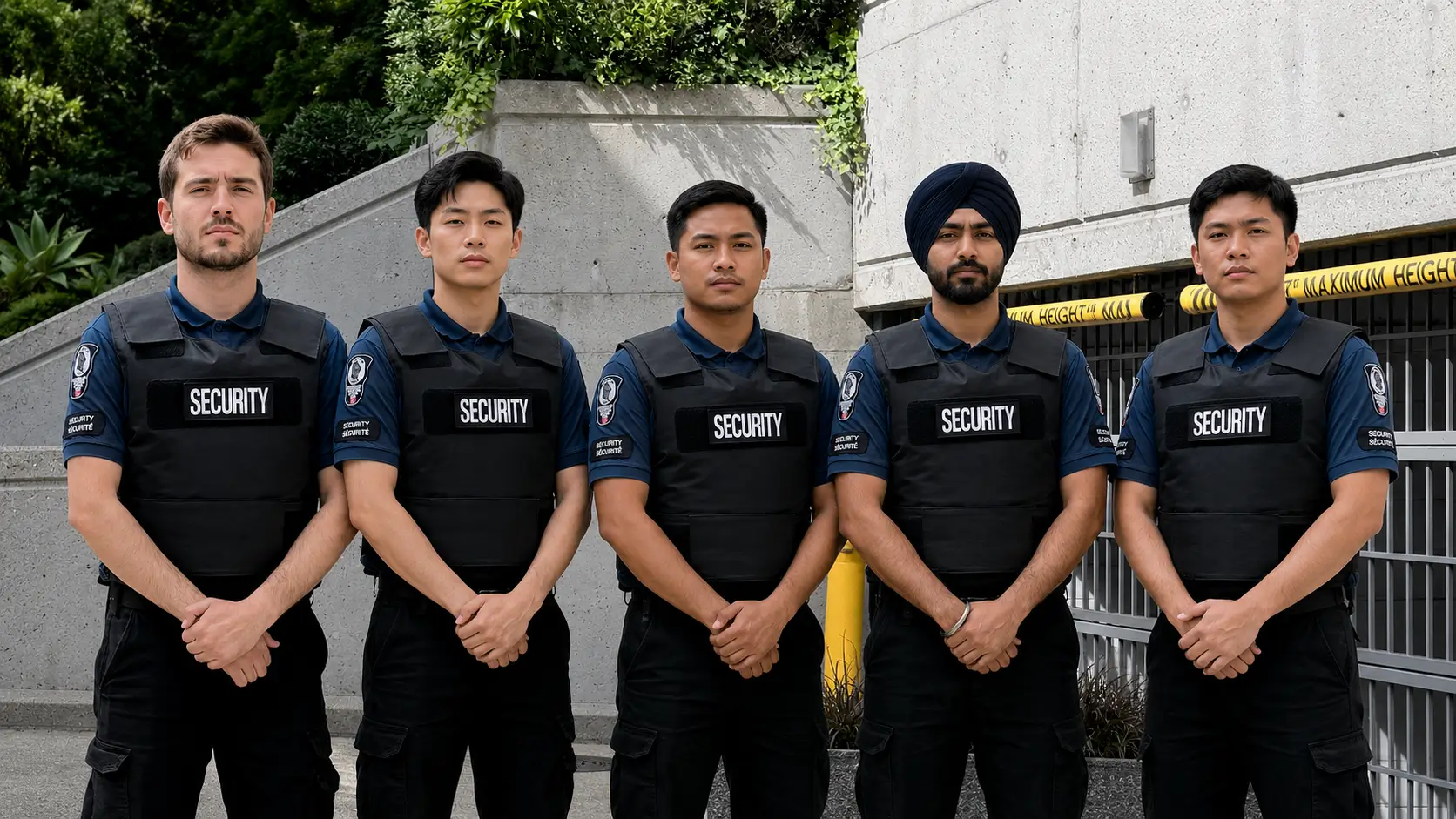
Armour has grown from 3 guards to 1,250 across six provinces, roughly 100 times its original size, and Armour’s very first TrackTik site is still an active client 12 years later. Rick’s team is targeting continued rapid growth, having expanded into three new provinces last year with three more planned.
“Without TrackTik, we wouldn’t have been able to change the industry standard and make guards more accountable for their actions. I love it.”
Rick Vj, founder, Armour Security Protection Services
Free download
Get your copy of the Armour Security case study
More security firms scaling on TrackTik
Ready to give your clients the same proof?
See how TrackTik verifies every patrol and incident, so clients know what they are paying for.