More than words: How better communication improves security operations

Trackforce
March 21, 2025 · 12 min read
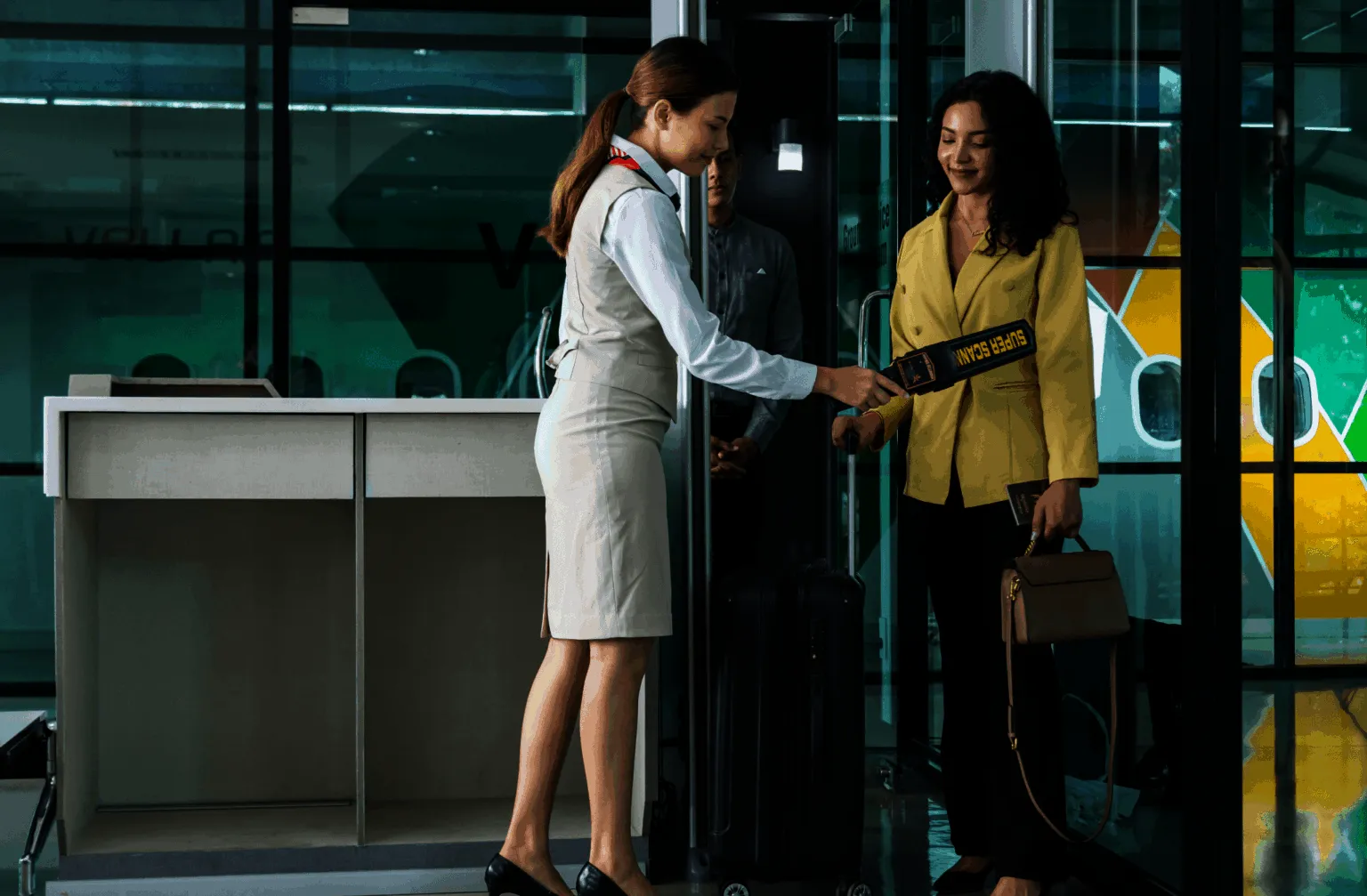
Picture this: A security guard stands tall, uniform crisp, eyes alert. But what’s the most powerful tool in their arsenal? It’s not their flashlight or radio. It’s their ability to communicate effectively. Interactions with the public aren’t just part of a security guard’s job; they’re the heartbeat of their role. Every word exchanged and every gesture made shapes the public’s perception of not just the guard, but the entire organization they represent.
But here’s the million-dollar question: Do you know what kind of experience your security team is providing? Buckle up as we dive into the world of security guard communication. We’ll uncover why it’s not just important, it’s crucial. We’ll explore what truly effective communication looks like in the security field and arm you with strategies to elevate your team’s skills from good to exceptional.
Key takeaways
- Communication is a guard’s most powerful safety tool.
The right words prevent incidents, calm conflict and keep emergencies under control. - Tactical communication is a learnable skill.
Positioning, posturing, observing and listening work together to de-escalate situations. - Good communication runs through the whole operation.
Shift handovers, post orders, dispatch and client updates all depend on clear, timely information. - Practice beats lectures.
Role-play, supervisor coaching and ongoing refresher training build skills that hold up under pressure. - TrackTik keeps everyone on the same page.
Live messaging, automated alerts, digital post orders and incident reporting connect officers, supervisors and clients in real time.
Safety and situational awareness
While security guards need many good skills to do their job well, the ability to communicate is paramount.
First, clear communication helps prevent incidents. Guards can identify and address potential security threats before they turn into big problems. Guards can not only work with upset parties but also easily coordinate with other team members.
Good communication is always helpful in an emergency. Providing and understanding clear instructions during a crisis helps find quicker and safer resolutions. It also helps during a potential conflict, since the right words can help calm situations, while the wrong ones can turn a verbal issue into a physical one. Plus, an empathetic guard can reduce tension instead of increasing it.
Building trust
Not only can communicative guards help when problems arise, but they can also build relationships. When interacting with the public, friendly and respectful communication can go a long way in creating a sense of security and trust. Not only do these professional interactions help make clients happy, but they can also make the entire operation more efficient. Reporting, documenting, and protocols are all improved when guards can communicate their expectations and results.
Being tactical
Tactical communication quickly conveys information to reduce the risk of misunderstanding. It’s commonly used by security teams, law enforcement, and other professionals in high-stress situations. By planning what to say ahead of time, tactical communication gives security guards an advantage.
Example: two ways to handle the same situation
A security guard sees a man arguing on his phone in a restricted area. The man is angry and loud. The guard can approach in one of two ways:
- Reactive: “Hey, you! You can’t be here. This is a restricted area! Get out now!”
- Tactical: “Excuse me, sir. I understand you’re having a difficult conversation, but this area is restricted. Is there somewhere else you could continue your call?”
While the man might still be angry, the tactical approach greatly increases the chance of a peaceful resolution.
The four elements of tactical communication
There are four elements of tactical communication: positioning, posturing, observing, and listening. Each plays into a security guard’s role.
1. Positioning: the strategic use of space
Where a security guard stands or sits relative to someone sends a message, whether intended or not. It can convey dominance, submission, cooperation, or threat. For instance, a security guard interviewing a witness would use different positioning than a security guard confronting a potentially violent person.
Tips for security guards:
- Evaluate body language and tone: Before positioning yourself, assess the other person’s body language. Are they calm or aggressive?
- Maintain safe distances: In potentially volatile situations, maintain a safe distance to allow for reaction time and to keep the person from feeling cornered.
- Verbally communicate your movement: If you need to reposition yourself, explain why so you seem less threatening.
2. Posturing: nonverbal cues
Posturing refers to body language, facial expressions, and how you carry yourself. A guard’s posture communicates a level of confidence and intention.
Tips for security guards:
- Make people comfortable: Smile when appropriate, make eye contact, and open your shoulders for a non-aggressive stance. Avoid crossing your arms, puffing out your chest, or pointing in people’s faces.
- Keep hands visible: This signals you’re not concealing anything, so there are no surprises.
- Be culturally sensitive: Nonverbal cues can have different meanings in different cultures. Consider these differences and adapt your posture accordingly.
3. Observing: stay aware
Observing is about assessing the surroundings and the people in them. Being observant helps guards anticipate and deal with potential problems, and it builds on strong situational awareness.
Tips for security guards:
- Check your environment: Note your location, exit routes, and any evidence of incidents.
- Watch individuals: Look for suspicious behavior, concealed weapons, aggression, or signs that someone is under the influence.
- Document: Record details and timelines as soon as it is safe and practical. Strong report writing turns observations into a record others can act on.
4. Listening: understand the situation
Listen actively and engage with people to understand their message and emotions. Active listening is a great skill for gathering information and de-escalating conflicts. It involves paying full attention to the speaker, both verbally and nonverbally.
Tips for security guards:
- Make the person a priority: Let people speak, don’t rush the conversation, and avoid planning what you’ll say next instead of listening.
- Listen actively: Show your engagement, ask questions, and check for understanding.
- Acknowledge the situation: Even if you don’t agree, address the person’s concerns.
These four elements are not isolated skills. They fit together to create a complete picture. By working on them, security guards can improve their communication skills, de-escalate situations, and create a safer environment.
Communication across the security operation
Tactical communication with the public is only half the picture. Security operations also depend on clear communication inside the team. A culture of communication makes sure information flows down from managers and back up from the field. Pay attention to these channels:
- Shift handovers: the incoming officer needs to know about open issues, expected visitors and anything unusual from the last shift.
- Post orders: site-specific instructions must be current, easy to find and acknowledged by every officer.
- Officer to supervisor: officers need a fast, reliable way to report problems and request backup.
- Dispatch: during an incident, dispatchers and officers need a shared, real-time picture of who is responding and where.
- Security team to client: clients expect timely updates and reports that show what their security team is doing.
Common communication breakdowns and how to fix them
Most communication failures follow a handful of familiar patterns. Here is what they look like and how to fix them:
| Breakdown | What happens | How to fix it |
|---|---|---|
| Missed handover details | The next shift walks into an issue it knows nothing about | Digital logbooks and pass-down notes every officer can read |
| Outdated or unclear post orders | Officers respond inconsistently to the same situation | Digital post orders that officers acknowledge |
| Unreliable radios or personal phones | Backup requests are delayed or lost | Secure in-app messaging and push-to-talk |
| Vague or late incident reports | Supervisors and clients lose confidence | Guided report templates and AI writing support |
| Mixed messages in an emergency | Confusion slows the response | One alert sent to every officer at once |
Most breakdowns are process problems, not people problems. Our article on getting information to your guards explains how to close the loop so nothing important is missed.
How to improve communication
Developing communication skills requires more than attending lectures. The most effective programs combine several methods:
- Role-playing scenarios: guards practice communication techniques in realistic situations, like dealing with angry customers, responding to a suspicious person, or coordinating with team members during an emergency.
- Feedback and coaching: supervisors review real interactions and incident reports, then offer specific, constructive feedback.
- Continuous learning: workshops and refresher courses keep guards current on best practices as situations change.
- Scripts for common situations: tested wording for requests like asking someone to leave or checking credentials gives officers confidence under pressure.
- Communication fields in reports: report templates that capture how an interaction was handled give supervisors material for coaching.
For more on building training that sticks, see our keys to a successful and engaging security officer training program.
The lasting impact
Training improves the safety of security guards and the community members they protect, since effective communication helps de-escalate conflict. This creates positive interactions and a better foundation between security personnel and the public. Finally, clear communication contributes directly to efficiency, ensuring that security operations go well, reports are accurate, and protocols are followed. Overall, effective communication affects many aspects of a security guard’s role.
How TrackTik supports tactical communication
While training helps develop tactical communication skills, having the right technology can improve a team’s communication ability. TrackTik, from Trackforce, provides tools designed to support tactical communication:
Security companies are transforming how they communicate with TrackTik. Officers, supervisors and clients share the same real-time information, which means seamless collaboration and elevated professionalism. Book a TrackTik demo to see how it keeps your whole operation connected.
Frequently Asked Questions
Latest Articles
Featured Resources

See Trackforce in action
Book a walkthrough with our team and see how it fits your operation.
Keep your whole team on the same page
Book a demo to see how TrackTik live messaging, automated alerts, digital post orders and incident reporting connect officers, supervisors and clients.