How to Conduct a Security Post Inspection

Trackforce
April 29, 2021 · 9 min read
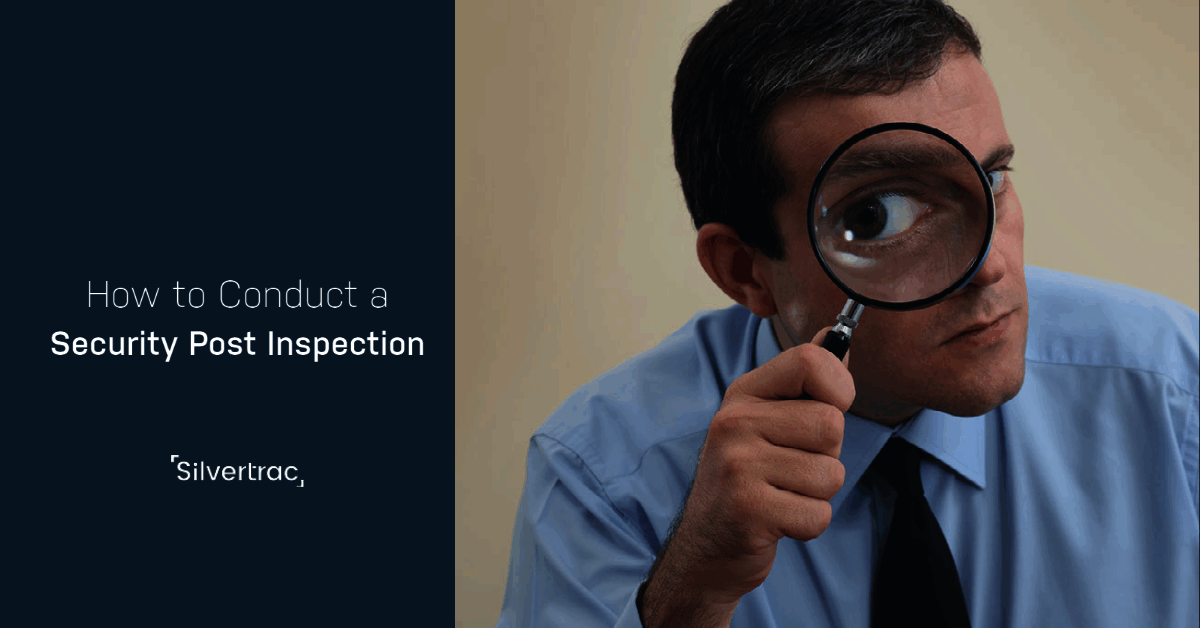
Security post inspections are a necessary part of any security business’s day-to-day operations. And knowing how to conduct post inspections is an easy way to ensure that your clients’ needs are being met and that your security guards are properly equipped to do their jobs.
Unfortunately, many security companies fail to conduct effective inspections, resulting in lost accounts that are costly to their bottom line. This article will look at what post inspections look like in most companies and how to make them more effective to get, keep, and grow your customer base.
Key takeaways
- Inspections are more than “gotcha” checks.
Used well, they improve service, support officers and protect accounts. - Check in with the officer first.
Questions about schedules, teamwork, pass-downs and equipment reveal fixable problems. - Walk the property together.
Seeing the site with the officer shows what needs to change and shows you value their work. - Prepare before every visit.
A calendar, a checklist for each post and recent daily activity reports make inspections focused and fair. - Make inspections part of your record.
TrackTik captures inspection findings, tracks follow-up tasks and shares results with clients.
The Reality of Post Inspections Today
Most companies simply use security post inspections as a way to see who’s sleeping on the job or not at their post. They send a supervisor to a random post, unannounced, with the hope that they’ll catch a guard clearly slacking off.
With all this focus on guard accountability, there’s a missed opportunity to use the security inspection as a way to improve your service offering. If the supervisor is just trying to catch a guy sleeping, they might miss getting information on ways to improve the process, tools that might be required, or an on-site problem going unaddressed.
Plus, using post inspections as a “gotcha” tool puts you in a confrontational setting with your guards, rather than having you both be on the same team trying to improve your security services. Inspections should be about establishing and maintaining internal standards and customer standards rather than just ensuring guards meet the minimum requirement of being present and awake.
Establishing Internal Standards
Whenever I conducted a post inspection, I would start by checking in on the officer personally, making sure they were doing alright, and establishing that we’re on the same team. After that, I’d ask the following questions:
- How is the schedule working out for you?
- How do you like the other team members?
- How viable are the pass down & BOLO (Be On the Look Out) notes from the previous officer(s)?
- Are you able to come in 5 minutes early to relieve your team member on time, and are you getting relieved on time?
- Does your team provide good information and is everyone communicating and working well together?
- Are keys or equipment getting misplaced?
- Are you developing good relationships with clients or visitors on-site?
- Are you comfortable using the guard tour system?
These questions ensured that our own security post orders and standard operating procedures were being met and helped me to identify areas that I could improve, such as shuffling around scheduling or adding better communication tools.
Past checking in with your security officers, creating and maintaining a security checklist will clearly communicate to officers what is expected of them on a given post. Then, when a post inspection needs to happen, everyone involved in the inspection will know what standard of service is expected based on the security checklist.
Establishing Customer Standards
The best way to make sure customer requirements are being met is to actually walk the property with your officer. This will give you more of an opportunity to see all of the possible issues that need to be addressed and make it easier to demonstrate anything you want the officer to change right where it needs to happen.
Make sure that you already know what the post order requirements are. You don’t want to be in a position where you have to ask the security guard what needs to be done, as that might cause the field teams to lose some respect for you.
By showing up and walking the site with your guard, you demonstrate your understanding of what he faces in the field, your appreciation for his effort, and the importance you place on the incident reports he sends back to the office.
On the customer-facing side, showing them exactly what your guards are doing on-site by sharing security checklists through a client portal is a simple way to maintain communication, transparency, and trust.
Prepare for Inspections
Preparation is absolutely critical to ensuring your post inspections are conducted as effectively as possible.
You can’t just show up randomly and hope to conduct effective security post inspections. You want to keep a calendar to make sure you’re hitting all sites regularly, and prepare your route at each site ahead of time. Make sure in this scheduling that you leave time for emergencies or critical issues.
By creating and regularly updating a security checklist for each post, not only will your officers know what’s expected of them, but you will know exactly what to look for during the inspection.
Show up with previous Daily Activity Reports (this is easier if you’ve already gone paperless with an incident reporting software like Silvertrac) so you can walk through them with officers. Going through previous reports shows you and your officers what duties should be performed based on the security checklist, as well as shows officers the value of maintaining accurate reports.
Lastly, try not to rush post inspections or, if you do have limited time, make sure you tell officers so they can bring up any pressing issues right away.
Clear lines of communication are critical in the security industry, and that’s what post inspections should really be about. Rather than just checking to make sure officers aren’t sleeping in the car, use them as an opportunity to communicate standards to your guards, and for them to communicate any issues on-site to you.
Security Post Inspection Checklist
Use this checklist on every visit and adapt it to each site’s post orders:
| Area | What to check |
|---|---|
| Officer | Uniform, ID and licensing, alertness, attitude and knowledge of post orders |
| Post orders | Current, accessible and understood by the officer on duty |
| Equipment | Radio or phone charged, flashlight, keys and access cards accounted for |
| Patrols | Tours completed on time with every checkpoint scanned |
| Reports | Daily activity and incident reports complete, accurate and timely |
| Pass-downs | Notes from the previous shift received and acted on |
| Site conditions | Lighting, locks, gates, hazards and anything that needs maintenance |
| Client relationship | Any feedback, complaints or requests from the client or on-site staff |
Configurable report templates keep every inspection consistent. See how configurable reporting templates standardize reporting.
After the Inspection: Follow Up
- Thank the officer. End on a positive note and recognize what they are doing well.
- Record your findings. Document what you saw, what you discussed and any issues found.
- Assign follow-up tasks. Give each fix an owner and a deadline, such as replacing equipment or updating post orders.
- Close the loop. Confirm each task is complete and tell the officer what changed.
- Share with the client when useful. A short inspection summary shows clients you are actively managing their site.
- Look for patterns. Compare results across sites to spot training or staffing needs.
How Often Should You Inspect a Post?
There is no single right answer. Inspect new posts and new officers more often, high-risk or high-value sites regularly and stable, well-performing posts on a steady cadence. Unannounced visits still have a place, but most inspections work best as planned, supportive check-ins. For more, see how to finally solve the guard accountability question.
How TrackTik Makes Post Inspections Easier
- Consistent inspection reports. Build inspection forms in TrackTik so every supervisor checks the same items and records results the same way.
- Everything in one place. TrackTik guard management gives supervisors tours, incidents and daily activity reports to review before and during the visit.
- Follow-ups that get done. TrackTik Site Tasks assigns fixes with owners and status, so nothing falls through the cracks.
- Trends across sites. TrackTik business intelligence shows inspection and performance patterns by site and officer.
Book a TrackTik demo to see how it supports better post inspections.
Frequently Asked Questions
Latest Articles



Featured Resources




See Trackforce in action
Book a walkthrough with our team and see how it fits your operation.