Electro Dépôt strengthens control of its security operations with GuardTek
Client:
Background
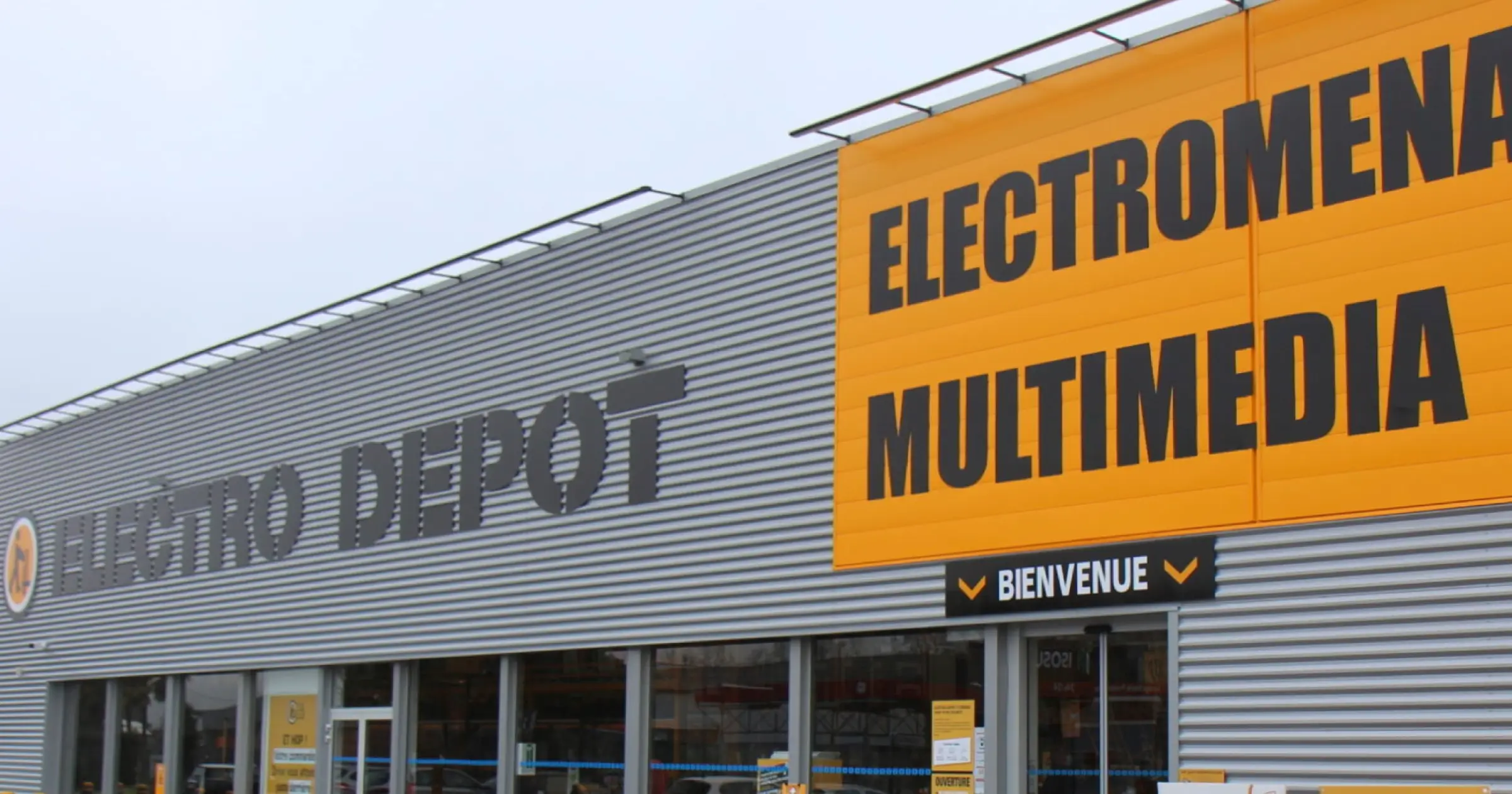
Founded in 2003, Electro Dépôt is a brand within the United B group (Boulanger, Webdistrib, and others). The company has become a major player in home appliance retail by following a straightforward model: offering quality products at the best price through optimized costs and processes.
With €1.5 billion in revenue and a growing store network, keeping operational risks and losses in check is a strategic priority — one that is essential to maintaining the competitiveness of the business. To that end, Electro Dépôt set out to modernize its tools and build a more structured, effective approach to security management.
Key takeaways
- Shrinkage held at a fraction of the industry average.
Retail shrinkage averages 0.7 percent of revenue. Electro Dépôt holds it at 0.12 percent, worth close to €8.7 million in losses avoided in 2025 alone. - Every critical event lands in one system.
Thefts, assaults, dangerous situations and field intelligence flow into a single reliable record rather than sitting in separate tools. - Adoption decided the platform, not the feature list.
The previous tool was considered complex and unintuitive, which limited team autonomy. Ease of use is what made the new platform stick across the network. - Mandatory use plus harmonized process drove a fast rollout.
National deployment standardized reporting and control across every store, with continuous support for internal teams and external security providers alike. - Data now sets where security resources go.
With everything centralized in GuardTek by Trackforce, Electro Dépôt maps risk across 126 stores and allocates resources on evidence rather than assumption.
The Challenges
Before implementing GuardTek, several issues were holding back security management across the store network:
- Improving operational control — teams needed better visibility over agent shift times, billed hours, and activity reporting.
- Centralizing critical events — thefts, assaults, dangerous situations, and field intelligence all needed to flow into a single, reliable system.
- Leveraging data to manage risk — the business needed to map incidents, spot trends, and adapt security resources accordingly.
The tool previously in use was considered overly complex and unintuitive, which limited team autonomy and made adoption difficult across the organization.
Why GuardTek?
After evaluating several options, Electro Dépôt selected GuardTek by Trackforce for its ease of use, operational depth, and ability to bring all security data into one place. Three factors were decisive:
- An intuitive and flexible platform — with tiered user access, criticality-based notifications, and instant alerts.
- Real-time operational visibility — dynamic dashboards, live event reporting, and precise activity tracking give teams a clear picture of what is happening on the ground at all times.
- Dedicated, hands-on support — the Trackforce team worked closely with Electro Dépôt throughout the implementation, bringing both industry expertise and a willingness to adapt the platform to the company’s specific operational needs.
Deployment
GuardTek was rolled out nationally to standardize practices and processes across all stores. To drive rapid adoption, use of the platform was made mandatory for all relevant stakeholders, reporting and control processes were harmonized, and teams received continuous support throughout the rollout. The result was a smooth, fast implementation embraced by both internal teams and external security providers.
Results
Today, Electro Dépôt operates 126 stores across Europe with 2,200 employees, all connected to the GuardTek platform. Since going live, the company has gained significantly better visibility over its security operations and is making far more strategic use of its data.
- Significant loss reduction — Shrinkage in the retail sector averages 0.7% of revenue. Through its security strategy, with GuardTek playing a central role, Electro Dépôt has brought that figure down to just 0.12% — translating to nearly €8.7 million in losses avoided in 2025 alone.
- More rigorous day-to-day operations — The platform provides complete event traceability, precise tracking of field actions, and stronger accountability across teams.
- A more strategic approach to security — With all data centralized, Electro Dépôt can now map risk across its entire store network and allocate security resources based on actual, evidence-based need rather than assumption.
Client Testimonial
“The processes and methods put in place deliver real results. Day-to-day controls and verifications are carried out to an extremely high standard. The shrinkage rate has been held well below 0.15% of revenue for years — which is a remarkable achievement in retail.”
Thierry Delannoy — Group Security/Safety Director
Looking Ahead
Electro Dépôt plans to continue building on GuardTek, with a focus on deepening collaboration between internal teams and external service providers. The goal is to keep using data as a driver of smarter risk management and stronger operational performance.
Frequently Asked Questions
Latest Articles


Featured Resources

See Trackforce in action
Book a walkthrough with our team and see how it fits your operation.