How a Guard Tour System Improves Safety (& Increases Your ROI)

Trackforce
March 10, 2020 · 9 min read

Whether you own a security guard firm or manage corporate security, putting a number on the return on investment (ROI) of your security program is no easy task. It is not like measuring a sales team, where you compare salaries with the revenue they bring in. Security does not generate revenue directly. Its value is measured in cost savings and in losses that never happen.
An effective security team creates those savings through loss prevention and through its effect on the organization’s reputation, employee retention and competitive position. The challenge is showing that impact to executives and clients. A guard tour system is one of the most direct ways to do it, because it turns everyday security work into evidence: where officers were, how quickly they responded, and what happened as a result. This article explains how a guard tour system improves safety, where the ROI comes from, how to calculate it, and how TrackTik security workforce software from Trackforce makes the value visible.
Key takeaways
- Security ROI is measured in avoided cost.
Losses prevented, liability reduced and contracts retained are where the return shows up. - Response time is the lever.
The longer it takes to respond to a threat, the more damaging it is. Knowing where every officer is shortens that time. - Documentation is the proof.
Time-stamped tours and incident records show executives and clients what they are paying for and protect you in a dispute. - ROI can be calculated, not just claimed.
Add up avoided losses, recovered time and protected revenue, then compare them with the cost of the system. - One platform beats several.
TrackTik combines tours, dispatch, incident reporting and analytics, which removes the cost and gaps of running separate tools.
Where a Guard Tour System Creates Value
A guard tour system does more than confirm that officers walked their routes. Each capability maps to a type of saving you can measure.
| Value driver | How a guard tour system delivers it | How to show it |
|---|---|---|
| Faster response | Real-time officer location and dispatch to the nearest responder | Average time from alert to officer on scene |
| Loss prevention | Verified patrols of high-value and high-risk areas | Theft, damage and incident trends by site over time |
| Reduced liability | Time-stamped, location-verified records of every tour and incident | Disputes and claims resolved with records rather than testimony |
| Client retention | Reports that show clients exactly what they are paying for | Renewal rate and billing disputes per client |
| Administrative savings | Reports generated from field data instead of written up by hand | Supervisor hours spent on reporting each week |
Securely Documented Incident Reporting Is Your Proof
When officers handle incidents as part of their daily work, the details matter: who was on shift, where they were, which tasks were on their tour, and when they submitted the report. Capturing that automatically, rather than relying on memory and handwriting, is what turns an incident into evidence.
Records of each incident, along with response times and outcomes, become simple reports for executives, clients and stakeholders. That makes it easy to show clients exactly what they are paying for. The same reports can be vital if a legal dispute arises from an incident, potentially saving the company significant legal cost. TrackTik security incident reporting captures time, location, photos and the officer’s account at the scene, which is the evidence layer that ends accountability disputes.
Faster Response Keeps Losses Small
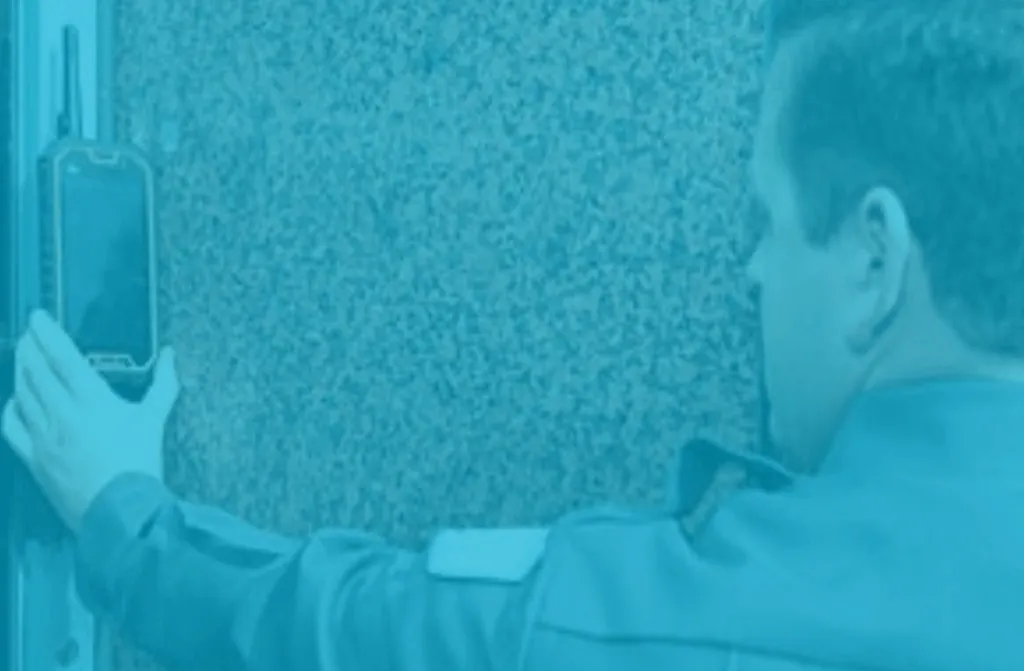
As a general rule, the longer security takes to respond to a threat, the more damage it does. GPS and NFC checkpoint technology let supervisors see officer locations instantly, so the nearest officer can be dispatched through TrackTik security guard dispatch the moment an incident is reported. Incidents are handled sooner, and potential losses stay small. Measuring that response time, and showing it falling, is one of the clearest ROI stories a security leader can tell.
Prevent Theft and Keep Operations Running
The best way to prevent theft is to be prepared and vigilant. A well-equipped security team prevents theft and damage to assets, and it also protects revenue in a crisis by making sure employees and vendors are accounted for while operations keep running.
A command view across every site
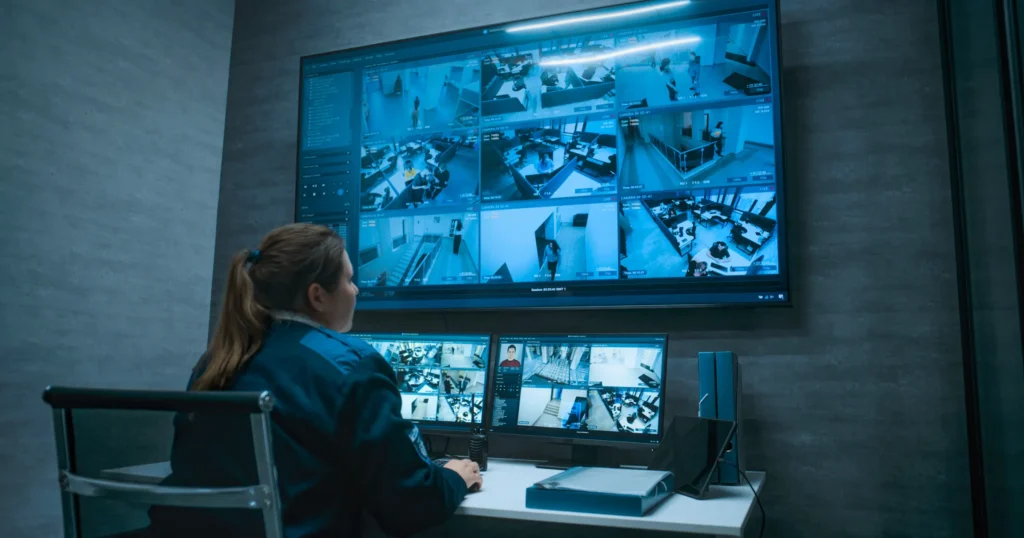
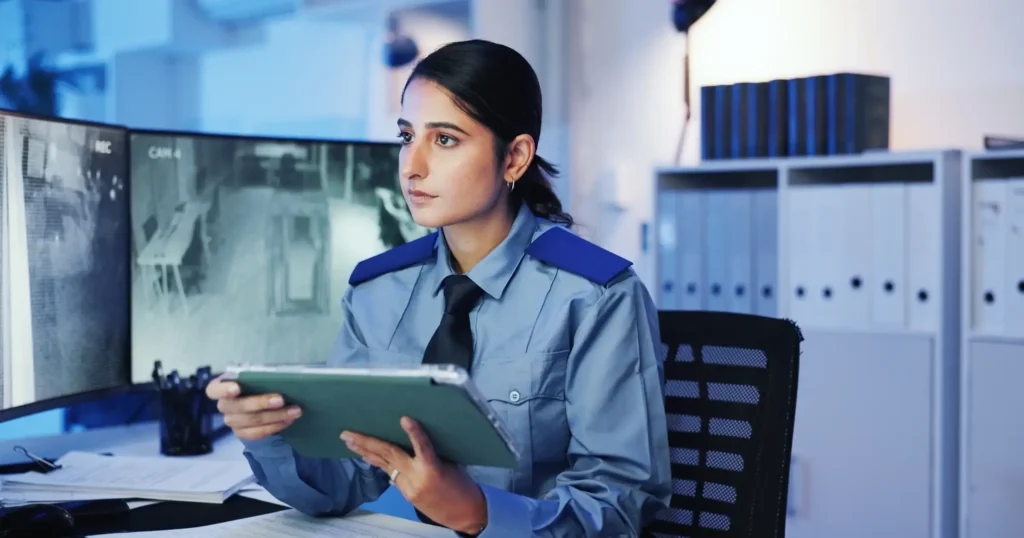
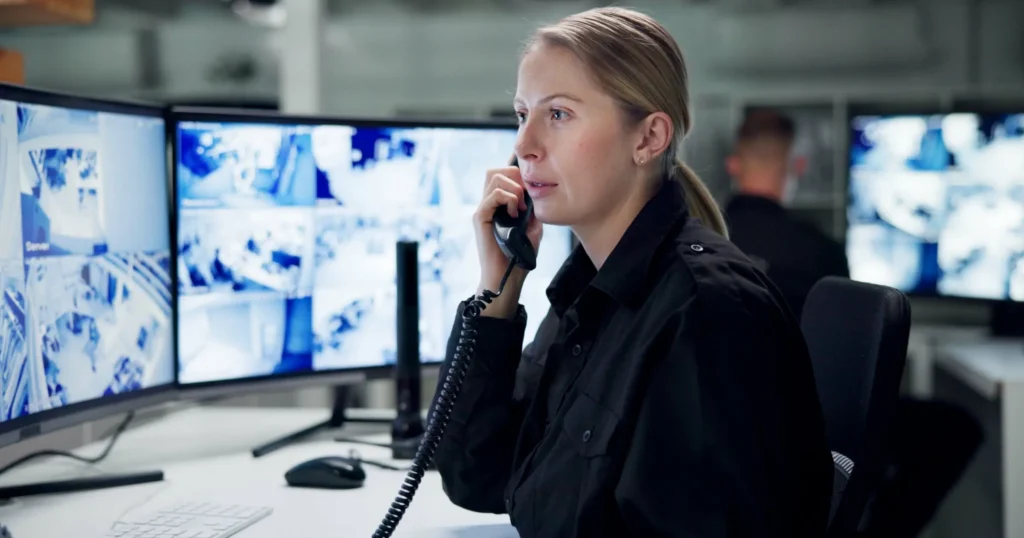
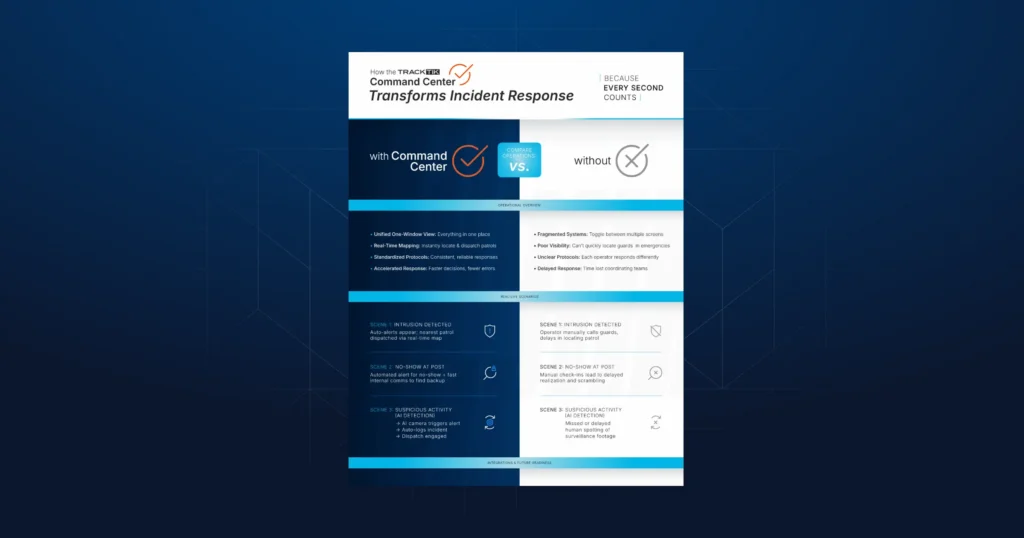
The TrackTik Command Center lets supervisors monitor multiple sites and coordinate resources quickly when an emergency arises. At any moment they know what is happening and where their team is. Communication is vital in a crisis, and fast, recorded communication with officers in the field means everyone gets the instructions they need.
Knowing who is on site
Third-party vendors, contractors and visitors are a common blind spot. Recording who is on site, and which areas they are allowed to enter, means officers know who to account for during an emergency and evacuation can be as orderly as possible. It keeps business activity running with fewer distractions and reduces the legal exposure that comes from visitors being in restricted areas. Visitor logging is part of TrackTik guard management, alongside post orders and site tasks.
How to Calculate Guard Tour System ROI
You do not need a complex model. The basic formula is ROI = (annual value created minus annual cost) divided by annual cost. The work is in estimating the value honestly. Build it from these components, using your own numbers:
- Losses avoided. Compare theft, damage and incident costs before and after verified patrols, by site.
- Supervisor and admin time recovered. Hours per week no longer spent typing up reports, chasing paper logs or building client summaries, multiplied by loaded hourly cost.
- Billing protected. Credits and write-offs avoided because hours and patrols are verified. For contract firms, this ties directly to profit margin.
- Revenue retained. Contracts renewed, or budget defended, because you could show the work. Even one retained client often covers the cost of the system.
- Liability reduced. Claims avoided or resolved quickly because the record was complete.
- Tools consolidated. Separate licenses for tours, reporting, dispatch and scheduling that one platform replaces.
In-house teams presenting to leadership will find a fuller framework in how to justify security software costs to leadership.
What to Show Executives and Clients
A short, consistent set of measures, reported the same way every month from TrackTik business intelligence, makes the value obvious:
- Tour and checkpoint completion rate by site
- Average response time, trending over the quarter
- Incidents by type and location, and what changed as a result
- Losses and claims compared with the same period last year
- Hours delivered against hours contracted
One Platform Instead of Several
Perhaps the biggest way TrackTik maximizes ROI is simply that it puts these tools under one roof. Many organizations piece together similar capabilities from several vendors, and the cost adds up, along with the gaps between systems. Fragmented tools undermine risk strategy; a unified platform gives you tours, dispatch, incident reporting, scheduling and analytics in one package, with one record. If you are comparing systems, start with how guard tour tracking benefits every tier of the operation.
Book a TrackTik demo to see how a guard tour system can improve safety and maximize the ROI of your security operation.
Frequently Asked Questions
Latest Articles
Featured Resources
See Trackforce in action
Book a walkthrough with our team and see how it fits your operation.