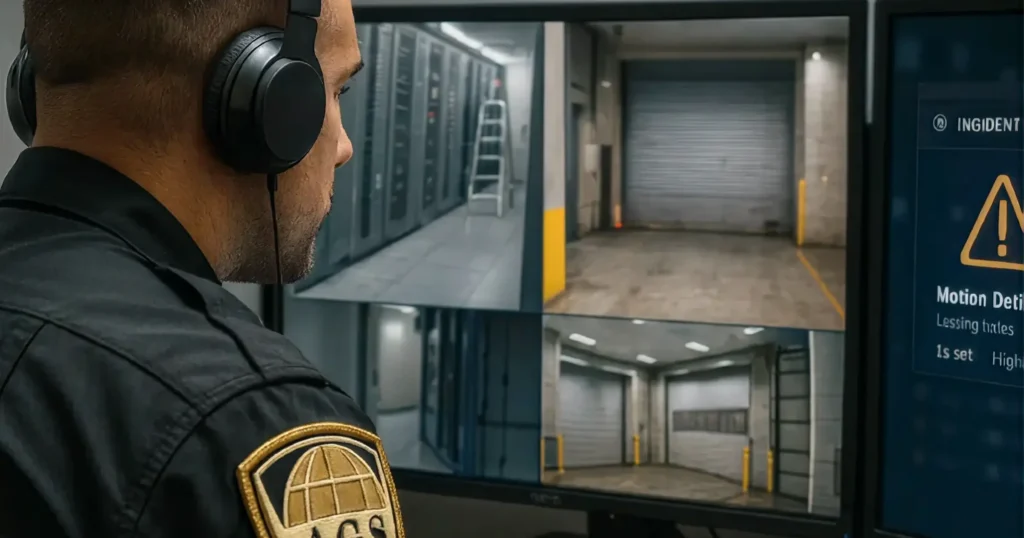
What Is Checkpoint Verification? NFC vs. QR vs. GPS Compared

Trackforce
August 31, 2026 · 5 min read

What Is Checkpoint Verification? NFC vs. QR vs. GPS Compared
Key takeaways
- Checkpoint verification proves presence, not just attendance.
It captures a timestamped record that a guard was at a specific location at a specific time, logged automatically instead of written down afterward. - NFC is the hardest to fake.
Centimeter-level proximity means no remote scan and no scanning from a photo, which suits server rooms, access doors, and secured assets. - QR is the fastest to deploy.
Print, post, and scan with any smartphone camera. The trade-off is lower tamper resistance if a code is damaged or duplicated. - GPS covers what you cannot tag.
Geofenced checkpoints suit outdoor perimeters and open areas, but accuracy runs 15 to 20 meters and degrades indoors. - Most operations should mix all three.
TrackTik by Trackforce supports NFC, QR, barcode, and GPS checkpoints in the same tour, so the method matches what each location needs to prove.
What is checkpoint verification?
Checkpoint verification is the process of confirming that a security guard physically visited a specific location at a specific time during a patrol. Guard tour software uses one of several technologies (NFC, QR code, barcode, or GPS) to log that visit automatically, creating a timestamped record that can be reviewed for compliance, billing, or incident investigation.
Checkpoint verification replaces manual paper logs, which can be filled out after the fact and offer no independent proof a guard was actually present.
What are the main checkpoint verification methods?
There are three primary technologies used for checkpoint verification in modern guard tour systems: NFC, QR code, and GPS. A fourth method, barcode scanning, works similarly to QR and is often grouped with it.
NFC checkpoint verification
NFC (Near Field Communication) checkpoint verification uses a small physical tag installed at a location. A guard taps their mobile device against the tag to log a visit. NFC requires the device to be within a few centimeters of the tag, so a check-in can only happen if the guard is physically at that exact spot.
Best for: high-security points such as server rooms, access doors, and secured assets where proof of exact physical presence is critical.
QR code checkpoint verification
QR code checkpoint verification uses a printed code posted at a location. A guard scans the code with their device’s camera to log the visit. QR codes are inexpensive to produce and can be deployed across a large site in a short amount of time.
Best for: high-volume interior routes and large sites where fast, low-cost deployment matters more than tamper resistance.
GPS checkpoint verification
GPS checkpoint verification uses geofencing instead of a physical tag or code. A checkpoint is defined as a location with a set radius, and a guard’s device logs a visit automatically once it enters that radius. Accuracy typically ranges from 15 to 20 meters, and precision decreases indoors or in dense urban areas.
Best for: outdoor perimeters, parking structures, and open areas where installing a physical checkpoint isn’t practical.
NFC vs. QR vs. GPS: quick comparison
| Factor | NFC | QR Code | GPS |
|---|---|---|---|
| Physical asset required | Yes, a tag | Yes, a printed code | No |
| Proximity required to scan | Centimeters | Direct line of sight | 15-20 meter radius |
| Deployment speed | Slower (tag install) | Fast (print and post) | Fastest (no hardware) |
| Tamper resistance | High | Moderate | High (no physical asset to tamper with) |
| Works indoors | Yes | Yes | Reduced accuracy |
| Works outdoors/large open areas | Yes, with enough tags | Yes, with enough codes | Best suited |
| Live location tracking | No | No | Yes |
| Best use case | High-security single points | High-volume interior routes | Outdoor perimeters, open areas |
Which checkpoint verification method is most accurate?
NFC is generally considered the most tamper-resistant method because it requires centimeter-level proximity and there’s no way to scan a tag remotely or from a photo. QR code accuracy depends on how well the code is protected from damage or duplication. GPS accuracy depends on environment, and it degrades indoors or near tall buildings, so it’s less precise for confirming presence at an exact door or asset.
Can a security operation use more than one checkpoint verification method?
Yes. Most guard tour platforms, including TrackTik, support NFC, QR code, barcode, and GPS checkpoints within the same tour. Operators typically match the method to the location: NFC for secured access points, QR for interior routes, and GPS for outdoor perimeters, so a single patrol can combine all three depending on what each checkpoint needs to prove.
Why does checkpoint verification matter for compliance and billing?
Checkpoint verification creates an independent, timestamped record of patrol activity that isn’t dependent on a guard’s manual log entry. That record supports:
- Client billing disputes, where a timestamped visit log confirms contracted patrol frequency was met.
- Incident investigations, where knowing exactly when a guard was at a location helps establish a timeline.
- Insurance and compliance audits, where proof-of-service documentation is often a contractual requirement.
Frequently asked questions
Latest Articles





Featured Resources




See Trackforce in action
Book a walkthrough with our team and see how it fits your operation.