7 Pieces of Protective Equipment for Every Security Patrol

Trackforce
August 12, 2022 · 10 min read
7 Pieces of Protective Equipment for Every Security Patrol
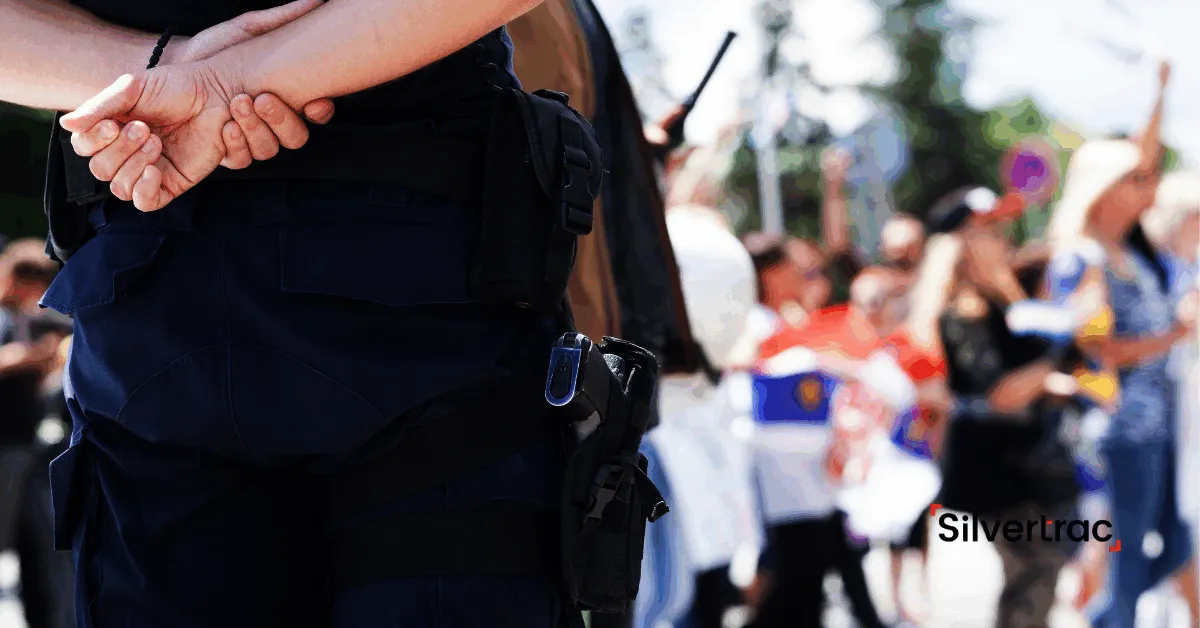
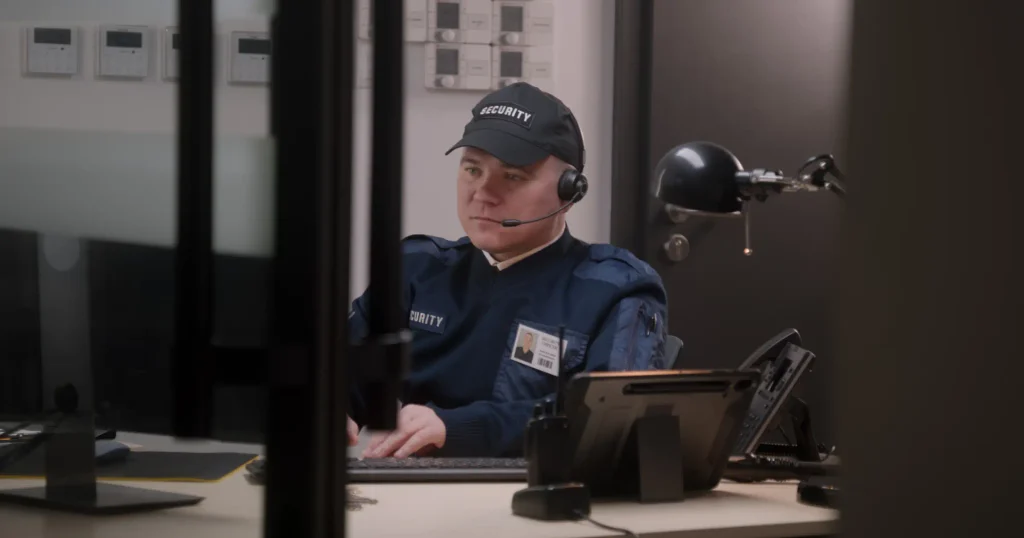
Security guards are hired to primarily serve two purposes: protect people & property and report incidents back to their customers. But an often-overlooked factor is the precautions that must be taken to protect the security guards themselves. While many security guards work low-threat shifts, there are many more who engage in dangerous patrols.
In areas with heavy crime rates, night shift guards, and executive protection officers are often armed to protect themselves, their team, and the property. With rising crime rates, it’s becoming more commonplace to see low-level officers using tactical style security gear in addition to company uniforms to keep themselves safe on their rounds.
What equipment does a security guard need?
These are the 7 pieces of security guard equipment & accessories that should be used on every modern patrol to ensure officer safety.
Key takeaways
- Seven pieces of kit cover almost every patrol.
A smartphone, body armor, heavy-duty boots, a guard booth, a torch, a duty belt and a lone worker alarm handle the overwhelming majority of officer safety needs in the field. - The phone is the highest-value item on the list.
A two-way radio only covers short distances. A smartphone reaches supervisors, clients and emergency services from anywhere, and it doubles as the officer’s reporting device. - Match the gear to the post, not to the catalog.
Armor-piercing ballistic protection belongs on a bank or armored vehicle assignment. A stab-resistant vest is the right call for a mall or lobby post. - Equipment only protects officers who can be located.
A panic button is worth very little if nobody sees the alert. GPS-verified tours and timed check-ins are what turn a lone worker alarm into an actual response. - TrackTik turns the kit into a record.
Tours, check-ins, incidents and site tasks captured on the officer’s phone become a timestamped operational record, so officer safety and client reporting come out of the same system instead of two.
Mobile Phone
Allowing a security guard to walk their rounds without a smartphone is a huge mistake, even if they already have a two-way radio, walkie talkie, or earwig. Here’s why:
- Two-ways are only designed for short-distance communication. As more security companies secure contracts across cities, counties, and states, it’s important to have other means to deliver important information to all required team members regardless of distance.
- Walkie talkies have limited range between properties & first responders. Often, security guards are the first ones on the scene of an incident, but walkie talkies are limited in their reach, so you need another way to communicate.
Outfitting a security guard with company-provided phones, or having them bring their own devices, will allow staff to communicate information instantly. And if a situation gets out of hand, they can report back or call 911 directly.
BONUS: Mobile security guard apps allow guards to ditch pen & paper daily activity reports and relay information like security, maintenance, or parking issues directly to their supervisors or customers.
Armored Vests
Sometimes having a self-defense weapon isn’t enough, making armored gear essential for every guard.
Personal protective equipment (PPE) like bulletproof vests and body armor can make the difference in dangerous situations. Especially when the rate of guard casualties has been on the rise due to violent encounters on the job.
A high-quality vest protects officers from a range of violent incidents like gunshots, stabbings, and ballistic shrapnel. But selecting the right vest comes down to the type of patrols a guard will be employed to work.
- Officers working in high-risk environments, like banks or armored vehicles, should be using armor-piercing ballistic protection.
- Officers working in low-risk environments, like mall guards, likely only need a stab-proof jacket or vest.
Providing PPE for security guards is key to keeping them safe so they can respond to threats more effectively.
Heavy-Duty Footwear
Heavy-duty tactical boots are an essential part of any security, defense, or law enforcement position.
The best heavy-duty footwear is:
- Comfortable. Patrolling security guards are typically on their feet for most of their shift, so it’s important to select a pair that are comfortable enough for all-day use.
- Light and flexible. Security boots that are lightweight and flexible for multiple terrains allow guards to be adaptable site-to-site.
- Offers ankle protection. Many guards opt for boots with ankle protection that helps them more easily carry the rest of their gear.
Also, it’s important to not “cheap out” on a new pair of boots. They should be seen as a tool and investment, so take your time, and choose wisely.
Protective Guard Booths
Guard booths aren’t just for rest breaks. Security guard booths, also known as guardhouses, provide unrivaled protection from the elements and an extra layer of protection for security officers.
Benefits of guard booths:
- Protection from inclement weather
- Allow officers to control visitor flow
- Help with parking management
- Give officers a safe place to watch surveillance
The guard shacks of today aren’t just four walls and a roof; many high-quality builders offer options designed specifically to protect the guards while on duty.
Guard booth manufacturers like Guardian Booth offer a range of prefabricated booths and customizable options to meet the property requirements and keep the guards as safe as possible.
PRO TIP: Bulletproof guard shacks built with ballistic resistant materials are becoming more common in high-threat areas, but they can be very expensive to acquire in comparison with a regular guard booth. These expenses can be absorbed by the property owner as part of the contract negotiation process if bullet resistance is necessary.
Security Torch
Every guard needs to have a high-quality security torch or flashlight.
A heavy-duty flashlight will help security guards keep a strict check around properties at all times of the day. Not only can it serve as a vision booster at night, but it serves as a useful self-defense tool.
Most people think of flashlights like the Maglite Heavy Duty D-Cell when purchasing their first security torch, but times have changed. Flashlights today are lighter, brighter, and offer more tactical options than the traditional entry-level torch.
What to look for in a good torch:
- LED Bulbs
- Rechargeable Batteries
- High Lumen Output
- Good Light Coverage
- Long Run Time
- Water, Shock, and Drop Resistant
- Everyday Carry Capability
Guard Belts
Having a ton of protective gear is great, but you still need a way to carry it around efficiently. A high-quality tactical belt is the answer.
Being able to keep your hands free is the primary feature a guard should think of when deciding what type of belt to use on the job. Most guards can get away with a traditional uniform-matching belt, but others find it more convenient to use a utility duty belt.
A proper utility belt provides easy access to other equipment like keys, gloves, flashlights, pepper spray, handcuffs, and whatever else is part of a guard’s everyday carry.
Lone Worker Alarm
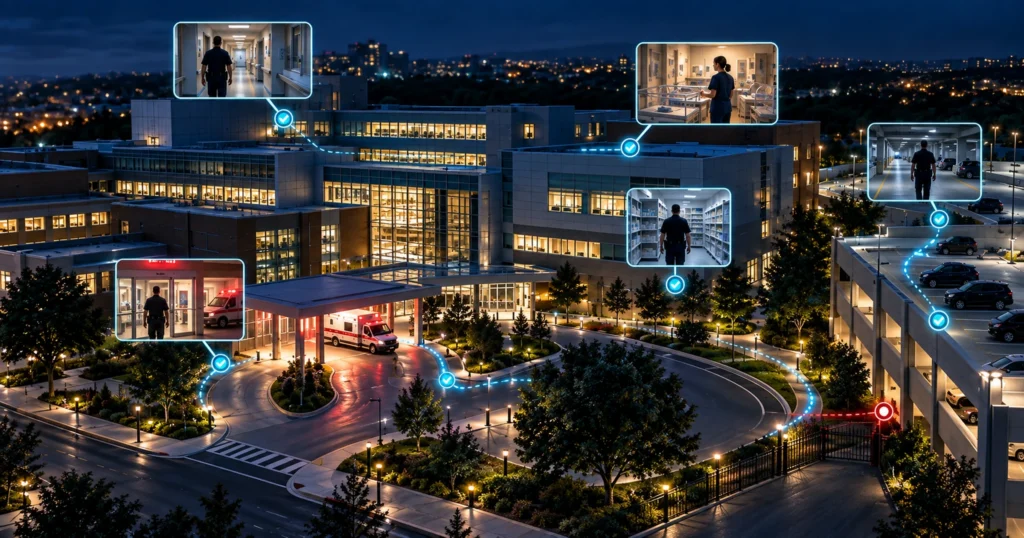
In many situations, your guards will be working on their own. With a lone worker alarm system, you can easily detect if a dangerous situation arises.
Finding a guard patrol tracking system that utilizes GPS tracking can help protect your guards by ensuring they are where they are supposed to be. In case of emergencies, guards can raise the alarm and alert the rest of their team, as well as local emergency personnel.
Protecting Your Officers
Your number one priority should be protecting your staff. Investing in all this security officer equipment is key to keeping your guards safe and enabling them to do their jobs effectively.
Increasing the utility of a guard can help improve guard effectiveness and as such, improve the security of your people and property. But in the end, it’s all about protecting guard safety.
Frequently Asked Questions
Latest Articles


Featured Resources



See Trackforce in action
Book a walkthrough with our team and see how it fits your operation.