Why 79% of Security Teams Respond Faster – And Why It Matters

Trackforce
March 11, 2026 · 6 min read
Why 79% of Security Teams Respond Faster – And Why It Matters
Key takeaways
- Response time is a chain, not a dispatch.
It runs from alert through validation, decision, notification, travel and on-scene action to a documented outcome. Measuring only the last step hides where the delay lives. - 79.17% clear 15 minutes on high-priority incidents.
That is the benchmark figure. The remaining 21% are usually losing time before an officer is ever contacted. - Three things slow the 21% down.
Outdated systems, siloed processes and stretched resources. Each adds friction to the workflow, and friction is what turns seconds into risk. - Readiness beats raw speed.
A team that validates fast and acts on clear information will beat a team that simply moves quickly on incomplete context. - Trackforce compresses the middle of the chain.
Validation, dispatch and notification happen in one platform, so the time between knowing and acting stops depending on who picks up a phone.
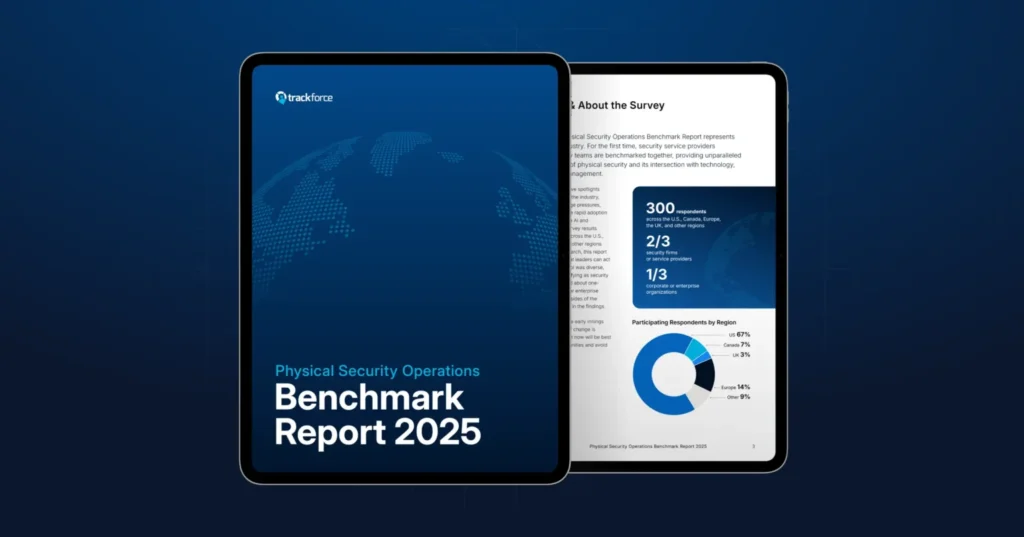
The Trackforce Physical Security Operations Benchmark Report reveals a striking data point: 79.17% of security teams respond to high-priority incidents in under 15 minutes. But what does “response time” really mean in physical security?
It’s much more than dispatching an officer. True response time is the entire chain of actions: validating alerts, sharing information, and triggering the right actions without hesitation. Fast response depends on integrated incident management systems, real-time communications, and connected technologies that give teams immediate visibility into threats.
So why isn’t everyone there yet? For the remaining 21%, outdated systems, siloed processes, and stretched resources often get in the way. These roadblocks add friction to the workflows – and when seconds matter, friction creates risk.
The takeaway: rapid response isn’t just about speed, it’s about readiness. Organizations with strong incident management capabilities are better equipped to contain threats quickly, minimize damage, and keep people safe.
What response time actually measures
Most operations report response time as the gap between an alert and an officer arriving. That number is real but incomplete, because it treats everything before dispatch as though it takes no time at all. In practice the chain has several stages, and each one can absorb minutes:
- Detection. A sensor, camera or person registers that something has happened.
- Validation. Someone confirms whether the alert is genuine, which is where most of the lost time sits.
- Decision. A judgment is made about severity and what level of response it warrants.
- Notification. The right officer is identified, contacted and given enough context to act.
- Travel and arrival. The part most teams actually measure.
- Documentation. The record of what happened, without which the response cannot be proven afterward.
Read that way, a fifteen-minute benchmark is not really a test of how fast officers move. It is a test of how little friction sits between detection and the moment someone is dispatched with the information they need.
Where the 21% lose the time
The article’s three blockers each map to a specific stage of that chain. Outdated systems slow validation, because confirming an alert means checking a second or third tool that does not talk to the first. Siloed processes slow notification, because the person who knows is not the person who dispatches, and the handoff happens by phone or radio. Stretched resources slow decision-making, because the operator weighing the alert is already handling several others.
None of those are solved by telling officers to hurry. They are solved by removing steps, which is why teams running on one connected platform tend to sit in the faster group.
Readiness is the better word
Speed on its own can make things worse. An officer sent quickly but without context arrives unprepared, and a team conditioned to move fast on unverified alerts burns capacity on incidents that were never real. Readiness means the validation was sound, the right person was chosen, and they arrived knowing what they were walking into.
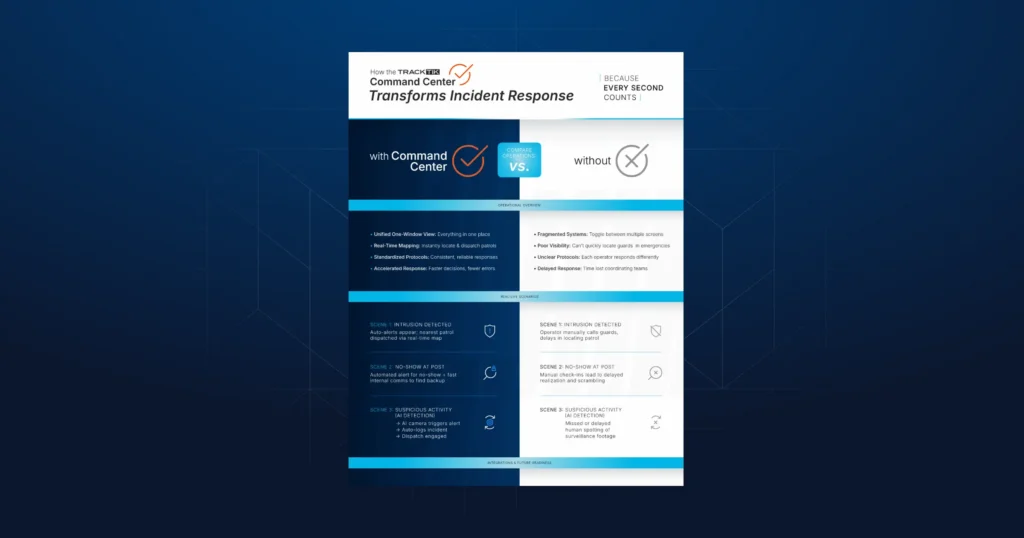
That is where Trackforce sits in the chain. Command Center takes the verified alert, dispatch identifies the closest qualified officer automatically, and the notification carries location, threat type and protocol to their device rather than being relayed by voice. Every stage timestamps itself, so response time becomes something you report rather than estimate. For the deeper treatment of how detection connects to dispatch, see the 15-minute rule.
Frequently asked questions
Latest Articles


Featured Resources
See Trackforce in action
Book a walkthrough with our team and see how it fits your operation.