The Data-Driven Approach to Security Guard Retention

Trackforce
July 28, 2025 · 11 min read

While most industries struggle with a 41% annual turnover rate, security companies face a crisis that’s spiraling out of control. Reports indicate security guard turnover can range from 100% to 400% annually, depending on the business model and operational environment. This means some companies are replacing their entire workforce multiple times each year, creating a revolving door that devastates both profitability and service quality.
But what if you could predict which guards are likely to leave before they even know it themselves? The future of security workforce management isn’t just about better benefits or higher pay. It’s about leveraging data to create proactive retention strategies that address problems before they become departures.
Key takeaways
- Turnover costs far more than recruiting.
Overtime, client churn, SLA penalties and inexperienced coverage all add to the bill. - Pay alone rarely fixes engagement.
Recognition, development, communication and feeling valued matter just as much. - Your data shows who is at risk.
Shift swaps, rising overtime, call-offs and skipped training often appear before a resignation. - Measure retention like any other KPI.
Track turnover, early turnover, overtime, call-offs and tenure by site and supervisor. - TrackTik connects the signals.
Scheduling, attendance, payroll and business intelligence in one platform make at-risk officers visible early.
The hidden costs of security guard turnover
The average private security firm has a completely new workforce every 12 months. But the financial impact extends far beyond simple recruitment costs. It usually takes 33% of an employee’s salary to replace them, but that’s just the beginning.
Consider the cascading effects: overtime costs for remaining guards covering vacant shifts, client relationship damage from inconsistent service, potential SLA penalties, and the security risks posed by constantly rotating inexperienced personnel. When a single percentage point increase in turnover can cost organizations millions in additional hiring expenses, the true cost of this crisis becomes clear.
The traditional approach of exit interviews and reactive hiring simply isn’t sustainable. By the time you’re conducting an exit interview, you’ve already lost the battle, and the investment.
Beyond traditional retention: Why good intentions aren’t enough
Most security companies approach retention with the same playbook: raise wages, improve benefits, offer signing bonuses. While these tactics can help, they’re treating symptoms rather than causes. A recent Gallup poll found nearly 70% of Americans aren’t engaged at work, and throwing money at an engagement problem rarely creates lasting solutions.
The guards who leave for a $2/hour increase elsewhere weren’t just chasing money. They were seeking something their current employer couldn’t provide. Maybe it was recognition, career development, better communication, or simply feeling valued. Traditional retention strategies often miss these deeper motivational factors because they lack the data to identify what truly drives satisfaction for individual guards.
The companies that are succeeding aren’t just offering better compensation. They’re creating data-driven environments where guards feel heard, valued, and connected to their work. They’re using technology not just to schedule shifts, but to understand what makes their workforce tick.
Predictive advantage: Reading the warning signs
The most effective retention strategies identify at-risk guards before they start job hunting. Modern workforce management platforms can analyze patterns that humans might miss: changes in shift preference requests, declining performance metrics, reduced engagement with company communications, or subtle shifts in scheduling compliance.
Consider these predictive indicators:
- A guard who suddenly requests different shifts might be experiencing work-life balance issues
- Declining response times to communications could signal disengagement
- Increased sick leave usage might indicate burnout or job dissatisfaction
- Guards who stop participating in voluntary training may be mentally “checking out”
By tracking these patterns, companies can intervene proactively. Instead of waiting for a resignation letter, supervisors can initiate conversations, address concerns, and implement targeted retention strategies while there’s still time to make a difference.
Retention warning signs and the data that reveals them
Each warning sign leaves a trail in data you probably already collect. Here is where to look and how a supervisor can respond:
| Warning sign | Where the data comes from | What a supervisor can do |
|---|---|---|
| Repeated shift swap or preference requests | Scheduling requests and swaps | Talk about work-life balance and adjust the schedule where possible |
| Rising overtime hours | Time and attendance records | Rebalance hours before fatigue sets in |
| More call-offs and sick days | Attendance history | Check in privately about burnout or personal issues |
| Late clock-ins becoming a pattern | Clock-in times by shift | Ask about commute, schedule fit or site conditions |
| Skipped training or lapsing certifications | Training and certification records | Offer support and a clear development path |
| Slower replies to messages and updates | Communication and acknowledgment logs | Reconnect one to one rather than through a group message |
For more on the behaviors that come before a resignation, read why good security guards quit.
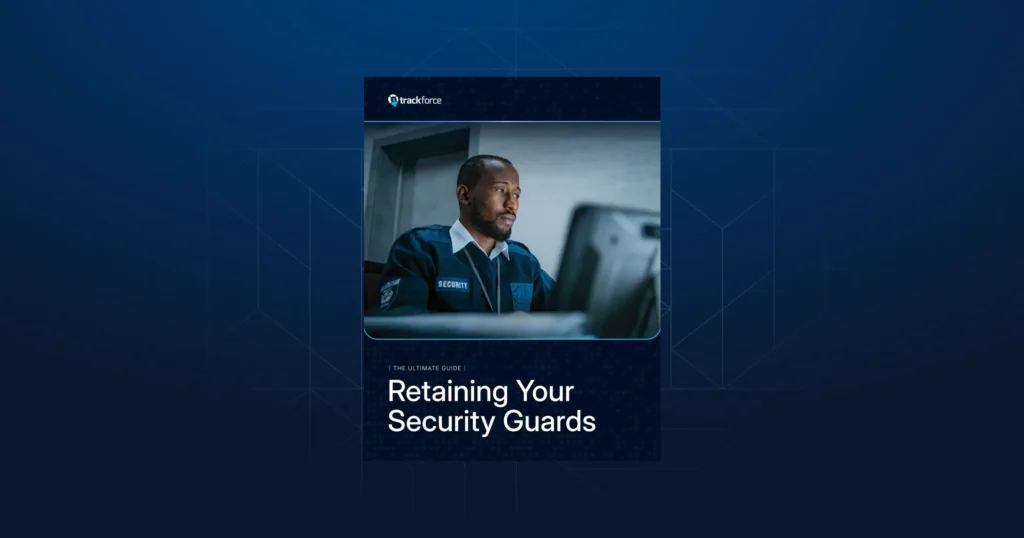
The Ultimate Guide to Retaining Your Security Guards covers the early warning signs of guard dissatisfaction and how to address them effectively.
Technology-enabled solutions: Making data work for you
The future of guard retention lies in intelligent systems that don’t just collect data. They act on it. Advanced workforce management platforms can automatically flag potential retention risks, suggest interventions, and track the effectiveness of different retention strategies.
Intelligent scheduling systems can accommodate work preferences while ensuring coverage, reducing the friction that often leads to dissatisfaction. Automated post-shift surveys can capture real-time feedback about job satisfaction, client interactions, and workplace concerns. Real-time communication tools keep guards connected to their teams and informed about company developments.
But the real power comes from integration. When scheduling data combines with performance metrics, communication patterns, and feedback surveys, it creates a comprehensive picture of guard satisfaction. This holistic view enables targeted interventions that address specific concerns rather than generic retention efforts.
Companies using these data-driven approaches report significantly higher retention rates. One security provider achieved an 80% retention rate by leveraging workforce analytics to identify and address satisfaction issues before they became resignations.
Retention metrics every security company should track
You cannot improve what you do not measure. These six retention metrics give owners and operations leaders an early, objective view of workforce stability:
| Metric | How to calculate it | Why it matters |
|---|---|---|
| Annual turnover rate | Officers who left during the year ÷ average number of officers × 100 | Your baseline for every retention goal |
| Early turnover (first 90 days) | Officers who left within 90 days ÷ officers hired in the period × 100 | Reveals hiring, onboarding and site-fit problems |
| Overtime hours per officer | Total overtime hours ÷ number of active officers | Sustained overtime is a common sign of burnout and understaffing |
| Call-off rate | Unplanned absences ÷ scheduled shifts × 100 | Rising call-offs often come before resignations |
| Time to fill open shifts | Average time between a shift opening and being filled | Shows how much pressure coverage gaps put on remaining staff |
| Average tenure by site and supervisor | Average months of service for officers at each site or under each supervisor | Highlights where leadership or site conditions drive people away |
Review these numbers monthly by site and by supervisor. A spike in one location usually points to a fixable cause, such as a difficult post, a scheduling pattern or a management issue. Scheduling problems are among the most common, as we explain in solving security scheduling and retention challenges.
The ROI of retention: Measuring success
The business case for data-driven retention is compelling. Companies that reduce turnover can save hundreds of thousands in recruitment and training costs alone. But the benefits extend far beyond direct savings:
- Improved SLA compliance: Experienced guards make fewer mistakes and respond more effectively to incidents
- Enhanced client relationships: Consistent service teams build trust and understanding with clients
- Reduced security risks: Seasoned guards are better equipped to handle complex situations
- Operational efficiency: Less time spent on recruitment and training means more focus on strategic initiatives
The companies that embrace data-driven retention aren’t just reducing costs. They’re creating competitive advantages. They’re building experienced, engaged teams that deliver superior service while their competitors struggle with constant turnover.
Ready to transform your retention strategy? Download our complete guide to guard retention for a step-by-step implementation plan.
How TrackTik puts retention data to work
TrackTik brings the data behind every retention signal into one platform, so supervisors can act before a good officer leaves:
- Skill and certification matching for every assignment, so officers are placed where they can succeed.
- Overtime prevention with live labor-cost tracking, so burnout risks show up before they become resignations.
- Accurate pay from verified time, removing the payroll errors that quickly erode trust. See how TrackTik helps automate payroll and workforce management.
- Instant pay options through TrackTik’s integration with Rain Instant Pay, giving officers access to part of their earned wages before payday.
- Real-time dashboards that track everything from clock-ins to financial metrics by site, client and supervisor.
The path forward
The security industry’s turnover crisis won’t be solved by incremental improvements to traditional retention strategies. It requires a fundamental shift toward data-driven workforce management that predicts, prevents, and addresses turnover before it happens.
The companies that embrace this approach will build stronger, more stable teams while their competitors remain trapped in the costly cycle of constant recruitment and training. The question isn’t whether you can afford to invest in predictive retention strategies. It’s whether you can afford not to.
The future of security workforce management is here. Are you ready to lead the transformation?
Take Action Today: Transform your approach to guard retention with our comprehensive guide. Download “The Ultimate Guide to Retaining Your Security Guards” and discover the proven strategies that are helping security companies achieve 80%+ retention rates. To see the data behind it in your own operation, book a TrackTik demo.
Frequently Asked Questions
Latest Articles





Featured Resources





See Trackforce in action
Book a walkthrough with our team and see how it fits your operation.