
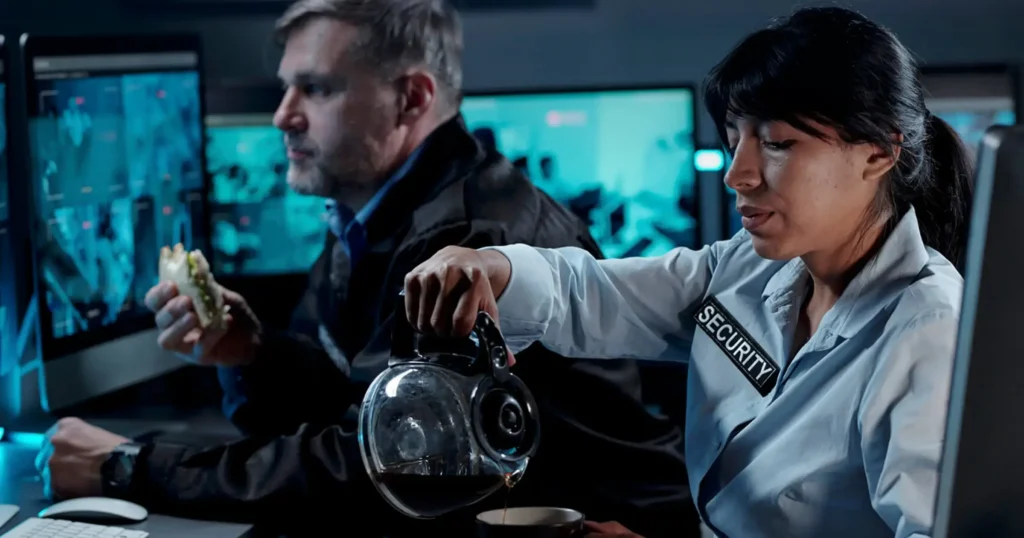
The Work Nobody Sees: How security firms are losing credit (and revenue ) for tasks that happen every single day
More than likely, your guards are doing more than the contract says.
A site manager flags a suspicious vehicle and asks someone to keep an eye on it. A fire extinguisher check is due and nobody else is going to do it. A construction crew shows up unannounced and needs to be monitored. Snow gets dumped overnight and a guard spends forty minutes clearing a path before the morning shift arrives.
None of it is in the tour schedule. All of it gets done anyway.
And then it disappears. No timestamp. No record. No line item at renewal. Just a guard who went above and beyond, and a firm that absorbed the cost without ever getting credit for it.
This is one of the most consistent, least-talked-about sources of revenue leakage in the industry.
The gap guard tours were never designed to fill
Guard tour software does exactly what it was built to do: confirm that a patrol happened, that checkpoints were hit, that the route was completed.
But a tour is binary. It started, it finished. There’s no space in that architecture for a task that takes three days, or one that gets created on the fly because a client called at 2pm with a request. There’s no way to tie a task to a specific asset, no mechanism for a guard to pick up unplanned work from their phone without a dispatcher getting involved.
Guard tour tells you what happened on the patrol. It has no language for everything else.
That’s the gap Site Tasks was built to fill.
What “everything else” actually looks like
The tasks that fall outside a standard tour aren’t edge cases. They’re a consistent, predictable part of how security work gets done on complex sites.
Healthcare rounds and patient area checks In a healthcare environment, guards are often asked to check specific areas, escort patients, or monitor spaces that require status updates throughout a shift. A task with a start state, progress notes, and a close-out timestamp captures that reality in a way a checkpoint scan simply can’t.
Fire extinguisher and equipment compliance checks A fire extinguisher check across a multi-building site might involve dozens of units, specific inspection criteria, and documentation that satisfies an insurer or regulatory body. A structured task with an assigned owner and a completion record captures all of it.
Parking lot maintenance and snow removal If a guard spent forty minutes clearing snow or patrolling an area outside the formal tour route, that labor is real and it deserves a record. With a timestamped task on file, it becomes part of the evidence at renewal rather than an effort the client never knew happened.
Ad hoc client requests This is the most common source of unrecorded work. A site manager asks a guard to check something, verify something, handle something. The guard does it because that’s what good service looks like. Without a system to capture it, there’s no record it happened at all by the time renewal comes around.
What changes when the work is on the record
When every task is logged, assigned, tracked, and closed out with a timestamp and a responsible party, the renewal conversation looks different. You’re showing clients exactly what was delivered on their behalf: every ad hoc request handled, every compliance check completed, every task outside the tour that got done because your team takes the work seriously.
Supervisors benefit too. A live view of what’s in progress, complete, and overdue across every site replaces the phone calls and handoff notes that make day-to-day management harder than it needs to be.
The question worth sitting with
How many tasks did your team complete last month that have no record? Guard tour covers the patrol. Site Tasks covers everything else, so the next time you walk into a renewal, you’re walking in with proof.
Join us Wednesday, June 17 at 1:00 PM ET for a live webinar on Site Tasks. We’ll walk through real operational scenarios, show you how to configure the feature for your team, and share what’s coming next.
