
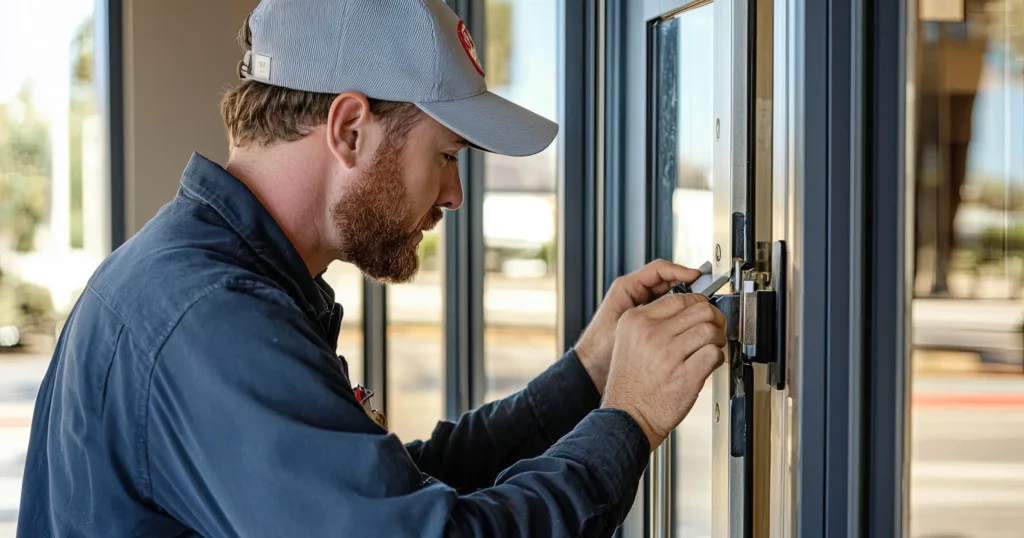

From Keys to Credentials: How Locksmiths Are Becoming the Front Line of Cyber-Physical Security
For decades, locksmiths were defined by their mastery of metal keys, mechanical locks, and physical access points. Today, that definition is rapidly changing. As electronic access control, mobile credentials, and cloud-connected systems become the norm, locksmiths are evolving into hybrid security professionals—operating at the intersection of physical and digital security.
This shift was highlighted in a recent Security Journal Americas article, “Looking Ahead to 2026,” which explores how the channel and its professionals are adapting to new technologies and customer expectations. The article underscores a key reality facing the industry: physical security can no longer exist in isolation. Digital trust increasingly starts at the door.
The Modern Locksmith: No Longer Just Mechanical
Electronic locks, smart access control, and IoT-enabled devices are now commonplace across commercial, multifamily, healthcare, and enterprise environments. With this shift, locksmiths are being asked to do far more than install or rekey hardware. They’re configuring software, managing credentials, and ensuring access systems integrate securely with broader IT environments.
The Security Journal Americas piece points out that many locksmiths and channel partners are already expanding their skill sets—embracing electronic access control, mobile authentication, and even basic cybersecurity services. This evolution is driven by customer demand. Organizations want convenience and visibility, but they also want assurance that access systems won’t become a vulnerability.
As a result, locksmiths are increasingly responsible for protecting not just physical spaces, but digital identities as well.
Why This Evolution Matters: Lessons from Physical Penetration Testing
Physical penetration specialist Deviant Ollam demonstrates through his testing work just how critical the evolution from mechanical to cyber-physical security has become in an episode of Darknet Diaries. In a recent podcast interview, Ollam described how his career began when he helped a law firm after their system administrator quit—not through network recovery, but by shimming open locked doors with simple office supplies when no one could find keys.
This moment crystallized a fundamental insight: physical and digital security cannot be separated. When Ollam can bypass an electronic strike with a piece of cardboard, clone RFID credentials overnight, or social engineer his way past security guards while drilling through locked doors, it exposes how electronic access control creates new vulnerabilities that traditional locksmiths weren’t trained to address.
Where Physical Security Meets Cyber Risk
Every connected lock, badge reader, or mobile credential represents a potential cyber entry point. Poorly managed access credentials, unsecured devices, or outdated firmware can expose organizations to serious risk.
That’s why physical access decisions are now inseparable from cybersecurity strategy. Who has access? When? From where? And how is that access monitored, audited, and revoked?
Locksmiths are often the first, and sometimes only, professionals interacting with these systems on-site. This places them in a critical position: they are no longer just installers, but stewards of cyber-physical trust.
However, this expanded role comes with challenges. Managing electronic access systems requires visibility, accountability, and consistent operational processes, especially as locksmiths scale their services or support multiple client locations.
The Human Element Remains Critical
Perhaps the most revealing finding from Ollam’s penetration tests is that technology alone cannot secure a facility. In one engagement at a small-town factory, his team cloned RFID badges, created fake credentials, and successfully entered the building, only to be caught by an employee who had worked there for 38 years and immediately recognized unfamiliar faces.
“That was the first time we ever had to show the get-out-of-jail-free card,” Ollam explained, referring to the authorization letter penetration testers carry. The employee’s vigilance succeeded where electronic systems failed, demonstrating that engaged employees who care about their workplace are often the strongest security layer, a reality that cannot be replicated by access control alone.
The Operational Gap Holding Locksmiths Back
In a high-security engagement Ollam described, his team spent nearly a week conducting surveillance on a critical infrastructure facility—including crawling through fields in ghillie suits to photograph badge readers and analyze ground-loop sensors at vehicle checkpoints. When they finally gained access by hiding in a car trunk and tailgating through the gate, they discovered the facility had invested heavily in perimeter security but left internal doors vulnerable to simple tailgating.
More revealing was what it took to finally get caught: one team member had to deliberately create chaos, drilling locks, triggering alarms, stealing a bike, and a golf cart before security recognized something was wrong. This type of comprehensive testing requires detailed operational documentation, coordinated team movements, and real-time visibility into what multiple teams are doing across a campus.
As services become more complex and more digitally sensitive, these gaps create risk:
- Limited visibility into who accessed systems and when
- Inconsistent documentation of installations, updates, or credential changes
- Difficulty proving compliance or service quality to clients
- Increased exposure to errors, misconfigurations, or insider risk
To succeed in this new era, locksmiths need more than technical skills—they need operational platforms that support accountability, transparency, and control.
Supporting the Transition with Trackforce
The locksmith profession has always operated on trust. But as locksmiths evolve into cyber-physical security professionals, that trust equation has fundamentally changed. Today’s locksmiths don’t just cut keys—they program credentials, configure access control systems, and maintain the digital infrastructure that determines who can enter sensitive spaces.
This creates questions many organizations can’t answer: When a locksmith programs credentials into an access control system, who tracks what they accessed? How do you prove which technician made changes to electronic locks? If a breach occurs, can you document every service visit and system modification?
The Insider Risk No One Talks About
Physical penetration specialist Deviant Ollam maintains a 100% success rate getting into buildings during security assessments—often by impersonating technicians with authentic-looking credentials. In one engagement, he posed as an elevator repair technician and was escorted directly into the server room by a trusting security guard.
Now consider that legitimate locksmiths have the same master access, authentic credentials, and trusted relationships. They can bypass locks, clone credentials, and access secure areas as part of normal job duties. Without proper operational controls, organizations are trusting individuals rather than verifying systems.
This represents one of the most overlooked vulnerabilities in cyber-physical security: the people who install and maintain access control systems have the knowledge and access to defeat them.
Building Accountability Into Service Delivery
Trackforce addresses this gap by providing operational infrastructure to manage and monitor security service providers who operate at the intersection of physical and digital security.
Key capabilities include:
- Comprehensive Audit Trails – Every technician visit, system access, and credential modification is logged with timestamps, locations, and technician identity. If a security incident occurs, organizations can immediately trace which service providers had access to affected systems and when.
- Real-Time Visibility – Track which technicians are on-site, what systems they’re accessing, and how long they’re spending in sensitive areas. This visibility deters misconduct while verifying that work was performed as contracted.
- Standardized Security Protocols – When multiple locksmiths service different locations, inconsistent practices create risk. Trackforce standardizes procedures across all technicians and locations.
- Compliance Documentation – Healthcare, financial services, and critical infrastructure facilities can prove that service providers followed proper protocols and that all access events were authorized and logged.
Trackforce doesn’t replace trust—it provides the verification layer that transforms trust from an assumption into a documented, auditable reality. For locksmith businesses, this infrastructure demonstrates professionalism and supports growth. For organizations, it addresses the insider risk that electronic access control has created.
As locksmiths take on greater responsibility in cyber-physical security, they need platforms that create accountability for the privileged access they hold—platforms that transform “trust me” into “verify me.”
Preparing for 2026 and Beyond
The message from Security Journal Americas is clear: the future of security belongs to professionals who can bridge physical and digital worlds while delivering real, reliable value. For locksmiths, this represents a major opportunity but only if they’re equipped to handle the operational demands that come with it.
The future belongs to security professionals who understand what Ollam demonstrated through hundreds of penetration tests: achieving a 100% success rate at entering buildings isn’t the goal. The goal is being caught for the right reasons—by engaged employees, proper procedures, and defense-in-depth strategies that don’t rely on any single layer. As electronic access control becomes ubiquitous, locksmiths who can bridge physical skills with operational oversight, digital accountability, and cyber-physical thinking will become indispensable partners in protecting what matters most.
Ollam reflected, “Darkness isn’t scary because it’s dark. It’s scary because you’re alone.” With the right tools, training, and operational platforms, the locksmiths of 2026 won’t be going into that darkness alone.
