

Securing the Modern Data Center: Integrating Physical and Cyber Defenses
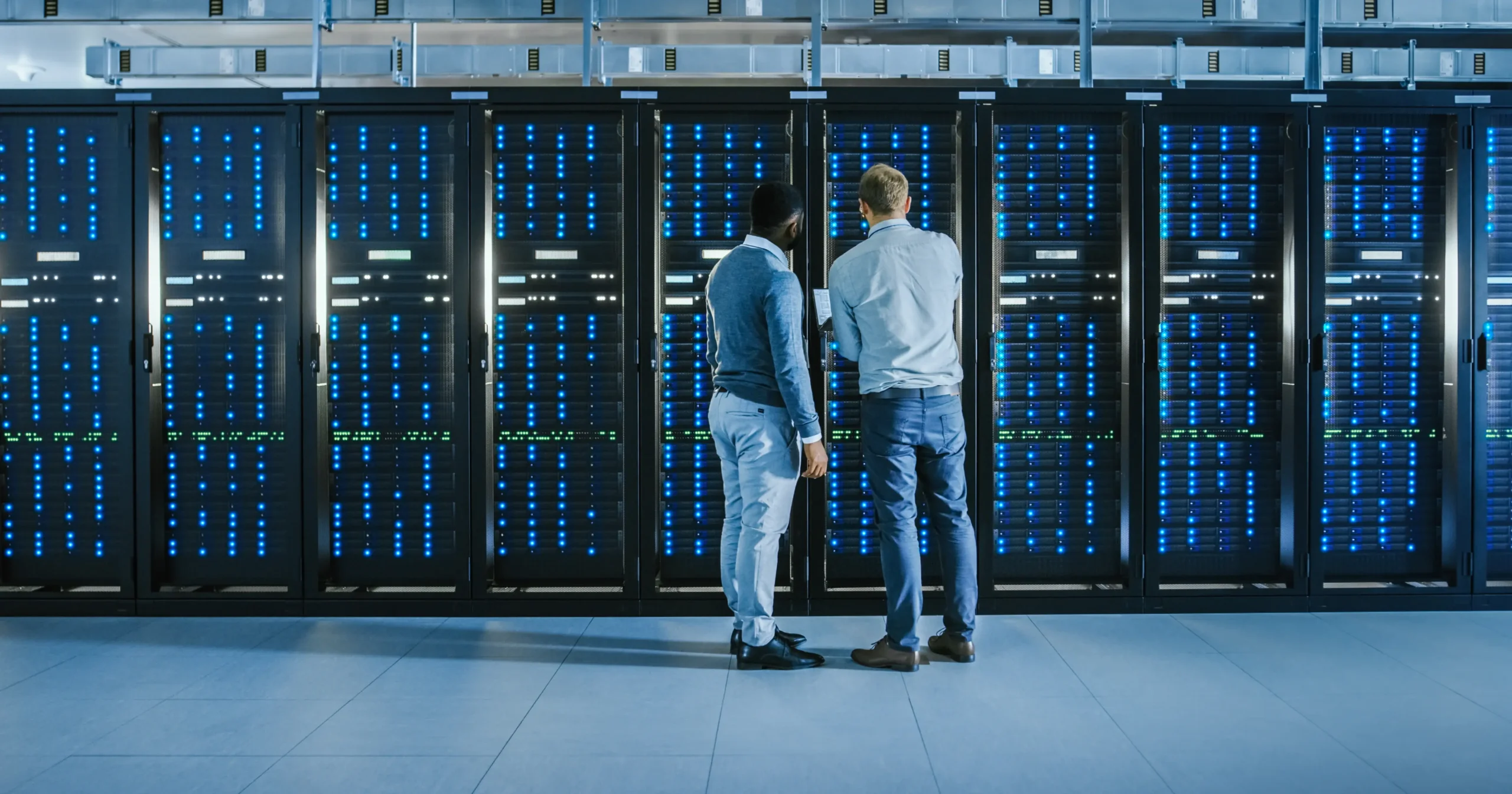
Data centers are at the heart of modern business infrastructure—combining physical real‑estate, HVAC, power supply and access‑control systems with server racks, network infrastructure, software and cloud connections. A former CISA official recently warned that data‑center operators often focus on cyber threats to the exclusion of physical vulnerabilities—and yet “a physical breach can have the same catastrophic impact as a cyber‑attack.”
That warning aligns with broader industry findings. CISA explains that many critical sites are vulnerable to “active shooter, bombing, unmanned aircraft, vehicle ramming as well as insider‑threat attacks.” And the U.S. Government Accountability Office (GAO) highlighted that infrastructure assets are increasingly interconnected, meaning that disruption of one system can cascade across others.
From a data‑center standpoint, the challenge is clear: a malicious actor exploiting a networked access‑control system, tail‑gating into a secure zone, or disrupting building‑automation systems through IoT devices can generate physical disruptions that feed directly into cyber exposure (or vice‑versa). Without unified oversight, an organization may secure its networks but leave physical paths wide open—or secure its gates but ignore the network paths feeding the building systems.
Why the silo model no longer works
Historically, physical security and cybersecurity have operated as distinct functions: different reporting lines, different processes, separate technologies. However, that approach is increasingly untenable. A white‑paper from Alert Enterprise observes that the “tectonic shift” toward converged security is driven by data‑flows across IT, OT (operational technology) and physical‑security domains.
In practice, the hazards of maintaining silos include:
- Blind spots at the interface: If physical‑security events (tail‑gating, badge misuse, building‑automation anomalies) are not correlated with cyber‑events (unauthorized network logins, IoT device behavior), attackers can exploit the gap.
- Delayed incident response: Cyber teams may not be aware of physical intrusions and vice‑versa, meaning a combined breach can unfold unchecked.
- Duplication and inefficiency: Two teams may monitor separate systems without shared insight, leading to overlap and wasted resources.
- Governance and accountability gaps: When cyber and physical functions report separately, it’s harder to define unified risk‑responsibilities, escalation paths and audit‑trails.
Regulatory and risk‑management frameworks are increasingly recognizing that infrastructure threats are blended. The GAO report notes that many owners of critical infrastructure now connect physical and cyber systems for efficiency—but that interconnection also “creates new opportunities for potential attackers.”
In sum: protecting a data center requires more than locking the door or patching the firewall. It requires orchestrated oversight of both physical and cyber domains as one ecosystem.
How a security workforce‑management platform bridges the gap
To operationalize convergence in a meaningful way, organizations need more than intent; they need tools and processes that bring teams together. A security workforce management platform offers a powerful mechanism to do exactly that. Consider the following ways such a platform can support convergence:
- Unified task‑and‑shift alignment
By tracking schedules, assignments, certifications and roles across physical‑security personnel (guards, access‑control operators, building‑automation technicians) and cyber‑security personnel (incident‑responders, network‑analysts, SOC staff), the platform creates a unified view of the workforce. For example: when a physical‑security guard logs an anomaly (e.g., uncontrolled access to a rack‑room), the platform can trigger a network‑log review task for a cyber‑analyst—and route it through the same system.
- Incident orchestration across domains
Converged threats require converged responses. The platform can manage workflows that span physical and cyber functions: an access‑control failure triggers physical‑security alert AND cyber‑forensic task, with notification, escalation and audit‑trail in one system. This ensures neither team operates in the dark.
- Cross‑training and certification tracking
Because convergence demands multidisciplinary skills, the platform can monitor certifications and training for hybrid roles (e.g., a guard trained in network‑device monitoring, or a cyber‑incident‑responder trained in building‑automation systems). This ensures the workforce is equipped to operate in a converged environment.
- Asset‑centric role assignment
Modern platforms support linking personnel to both physical and cyber assets. For example: guard assigned to rack‑room access; network‑analyst assigned to the switch‑room; building‑automation technician assigned to HVAC control network. Assigning responsibility across both domains promotes accountability for the full stack.
- Analytics and continuous improvement
As tasks are tracked across physical and cyber domains, so are incident outcomes, resolution timeframes, escalation patterns and cross‑team handoffs. Insight generated from the platform can highlight recurring gaps (e.g., physical‑entry events that become network‑intrusions) and help organizations refine their converged operations.
- Governance, audit and compliance
By logging all roles, tasks, escalations and training in one system, organizations gain a unified audit trail. This supports governance models that no longer treat cyber and physical as discrete silos but as a unified defence model—consistent with modern risk frameworks.
The workforce‑management platform is the operational glue that allows organizations to shift from siloed physical vs cyber thinking toward un workforce-management platform is the operational glue that enables organizations to transition from siloed physical versus cyber thinking to a unified cyber-physical ified cyber‑physical security posture.
A focused lens: data centers as integrated cyber‑physical ecosystems
Data centers today are evolving into adaptive ecosystems—where reliability, sustainability and security are tightly coupled. Physical plant systems (power, cooling, access control) are now guided by AI‑based automation engines, which in turn depend on data integrity and secure interconnectivity. This creates both efficiency opportunities and new threat vectors.
Operators must view their sites not only as systems‑of‑systems but as intelligent, learning environments. This means securing the algorithms that optimize airflow as tightly as the servers processing financial transactions, and ensuring that predictive maintenance sensors don’t become backdoors into operational networks.
Geographic and supply‑chain resilience now also form part of the cyber‑physical equation. Natural‑disaster scenarios, contractor access management, and remote‑operations infrastructure should be modeled together with network‑threat simulations. Scenario planning and “digital twins” can help operators visualize cascading failures across both physical and virtual realms before they occur.
In this next stage of convergence, security is not just a set of controls—it becomes a continuous feedback system connecting people, AI, hardware, and environmental conditions into a single operational fabric.
Conclusion
The boundary between cyber and physical security is no longer feasible. For data‑center operators and other critical‑infrastructure owners, silos are a liability. Converged threats—whether a physical breach used as a pivot to a cyber‑intrusion, or a networked attack disabling building systems—require unified oversight and response.
A security workforce‑management platform offers an operational tool to bridge that gap—bringing together scheduling, incident orchestration, training, asset assignment, analytics and governance across cyber and physical teams. By leveraging such a platform, organizations can align their people, processes and technology to meet the demands of modern converged security
